Gear & Supplies
Do Emergency Blankets Expire? Waterproofing and Storage
We may earn a commission if you buy through our links, at no extra cost to you. We don't test every product ourselves. We read and weigh real buyer reviews to give a fair, balanced picture. How we research.
In this guide
Yes, emergency blankets expire. Sealed, stored cool and dry, and kept out of light, a mylar emergency blanket lasts about 1 to 2 years before the metallic coating fades and stops reflecting heat. Once opened, it degrades within days, so treat it as single-use and replace any blanket that’s been unsealed, worn, or knocked around in a bag.
They don’t have a printed date like a carton of milk, but the thin material breaks down over time, and a worn-out blanket won’t do its job when you need it.
Most families keep one in the car or with their camping gear and forget about it. That’s fine, as long as you check it now and then and swap it out when it gets old.
How long they last
It depends on how long it sat in a store before you bought it, where you keep it, and whether you’ve opened it. Kept sealed and away from light, moisture, and heat, an emergency blanket can last 1 to 2 years. Because storage varies so much, there’s no exact expiration date.
Any contact with the elements can damage the mylar material and dull the shiny metallic coating. That coating is what reflects your body heat back to you, so once it fades, the blanket loses its purpose.
How to care for an unused emergency blanket
The main thing is to keep it out of heat, moisture, and direct light. Good spots are a cupboard away from heat sources, a garage that stays dry, or a basement that isn’t damp or warm.
Skip the glove box, plastic totes in the car, the attic, and anywhere near windows or a furnace. These spots are handy, but the heat will wear the blanket down fast.
Where to store them
Pick a place that stays cool and dry. If you want one in the car for winter driving, keep it inside a small cooler or bag so it’s out of the sun and heat. If you think a blanket got damaged, replace it. They are one of the cheapest pieces of emergency gear you can buy.
Leave them sealed. They’re tempting to open, and kids love to make forts out of them, but once opened you can’t get them back in the package, and they start to fade within a few days.
Also keep them somewhere they won’t get banged around. A purse or backpack can shift the blanket and crack the coating that makes it work. Pack one in your bag right before you head out, not weeks ahead, and it will last longer.
Are emergency blankets waterproof?
Yes. A quality emergency blanket keeps water off you and holds your body heat in at the same time. The metallic surface sheds rain, blocks wind, and stays shiny enough that rescuers can spot you if you get lost.
It works three ways. The airtight foil stops heat from escaping into the air around you. It cuts down on heat loss from sweat and evaporation. And it reflects your own body heat back toward you instead of letting it radiate away. The metal layer does all the work here: once you’re wrapped up, it puts a barrier between your skin and the cold, wet air outside, so the heat you make stays with you.
That’s also why “waterproof” and “windproof” matter as much as warmth when you’re shopping. A soaked blanket pulls heat away from you faster through direct contact, which makes it far less useful in rain or flooding. Wind carries heat off your skin the same way, so a blanket that blocks both does its job a lot better than one that only blocks one.
Why are emergency blankets silver and shiny?
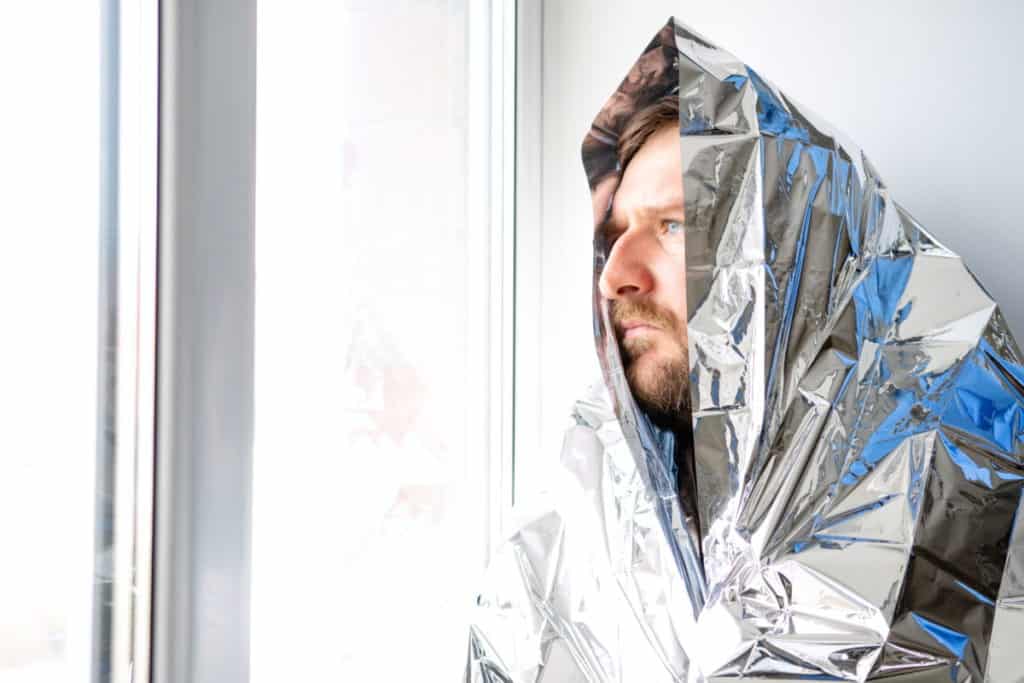
Because the metallic coating reflects heat instead of absorbing it. The thin film is mylar, a plastic sheet with a vacuum-deposited layer of aluminum. It works a lot like the foil in your oven: it keeps warmth in, and it keeps outside heat out.
That’s why the same lightweight sheet turns up in so many places, from marathon finish lines to space suits and surgical rooms, where it helps keep patients from shivering under anesthesia. Wrapped around someone with the reflective side facing in, it can hold in around 90% of body heat that would otherwise radiate away. Turned reflective-side-out in direct sun, it bounces heat and UV away instead, which is why it works in hot weather too.
The shine has a second job: visibility. A large, moving, reflective surface catches a rescuer’s eye from much farther away than a small mirror or a bright jacket would. That’s part of why it’s standard gear in first aid kits and ambulances, not just backpacks.
What to look for when you buy one

Not every emergency blanket is built the same. A few things are worth checking before you buy.
Size. Look for one at least 82 inches long to cover a 6-foot adult, and 52 to 54 inches wide so it doubles as a ground sheet if you need one.
Material. Mylar is the standard choice: light, cheap, and good at holding heat. Wool blankets are more comfortable but heavier and bulkier, so they’re a better fit for a car kit than a daypack.
Thickness. Thicker mylar, around 26 microns, holds up longer and runs warmer. Anything under about 12 microns tears easily and won’t last through repeated use.
Weight. For a bag you’ll carry, look for 2 to 2.5 ounces. The lightest ones trade away a bit of comfort and durability for that low weight.
Do emergency blankets keep things cold?
No, not really. A space blanket can bounce some heat away from a cooler sitting in direct sun, but that’s a side effect, not what it’s built for. It’s designed to hold your own body heat in, not to keep food or drinks cold.
The reason comes down to the same mechanism that makes it work as a warming layer. The blanket blocks heat loss from wind (convection) and radiated body heat, and it helps some with evaporation, but the plastic itself is too thin to insulate. It has no meaningful R-value the way a cooler’s foam walls do. It also does nothing for heat lost through direct contact with a cold surface (conduction), which is the same reason it won’t keep you warm if you’re lying directly on cold ground without a pad underneath.
If you actually need to keep food or drinks cold during a power outage or a trip, reach for an insulated cooler instead. Our guide on keeping food cold during a long power outage covers what actually works. You can angle a mylar blanket, reflective side out, over a cooler in direct sun to slow how fast it heats up, but treat that as a minor assist, not a real cooling method.
When you need them
Rather than keeping a blanket on you all the time (you can, if you replace them often), grab one on your way out the door. You should always have an emergency blanket with you for hiking, camping, road trips, skiing or snowboarding, boating, and any outdoor activity where you could get stuck away from shelter. It’s smart to bring one to sporting events too, even a softball game at the park. Ready.gov’s basic kit checklist suggests keeping a warm blanket for each household member on hand alongside water, food, and a flashlight.
Emergency blankets also help prevent shock after an injury. Ambulance crews always carry them, so ask for one if it isn’t offered right away. A blanket is worth having any time there might be an injury: stuck on a snowy slope or dealing with a car accident on a road trip, it can keep someone warm and help prevent shock while you wait for help. The CDC’s guidance on hypothermia recommends wrapping a person’s whole body, including the head and neck, in a warm blanket once they’re dry and out of the cold, which is exactly the job an emergency blanket is built for. It’s worth checking your first aid kit for expired supplies at the same time you check your blankets, since both fail you the same quiet way.
Frequently asked questions
Can you reuse an emergency blanket after it’s been opened?
You can, but treat it as a downgrade, not a repeat performance. Once unfolded, the thin mylar creases and the metallic coating starts flaking at the fold lines, so a reused blanket reflects less heat than a fresh one. It still beats having nothing, but if you have a spare, use the new one for anything serious and save the opened one for low-stakes situations like a picnic ground cover.
Can an emergency blanket catch fire?
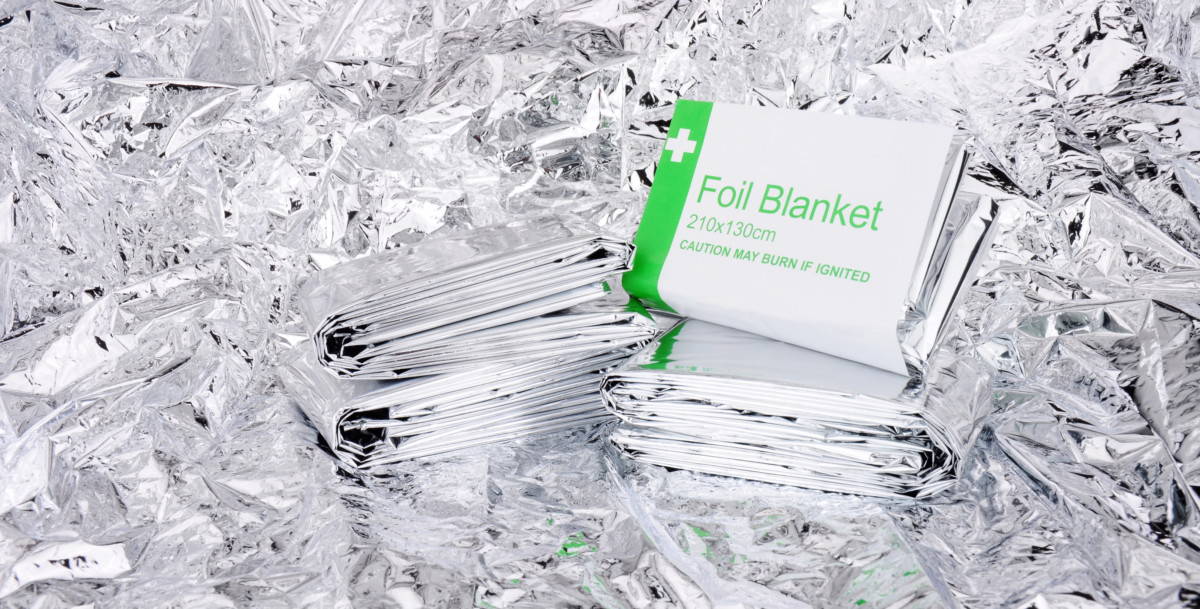
Yes, so keep it away from open flame, campfires, and space heaters. The plastic film ignites and melts quickly, and the packaging on many blankets carries a printed warning about exactly that. Wrap it around a person for warmth, not around anything near a heat source.
Do emergency blankets work in the rain as well as in the cold?
Yes, the same properties that trap heat also shed water. Because the material is airtight and waterproof, it keeps rain off your skin and clothing while it holds body heat in, which is why the same blanket shows up in both winter car kits and summer hiking packs.
How many emergency blankets should a family keep on hand?
Plan for at least one per household member, plus a couple of spares. Keep one in each vehicle, one in the family’s emergency kit, and one in any bag someone regularly carries outdoors. Because they’re inexpensive, there’s little reason to stock just one for the whole family.
Where to buy emergency blankets
When it’s time to replace an old or used blanket, you have plenty of options, including bulk buys. Most sporting goods stores and supermarkets carry them, along with Amazon and outdoor retailers like REI and Cabela’s.
For bulk, online retailers often sell them by the case. They cost so little that buying several at once makes sense if you use them often, or just want backups in every bag and vehicle.
Quality still matters even at a low price. Cheap mylar reflects heat less effectively than a well-made blanket, so check reviews for how thin the material feels and how well it holds up in actual use before you buy in bulk.
The bottom line
Emergency blankets are cheap, light, and worth keeping in more than one place: the car, the closet, a first aid kit, a bag you take on trips. Store them sealed, cool, dry, and out of direct light, and plan to replace them every year or two even if they’ve never been used. They’re waterproof and windproof, the silver coating is what reflects your body heat back to you, and no, they won’t double as a cooler. Build a habit of checking them alongside the rest of your emergency kit, and keep one place to log what you own and when you last checked it so the habit sticks.
Coming soon
The part of being prepared most families never finish
The Family Emergency Binder puts your family's contacts, documents, and plans in one place — a 15-minute quick start tonight, finished over a weekend. Join the list and we'll email you the moment it's ready, at the $19 launch price for a limited time.