Gear & Supplies
Do Propane Generators Work In Cold Weather?
In this guide
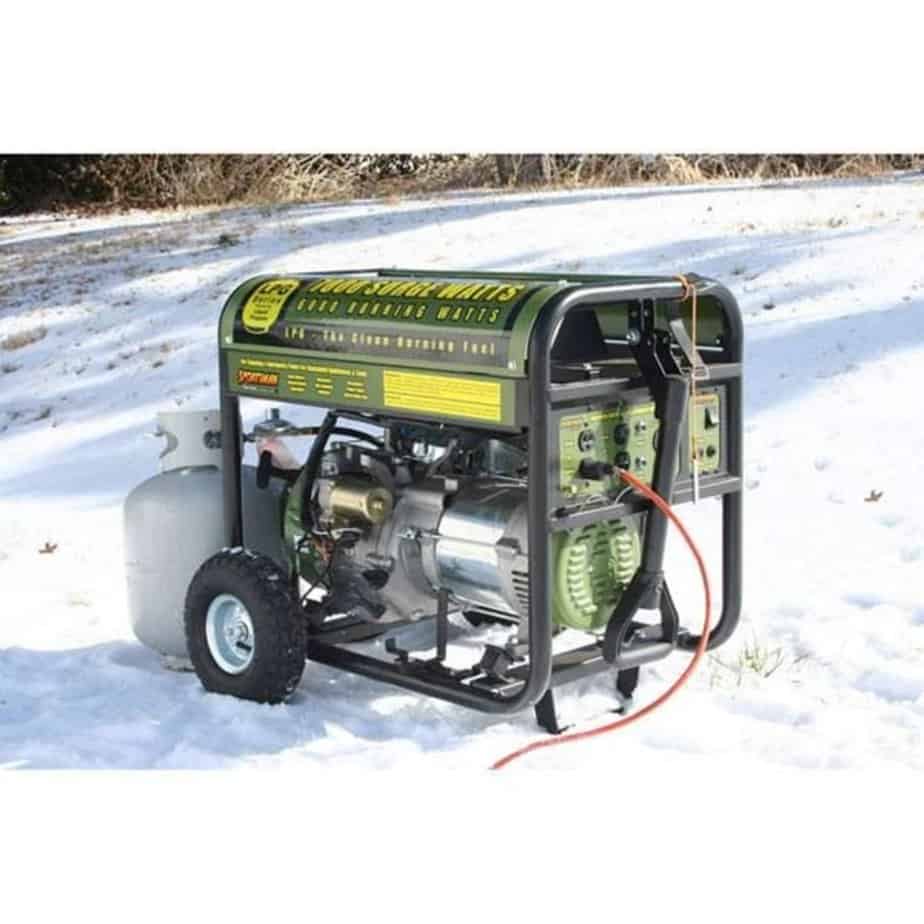
Yes, propane generators work in cold weather. Propane stops vaporizing into usable gas around -44°F, but real trouble starts far sooner: a tank that’s low, small, or exposed to wind can lose pressure and stall well above that point. Keep the tank full and sheltered, and most units get through winter outages fine.
The cold mostly affects two things: how reliably fuel reaches the engine, and how much of your tank you burn through getting there.
Propane is a good winter fuel because it doesn’t degrade in storage the way gasoline does. But it behaves differently in the cold, and knowing why helps you avoid the two problems that actually trip people up: a generator that won’t start on the coldest morning of the year, and one that eats through fuel faster than expected.
How cold is too cold for a propane generator?
The hard physical limit is around -44°F (-42°C), where liquid propane stops vaporizing into a usable gas at all. Below that point, nothing you do will get propane out of the tank as gas, because it simply won’t boil.
For almost every family reading this, -44°F is not the number that matters. Very few places in the continental U.S. get that cold. What matters is that propane’s vaporization rate drops well before that floor, and a tank that’s low, small, or sitting in direct wind can underperform long before the thermometer gets anywhere near -44°F.
Propane vaporizes by pulling heat from its own liquid and from the surrounding tank and air. In warm weather there’s plenty of ambient heat to draw on, so vaporization keeps up with demand easily. In cold weather, especially with a generator pulling propane fast under load, the liquid can cool itself faster than the air can reheat it. The tank effectively “self-refrigerates,” and vapor pressure drops. That’s why a generator can stall or surge in the cold even when the outdoor temperature is nowhere near the -44°F floor.
What actually helps in the cold
A few practical choices make the biggest difference, more than any gadget you can bolt on.
Tank size. A larger tank has more liquid surface area and more thermal mass, so it loses pressure more slowly than a small one under the same draw. If you’re running a generator through multi-day winter outages, size up rather than relying on a small cylinder.
Keep the tank reasonably full. A tank that’s down to the last quarter has less liquid propane and more empty vapor space, which makes it more sensitive to cold. Topping off before a storm isn’t just about having enough fuel, it also helps the tank hold pressure.
Keep the tank above the dew point when you can. Condensation and ice on a tank or regulator make a cold problem worse. Where practical, a tank kept in a sheltered, wind-protected spot (not indoors, see below) vaporizes more evenly than one exposed to direct wind chill.
Watch the regulator. Two-stage regulators generally handle cold better than single-stage ones, and a regulator that’s iced over or caked with snow can restrict flow even if the tank itself is fine. Brush off snow and ice before you rely on the unit, and if you notice sputtering or surging, the regulator is a reasonable first place to check.
Run it periodically before you need it. Starting the generator for about 10 minutes every couple of weeks through the winter keeps the engine, lines, and starting battery in working order, so you’re not troubleshooting a cold start for the first time in the middle of a storm.
What to avoid
- Never run a generator indoors, in a garage, carport, or enclosed porch, even with the door open. Carbon monoxide from a running generator can build to lethal levels in minutes in an attached or enclosed space. The CDC recommends running a generator more than 20 feet from windows, doors, and vents, and the CPSC confirms that opening a garage door is not sufficient protection. Run it outdoors, well away from windows, doors, and vents, and pointed away from the house.
- Don’t let the tank run near empty in cold weather. A near-empty tank is the fastest way to see pressure problems that look like a generator failure.
- A cold-weather kit alone won’t fix a fuel problem. Battery warmers and crankcase heaters help the engine start, but they don’t change how propane vaporizes. If you’re seeing pressure drop under load, the fix is tank size and fuel level, not just engine warmth.
Maintaining a propane generator in cold weather
A little prep ahead of winter goes a long way toward a safe, simple setup when you actually need the generator:
- Keep the path to the generator clear of snow and debris
- Run the generator briefly before a storm to confirm it starts and holds a load
- Fill the tank before a storm rather than during one
- Check hoses, fittings, and the regulator for cracking or ice damage
Where to store a propane generator in cold weather
How you store the unit between uses depends on whether it’s portable or a standby model wired into the house.
Standby generators are installed outdoors and hardwired, so storage isn’t really a choice. Keep the area around the unit clear, keep the vents free of snow and debris, and make sure there’s a clear path to reach it in a storm.
Portable generators should live in a cool, dry place between uses, like a garage or basement, and never be run in that space. A fitted cover helps if you store one outdoors, and a small shed works well for winter storage since it blocks wind and snow while keeping the unit ready to move outside when you need it. If you want a deeper walkthrough of fuel storage in general, see our guide to storing fuel for emergencies.
For a broader look at getting through a winter outage, our guide on what to do during a power outage at night covers the rest of the checklist, along with Ready.gov’s recommendation to run any generator only outdoors and away from your home, and if you’re driving in the same storm, our winter car emergency kit guide is worth a look too.
Frequently asked questions
Can I leave a propane generator running outside overnight in the cold?
You can, as long as it’s positioned the same way it would be during the day: outdoors, well clear of windows, doors, and vents, and somewhere it won’t get buried by drifting snow. Check the tank level before you turn in, since you don’t want it running dry at 3 a.m., and confirm the exhaust and intake haven’t gotten blocked by snowfall if the storm is still going.
Does propane get less efficient in cold weather?
A little, but the bigger factor is vaporization, not combustion efficiency. Once propane vapor reaches the engine, it burns about the same regardless of outdoor temperature. What changes in the cold is how reliably the tank turns liquid propane into that vapor in the first place, which is why tank size and fill level matter more than any tune-up.
Should I use a propane tank heater or blanket in cold weather?
For most residential setups, a bigger tank and keeping it fuller matters more than an add-on heater. Tank warming blankets exist and can help in genuinely extreme cold, but check that any heating accessory is rated for use with propane cylinders specifically, and never use an open flame or an uncertified space heater to warm a tank.
Will a propane generator start in sub-zero temperatures?
Often yes, especially if it’s been maintained and the tank is full, but cold starts get harder as the temperature drops. Cold engine oil thickens and makes cranking tougher, and a weak battery loses power faster in the cold. Running the generator periodically through the winter, as covered above, catches a fading battery before you need it in a storm.
Coming soon
The part of being prepared most families never finish
The Family Emergency Binder puts your family's contacts, documents, and plans in one place — a 15-minute quick start tonight, finished over a weekend. Join the list and we'll email you the moment it's ready, at the $19 launch price for a limited time.