Gear & Supplies
How To Store Fuel For Emergencies: The Ultimate Guide
We may earn a commission if you buy through our links, at no extra cost to you. We don't test every product ourselves. We read and weigh real buyer reviews to give a fair, balanced picture. How we research.
In this guide
You can store fuel safely for emergencies by keeping it in tightly sealed, approved containers inside a detached shed a few feet from your house, never an attached garage. Federal rules cap most storage cabinets at 60 gallons of gasoline. Run generators outdoors, more than 20 feet from windows and doors, since carbon monoxide kills over 400 people a year.
How you store it depends on a few things: what you need it for, the type of fuel, how easy it is to get, and how you keep it safe.
Most families think about food, water, and shelter long before they think about fuel. Then the power goes out after a storm, and suddenly fuel matters a lot. A little planning ahead of time makes that moment easier.
Buying and storing fuel takes some thought. You want it to still work when you need it, and you want it stored in a way that does not put your family at risk. Here is a plain guide to what to store, how to store it, and which fuels fit which needs.
Before you store fuel, check its quality
Low-quality fuel can damage your engine, and in some cases it can be dangerous. You do not need a physics lesson to tell good from bad. Here is the simple rule.
Good fuel burns without black smoke. Black smoke leaves deposits on your engine and makes it run worse over time.
This matters whether you are dealing with an emergency or just a normal day. In a power outage, you may need fuel to run a generator or an engine when a storm has knocked out your power. Before you plug anything sensitive into that generator, though, it’s worth knowing whether a generator can damage electronics. The point is that stored fuel should burn cleanly and not give off harmful byproducts.
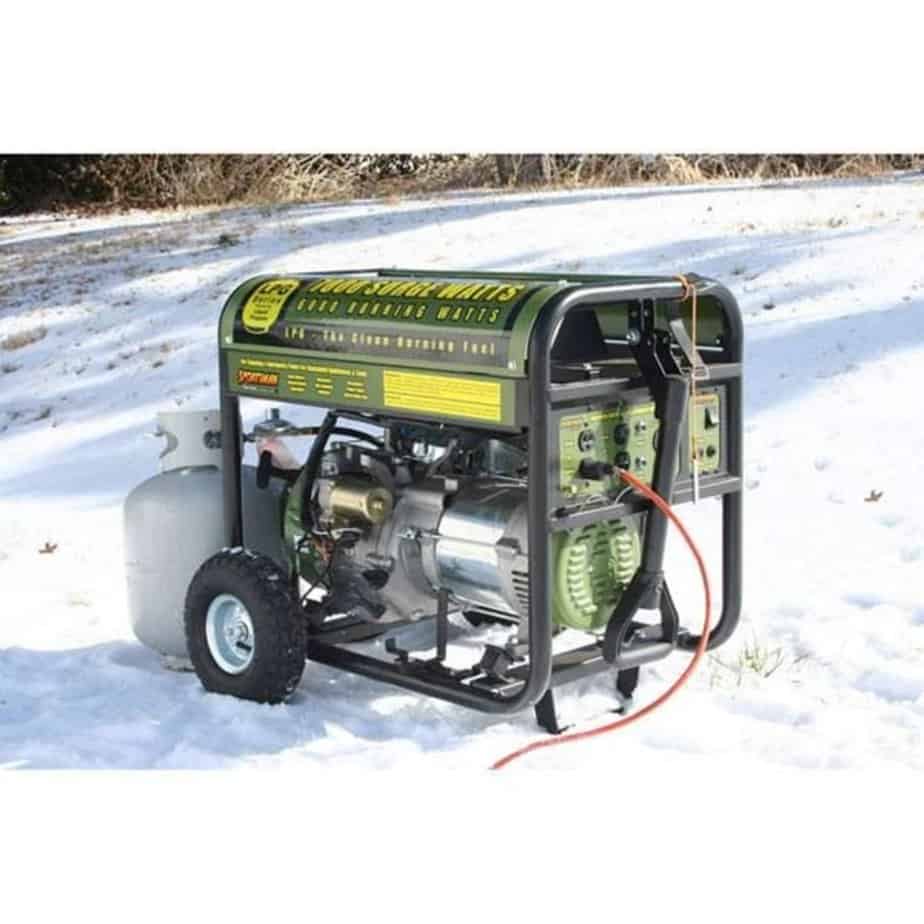
According to the CDC, carbon monoxide poisoning sends more than 100,000 people to the emergency room each year, and more than 400 die from it. It is often missed at first, because the symptoms get serious before anyone calls a professional. If you run a generator for stored fuel to power, keep it outdoors and more than 20 feet from windows, doors, and vents, and never in a garage even with the door open.
General guidelines for fuel handling
- Keep it out of reach of children.
- Provide good ventilation. The amount of fumes released depends on how much oxygen is around.
- Install smoke detectors.
- Keep a fire extinguisher nearby, whether that’s the shed, the garage, or the car.
- Fix leaks right away.
- Read the manufacturer’s guidelines for your engines first.
- Store fuel according to your local laws.
Storing fuel for everyday and emergency use
Normally you just drive to the gas station and pay your bill. Once you decide to store fuel at home, there are a few rules to follow. It is not as simple as filling a can and tucking it away.
Store fuel with care. The right conditions depend on whether the fuel is flammable or combustible. As a general guide, stored fuel should be:
- Kept in tightly closed containers.
- Kept out of direct sunlight.
- Stored in a dry place.
- Kept at a steady temperature, with as little fluctuation as possible.
- Stored where there is good ventilation.
- Matched to how long you will need it and the situation you are planning for.
- Paired with a plan to use it sparingly.
Important: never store fuel in your garage.
People tend to assume the garage is the right place for anything worth storing. That works for almost everything except fuel.
Why? Unless your garage is a separate building, you are putting your home and family at risk by keeping a flammable or combustible container in a space attached to the house.
Where to store fuel
Storage rules and local laws say fuel should be kept in a detached building, in a fuel storage cabinet. These cabinets are built to contain fumes and protect the fuel from accidental ignition.
You can find fuel cabinets in many sizes online. How much fuel you can keep in one depends on local law. Under federal OSHA rules, a single approved storage cabinet can hold up to 60 gallons of gasoline-type fuel, and no more than three cabinets can sit in one storage area. Many local fire codes set a lower cap, so check with your fire marshal before you buy a cabinet or plan how much to keep.
Keep fuel away from your home in case it ignites. A common recommendation is to build a small shed a few feet from your living space and store it there.
Storing different types of fuel
Different fuels have different storage needs, and there are good reasons for that. Below is a rundown of the common types and how to store each one.
Solid fuel
Firewood
Storing firewood is the oldest and most common way to keep a personal energy source on hand. It is cheap, easy to find, and needs almost no upkeep. People have long used it for cooking and heat, and it can also run some engines.
How much you need depends on your home. As a rough estimate, one household uses about five to eight cords a year. That changes with the size of your home, your insulation, your needs, and the type of wood. A cord is 128 cubic feet of wood, stacked four feet high and four feet wide.
Getting firewood is not as simple as cutting down a tree and expecting it to heat your home. It depends on the type of wood and how it burns.
Softwood: Softwood burns fast but poorly. It is not good for long-term use, and most people skip it for heat. It is mainly used to make paper and other products, so it is far from your best fuel.
Hardwood: Hardwood does everything softwood cannot. It burns slowly and gives off more heat. It is easier to store, holds up better against insects, and gives off less pungent smoke.
Another common step is to season your firewood. Seasoning means chopping, splitting, and then storing the wood for at least six months before you burn it. The wait dries it out and makes it burn better.
Charcoal
Charcoal has a few advantages over wood. It burns more efficiently and produces more heat. There is one big catch: never burn charcoal indoors. Like other stored fuels, it gives off high levels of carbon monoxide and uses up a lot of oxygen as it burns.
When storing charcoal, know the difference between lighter fluid and crude charcoal. Lighter fluid is rarely recommended for storage because it evaporates over time. It is more of a ready-to-use form.
Crude charcoal stores easily and keeps for a long time. Store it in airtight containers with a moisture absorber so it stays clean and dry.
Coal
Coal may be one of the first fuels you thought about storing. People have used it for a long time, and it makes a strong, warm flame. It does use a lot of oxygen as it burns and gives off high levels of carbon monoxide.
Coal is low maintenance to store. It keeps almost indefinitely with little effort, as long as you keep it dry and free of moisture.
Using coal is a lot like using charcoal. It burns slowly and takes time to catch. It gives off somewhat pungent smoke and can burn darker.
Fuel tablets
Fuel tablets are a storage-friendly option. They are made for immediate use and keep almost forever. Each one is a small cube that can reach more than 1,400 degrees of heat. They burn fast and last about 15 minutes.
People like fuel tablets because they store indefinitely and cost little. You can leave them in their original packaging with almost no upkeep.
A common type is the Esbit tablet. These produce little to no smoke and leave no residue. Burn them outdoors, though, because they give off toxic gases.
Batteries
Batteries belong on the list too. They are the most common fuel source most of us use. They are chemical products that can keep anywhere from a few months to decades.
The batteries worth storing are not your TV remote batteries. For emergency use, alkaline and primary lithium batteries are the ones to keep. They can store for ten years with little loss of charge.
Nickel-based batteries are the everyday kind. They store for five years or more depending on conditions. Lithium-based batteries can be stored charged, while nickel-based ones are stored discharged.
The rest is what your parents always told you: take batteries out of equipment when you are not using it. Store loose batteries in a cool, dry place.
Liquid fuels
Kerosene
Kerosene is a common oil-based fuel used for cooking and heating. It comes in grades based on sulfur content, and the grade sets its properties. Klean Heat is a premium grade that burns the cleanest with the least debris.
You can store kerosene safely in 5-gallon containers, the big blue ones you often see. The blue color sets it apart from gasoline, which is far more volatile. Kerosene lasts two to five years. Keep it in its original blue container, and add a stabilizer like PRI-D each year to extend its life.
Kerosene is generally safer to store than gasoline. It does not give off explosive, toxic vapors. It is still flammable, so keep it away from heat sources. A kerosene heater doubles as a way to cook a hot meal when the power is out, so stored fuel earns its keep twice.
Gasoline
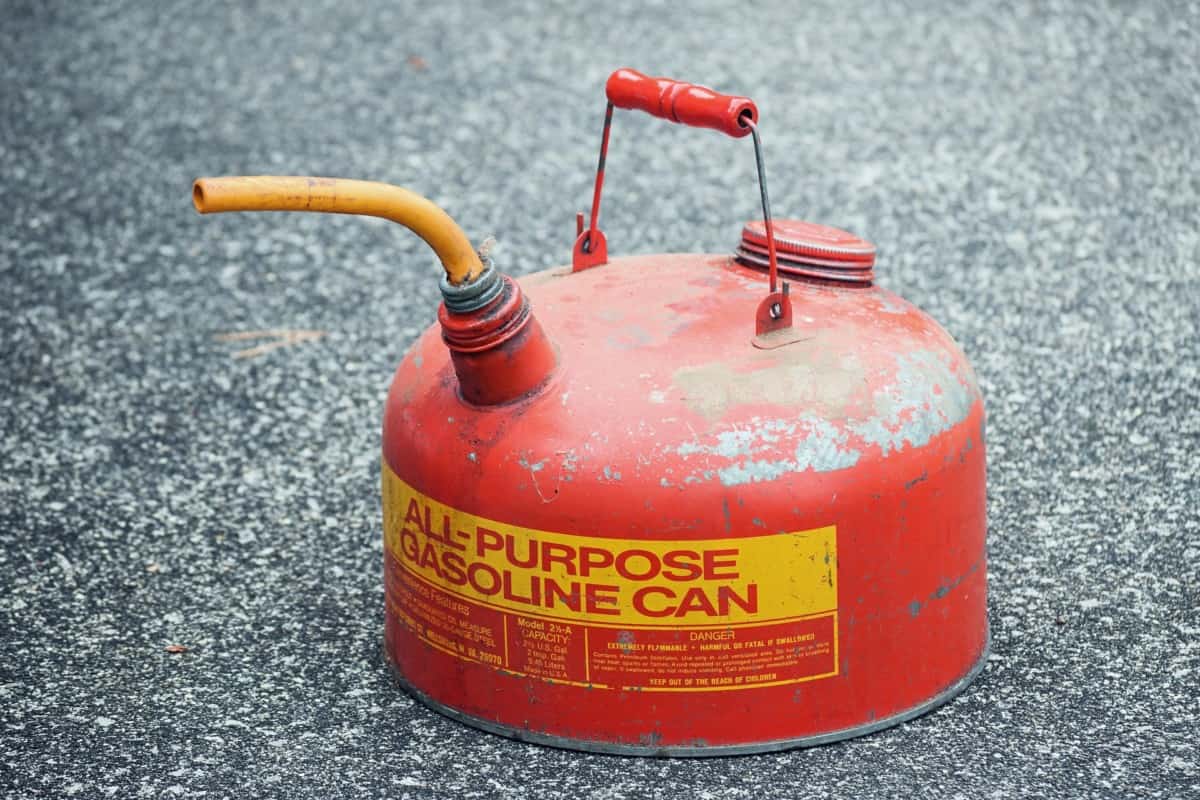
Gasoline is still the most common fuel, since more than 80% of vehicles run on it. People store it to power tools like chainsaws, generators, and lawnmowers. It is also one of the most flammable fuels, so it needs careful storage.
Gasoline has a short shelf life, usually 3 to 6 months without a stabilizer, and ethanol-blended gas breaks down faster than pure gasoline. A stabilizer can stretch that to a year or more, depending on the product, but that is about the limit. The longer it sits, the less useful it gets, until it stops working at all.
Most people store gasoline only when prices drop a lot. They keep it for quick, everyday needs rather than long-term storage. Adding a stabilizer now and then helps preserve it.
Keep gasoline away from electrical appliances like TVs, fridges, stoves, air conditioners, and heaters. Those can be a source of heat or sparks that set the gasoline off.
You can also rotate your gasoline. That means pouring it into your car and refilling the container at the gas station, so the fuel stays fresh. It is not a fuel you would rely on in an emergency, though.
With such a short shelf life, how much should you keep? A good rule is enough to reach a destination or do the job once, plus no more than 25% extra. Many laws require gasoline to be stored in red containers so it is easy to identify.
Again: gasoline is highly flammable, breaks down fast, and has a short shelf life. Add a stabilizer now and then to extend it. The longer it sits unused, the less likely you will ever use it.
Diesel
Diesel is another oil-based fuel, though less common than gasoline. Only about 3% of US vehicles run on diesel. It is less flammable and stores longer, 18 to 24 months without a stabilizer. It does give off harmful gases. Diesel containers are yellow, to set them apart from gasoline and kerosene.
How you store it depends on whether your vehicle runs on diesel and whether you expect to need it. Gasoline has a shorter, less predictable shelf life, which makes it a poor choice for long-term storage. Diesel keeps almost indefinitely with a stabilizer and nitrogen blanketing.
Nitrogen blanketing means filling the empty space in the container with nitrogen so the diesel breaks down more slowly. It also kills microbes and fungi.
Lighter fluid
Charcoal comes in two forms: crude charcoal, the kind you picture, and lighter fluid. Lighter fluid is a liquid fuel that is either alcohol-based or petroleum-based. It is volatile, so handle it carefully.
Lighter fluid is highly flammable. Store it in closed containers away from sunlight and direct heat. It is not meant for long-term storage. Keep it only if you need it soon.
Tip on mixing oils: there are many types of oil, each with strengths and weaknesses. Mixing balances out those traits to make a safer, more useful fuel.
Mixed oil does not keep long, though. If you mix oil and leave it more than a month, throw it out. There are pre-mixed commercial versions that last longer.
Gas fuels
Propane
Propane is a liquid fuel stored as a gas under high pressure. It is a common storage choice and easy to find in an emergency. Tanks range from 1 pound up to 30 pounds, plus fixed tanks that hold hundreds of pounds.
The fuel itself keeps indefinitely. The tank is usually the weak point, so inspect it regularly for rust or dents.
Storage is simple and the gas is low maintenance, but propane catches fire easily, so keep the valve closed tight when you are not using it. Like kerosene, propane stores well for the long term without breaking down. It runs stoves, lights, heaters, and even a refrigerator.
Placement matters too. NFPA 58, the code that governs propane storage, sets minimum distances from buildings, property lines, and ignition sources that grow with tank size. Keep tanks upright, outdoors, and away from dryer vents or anything that could spark.
Butane
Butane is a lot like propane, but more dangerous, and it needs specific care. It is a highly flammable gas used for cooking and heating.
Butane comes in cylinders or cartridges. Temperature swings hit it hard, and near-freezing temperatures (32°F) break it down. Keep it between 32°F and 120°F. Store it in a cool, dry, well-ventilated spot, and keep it away from oxidizers like chlorine or concentrated oxygen.
Natural gas
Natural gas has one feature that makes it easier to live with: a rotten-egg additive that makes leaks easy to smell. It is a common energy source, and many appliances like heaters and generators run on it.
It can be stored in containers for a long time and fixed with valves. It is also very dangerous. Nearly half of fuel-related emergency room visits involved natural gas. When inhaled, the vapors push out oxygen and cause dizziness, lightheadedness, and drowsiness, and in some cases death.
How to keep stored fuel safe
No matter how long you store fuel, it will not perform well unless you keep up the right maintenance. There are mechanical and chemical things to watch, and many are covered above under each fuel.
A few general fixes can extend almost any fuel’s quality. These help with stability problems. They are called fuel treatments, and they keep impurities and sludge from clogging containers and ruining the fuel.
Fuel polishers are a mechanical fix that removes water and sludge by filtration. Both chemical and mechanical methods are part of a fuel preventive maintenance program, or fuel PM.
Chemical treatments
The best-known chemical treatments are fuel stabilizers, water controllers, biocides, and sludge dispersants. They help fuel store longer by removing damage or preventing it. For example:
- Fuel stabilizers are anti-oxidant solutions that stop reactions from starting in the fuel. Most fuel loses its ability to make energy because of byproducts that build up when it sits unused or in bad conditions. Stabilizers stop that breakdown, most often in liquid fuels like diesel and gasoline.
- Water-based chemicals control water buildup in stored fuel. Water weakens the flame and makes it denser. Common products include Bell Performance treatments like Dee-Zol, used for diesel. They break down water in the fuel and force it to separate and collect at the bottom, where you can remove it.
- Sludge dispersants are a newer option. They prevent sludge buildup or break down existing sludge in containers prone to clogging or fungal growth. They clean storage tanks and make biocides work better. They also slow corrosion by protecting the tank surface.
Mechanical treatments
Mechanical treatments use filters and separators to extend fuel quality. They remove debris, sludge, and water from the storage tank.
Filtration is an old, proven way to separate impurities from fuel. It used to be a large-scale, commercial process, but it has come down to simple tools anyone can use.
Mechanical methods are also the best way to handle the water that many storage tanks collect over time if no one keeps an eye on them.
Hybrid treatments
Chemical and mechanical treatments each have limits. A hybrid treatment combines them. You use mechanical methods to filter and clean out existing impurities, then chemical methods to polish and improve the fuel.
Mechanical servicing clears out sludge, water, debris, and microbial growth. Chemical treatments then mop up leftover water and remove sludge and asphaltene. You can add biocides on top to extend quality and shelf life.
Conclusion
What is the best fuel to store? It depends on how much storage you have, how long you want to keep it, and what you are planning for. Each fuel has its own upkeep and shelf life. Treatments and additives help, but weigh the cost against the benefit.
Fuel is volatile, dangerous, and not cheap. There is no reason to keep more than you need. Too much is a waste of space and money.
Different needs call for different fuels, and each one has its own rules. Because these fuels are volatile, take the safety steps seriously to avoid outcomes that could threaten your family.
Coming soon
The part of being prepared most families never finish
The Family Emergency Binder puts your family's contacts, documents, and plans in one place — a 15-minute quick start tonight, finished over a weekend. Join the list and we'll email you the moment it's ready, at the $19 launch price for a limited time.