Emergencies & Disasters
What to Pack in a Car Emergency Kit for Winter Driving
We may earn a commission if you buy through our links, at no extra cost to you. We don't test every product ourselves. We read and weigh real buyer reviews to give a fair, balanced picture. How we research.
In this guide
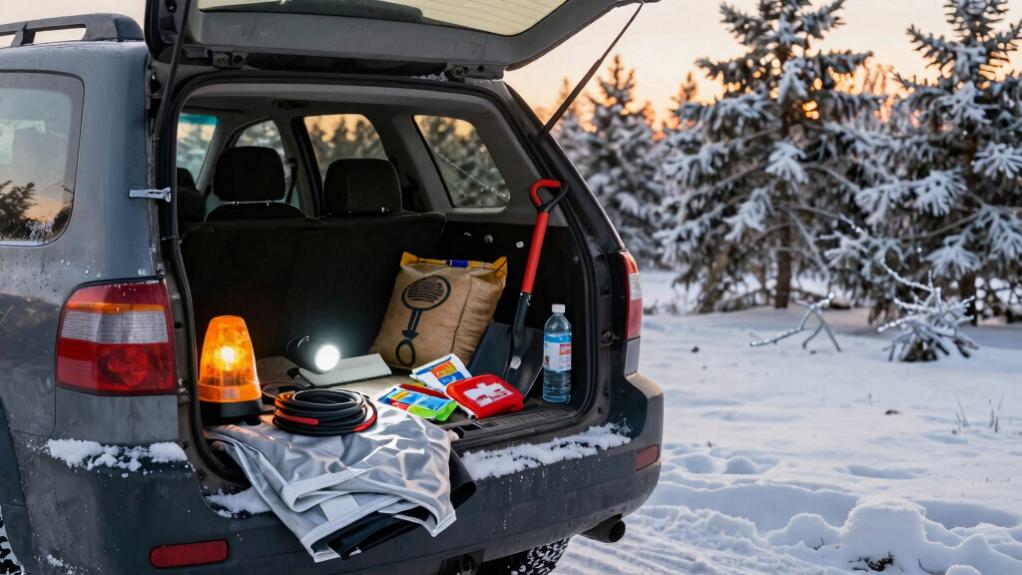
Pack five basics for winter driving: a gallon of water, food that keeps, a thermal blanket, hand warmers, and a charged power bank, plus recovery tools like a tow strap and shovel. If stranded, stay in the vehicle and run the engine only about 10 minutes each hour with a window cracked, since carbon monoxide can build up fast.
Snow can drop visibility to near zero in minutes and leave you stranded with a dead phone and falling temperatures. What you pack matters. So does where you put it. Here is the full list.
Start with these 5 winter basics
Pack five things first.
Carry food that keeps, like energy bars and nuts, to hold your energy and body heat. Store a gallon of water so you stay hydrated. Add a thermal blanket and hand warmers to fight the cold. Keep a flashlight with spare batteries for light and signaling. And carry a charged power bank for calls. A portable charger keeps your devices alive if you are stuck longer than you expected, which matters most when cell coverage is thin. See rechargeable power banks.
If you do get stranded, stay inside your vehicle with the hazards on until help comes. Stepping out risks getting hit or losing your way in poor visibility. These five basics keep you safe, warm, and easy to spot. Build the kit now and store it where you can grab it from the driver’s seat.
How to stay warm if you’re stranded
Stay inside your vehicle. Ready.gov says to stay off the roads if you can, and if you get trapped, to stay in the car rather than walk for help. Your vehicle shields you from wind and snow. Run the engine about ten minutes each hour for heat, and crack a window so carbon monoxide cannot build up. Clear snow away from the tailpipe first, since a blocked exhaust pushes fumes back into the cabin. The CDC notes that CO poisoning can happen fast and often feels like the flu at first: headache, dizziness, and confusion. Wrap up in blankets and put on a hat, since a lot of body heat leaves through your head. Tuck extra clothing around doors and windows to block drafts.
Make yourself easy to find too. Tie a bright cloth to your antenna or door handle. Turn on the dome light at night so rescuers can see it. Keep your phone charged for calls, but use the battery sparingly. Stay calm, stay visible, and wait it out.
Recovery tools every trunk needs
The right tools in your trunk turn a bad winter morning into a manageable one.
Start with the basics. Carry a tow strap rated for your vehicle’s weight, not rope or chain, which can snap and hurt someone. Add a folding shovel for digging out tires and a good ice scraper with a brush. Traction aids help the most: pack sand, cat litter, or traction mats to grip when your wheels spin.
Include jumper cables or a portable jump starter, because cold drains batteries fast. A tire pressure gauge and a sealant kit handle slow leaks until you reach help. Bring work gloves and a headlamp so you can work with both hands free in the dark and cold.
These tools keep you moving when winter tries to stop you. See emergency generators.
Get seen and get help: signaling
Once you are free of the snow, make sure others can spot you fast. Pack a few signal devices. A reflective safety triangle warns approaching drivers right away. Road flares burn bright even in heavy snow. Keep a whistle handy, since three sharp blasts carry farther than your voice.
Plan for day and night. Put reflective tape on the outside of your vehicle. Wave a bright orange flag in daylight. After dark, turn on your hazard lights and use a flashlight with fresh batteries to flag down passing cars.
Keep your phone charged so you can reach emergency services, and store a portable charger too. A small whistle adds an audible signal that travels farther than shouting in the wind. See emergency whistles.
Where to store your kit (and why your trunk isn’t enough)
Placement matters more than people think. The trunk seems like the obvious spot, but picture sliding off an icy road and being stuck inside the car. You cannot reach the trunk when you need it most. Keep items easy to grab but secure from theft.
Spread the essentials around your vehicle:
- Glove compartment: flashlight, phone charger, emergency contacts
- Under front seats: a first aid kit you actually check twice a year, energy bars, water bottles
- Door pockets: ice scraper, microfiber cloths, work gloves
- Rear passenger area: blankets, extra clothing, road flares
Spreading things out means you can reach what you need fast, no matter which doors open or how the car settles after a wreck. Print your emergency contacts from a home for your family’s important info and tuck a copy in the glovebox, since a dead phone can’t pull up a saved number. When you build or check the kit, add a manual can opener for canned food, which helps during a power outage. See manual can openers. Just check the dates on those cans now and then; see how long canned food actually lasts past the printed date. Keep it within reach in the glove box or under a seat.
How often to check and refresh your supplies
Check your kit twice a year: once before winter and once at its midpoint. Set calendar reminders so it does not slip. Each time, look at the expiration dates on food, medications, and hand warmers. Test the flashlight batteries and swap weak ones. Make sure your portable charger holds a full charge.
Also refresh based on use. Replace anything you have used right away instead of waiting for the next check. Swap water bottles every six months no matter what, because the plastic breaks down and the water starts to taste off.
It also helps to pair your kit with an emergency radio so you can get alerts and stay informed during a long winter event. See the best two-way radios for emergencies.
Frequently asked questions
Can I use regular candles in my car?
Yes, but take precautions. Put them in sturdy, non-flammable holders and crack a window for airflow. They give off heat and light if you are stranded, though battery-powered LED lights are safer. Never leave a burning candle unattended, and keep it away from anything flammable. Store matches in a waterproof container.
Should I keep extra cash in my kit?
Yes. Keep small bills and coins in waterproof packaging, since ATMs and card readers often fail during winter storms. You may need cash for gas, food, or a toll when electronic systems go down. Tuck the money in a sealed plastic bag inside your glove box or kit, and you will be glad you did when the tech quits.
How do I signal helicopters for rescue?
Make a large “X” or “SOS” with bright materials. Lay out colorful clothing, reflective blankets, or rocks against the snow. Wave your arms when you spot aircraft.
At night, use a flashlight to flash three quick bursts, over and over.
Mirrors work well in daylight and can catch a pilot’s attention from miles away. Stay visible and keep signaling until you are spotted.
Is it safe to run my engine while stranded?
Yes, with precautions. Run it only ten minutes each hour to save fuel and prevent carbon monoxide buildup. Keep the tailpipe clear of snow. Crack a window slightly and check that snow is not blocking the exhaust. You will stay warm and keep fumes out of the car. Stay alert for rescuers.
What should I do if my phone has no signal?
Do not panic, you have options. Try texting, which often works when calls will not, or move to higher ground. You can also signal without a phone: flash your headlights, honk in a pattern, tie a bright cloth to your antenna, or use road flares from your kit. Stay with your vehicle, since it is easier for rescuers to spot than a person on foot.
Conclusion
You have everything you need to build a kit that could save your life. Do not just toss it in the trunk and forget it. Check it twice a year and replace what has expired. Winter roads are unpredictable, but you will drive with more confidence knowing you are ready. Stay safe out there.
Coming soon
The part of being prepared most families never finish
The Family Emergency Binder puts your family's contacts, documents, and plans in one place — a 15-minute quick start tonight, finished over a weekend. Join the list and we'll email you the moment it's ready, at the $19 launch price for a limited time.