Skills & Know-How
Can A Generator Damage Electronic Devices?
We may earn a commission if you buy through our links, at no extra cost to you. We don't test every product ourselves. We read and weigh real buyer reviews to give a fair, balanced picture. How we research.
In this guide
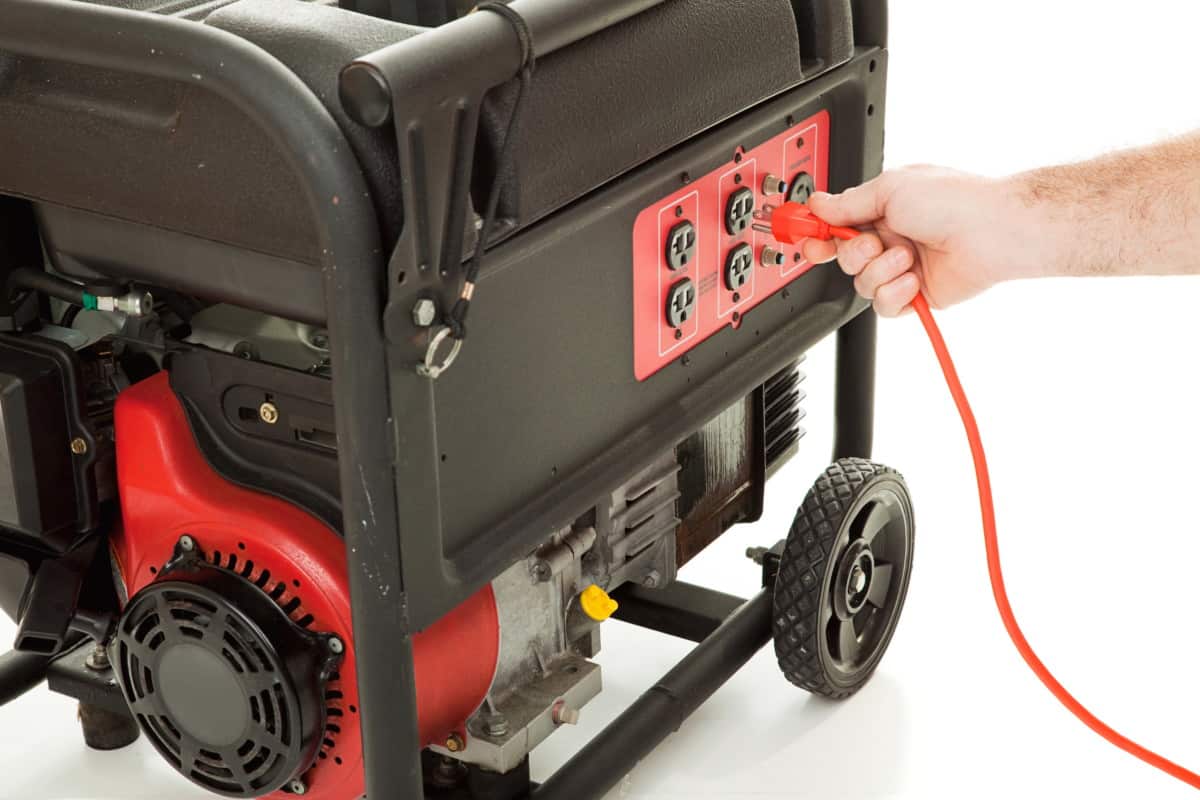
Yes, a generator can damage electronics, but it depends heavily on the type. Standard (conventional) generators produce power that fluctuates more than what comes out of your wall outlet, and that instability can stress or shorten the life of sensitive devices. Inverter generators solve this by producing clean, steady power that’s safe for laptops, phones, and TVs.
Not every generator is built the same, and the difference matters more for a laptop or a smart TV than it does for a string of shop lights.
Clean power vs. dirty power, in plain terms
Electricity from the grid arrives as a steady, consistent sine wave. Generators that produce power close to that same steady wave are often called “clean.” Generators that produce a rougher, more variable wave are called “dirty.”
Engineers measure how far a generator’s output drifts from that ideal wave using a number called total harmonic distortion, or THD. You don’t need to do the math yourself, but the short version: a lower THD means steadier, more grid-like power, and a higher THD means more distortion and more voltage swings. Inverter generators typically run under 3% THD, which is considered clean enough for sensitive electronics. Standard portable generators can run considerably higher, especially under a light or uneven load.
Standard (conventional) generators spin an engine at a fixed speed to produce AC power directly. That’s simple and reliable for basic loads like power tools, work lights, or a sump pump, but the output isn’t as steady, and voltage can swing more as the load changes.
Inverter generators produce power, convert it to DC, then invert it back to clean AC at a steady frequency. That extra step is what gives them a lower, more consistent THD, closer to wall power.
Which devices are actually at risk
Not everything you plug in is equally sensitive. Simple resistive loads, think incandescent lights, space heaters, or a basic power tool, tolerate rough power fine. The devices worth being careful with are the ones built around microprocessors and precision electronics:
- Laptops, desktops, and external hard drives
- Smart TVs and streaming devices
- Phones and tablets charging directly from an outlet
- CPAP machines and other sensitive medical equipment
- Modern appliances with digital control boards (some refrigerators, washers)
The risk isn’t usually a dramatic, one-time failure. It’s more often cumulative stress from repeated voltage swings, which can shorten a device’s working life or cause it to behave erratically.
When an inverter generator is the right call
If you plan to run a laptop, a CPAP machine, or anything with a sensitive control board during an outage, an inverter generator is the more defensible choice. It costs more per watt than a standard generator, but for households leaning on medical equipment or work-from-home electronics during an outage, that’s the safer trade.
When a surge protector (or UPS) is the right call
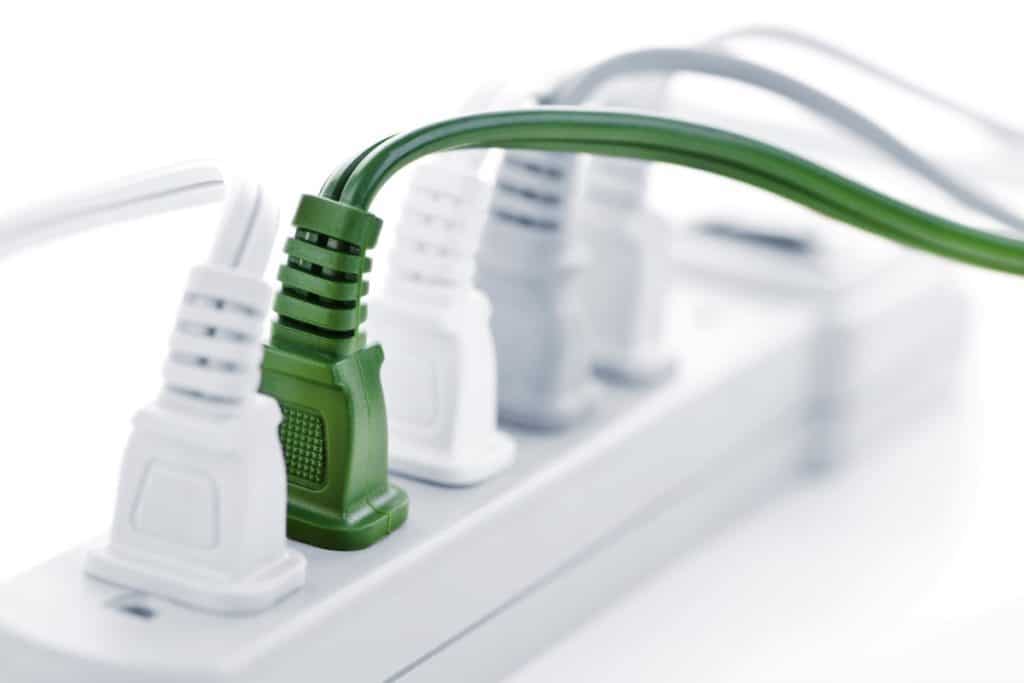
If you already own a standard generator and don’t want to replace it, a surge protector strip between the generator and your devices adds a layer of protection against sudden spikes, though it won’t smooth out the kind of ongoing voltage variation a standard generator can produce.
An uninterruptible power supply (UPS) goes a step further. It stores a buffer of power and switches in instantly if the incoming power drops out or spikes, which gives you a few minutes to save your work and shut a device down cleanly rather than losing power mid-task. If you pair a UPS with a generator, confirm the UPS is rated for generator input, since some models are picky about non-utility power.
Best inverter generators for powering electronic devices
The chart below compares our top three picks for the safest inverter generator for electronics. Click the name to see purchase options and current pricing.
| GENERATOR | NEXPOW Portable Power Station | WEN 56380i | CHAMPION 3400 |
|---|---|---|---|
| PORTABLE | Yes | Yes | Yes |
| WEIGHT | 3.1 lbs. | 111 lbs. | 95.7 lbs. |
| WATTS (W) | 150 | 3,800 | 3,400 |
| RUN TIME (hrs.) | 48 (depends greatly on usage) | 8.5 | 7.5 (gas)/14.5 (propane) |
| FUEL | Solar Battery | Gas (.7 gallon) | Gas (1.6 gallons) or Propane |
| START | Electric | Electric | Electric |
| PRICE | $ | $$ | $$ |
A good multi-outlet surge protector strip like this one is an easy add if you’re plugging several devices into a generator at once, standard or inverter.
What to consider when choosing an inverter generator
Beyond keeping your devices safe, a few more things matter when you look for a generator that is safe for electronics:
Portable vs. standby
- Portable: If you run a food truck, move often, or camp a lot, get a portable generator.
- Standby: These install in your house and usually turn on by themselves when the power goes out.
Weight
Weight matters less for a standby generator, since you won’t carry it around. For a portable generator, weight can be a deal-breaker. You need to lift it and move it without straining.
Wattage
Everyone’s power needs are different. If you need to run several devices and large appliances, look at higher wattages. If you only need to power a few small devices or one or two large appliances, a smaller wattage will do.
To figure out how much wattage you need, add up the wattages of every device and appliance you want to run. The wattage is printed on the device, the appliance, or in the user’s manual.
Run time
Running a food truck for hours a day needs more run time than charging your devices for an hour on a camping trip. Run time also tells you how often you’ll refill the tank.
If you need to run the generator for several days during a long power outage, get one with a long run time and a large tank, so you refill less.
Fuel
Generators run on propane or gas. Some run on both. Weigh the pros and cons of each to pick what fits you:
Propane:
- Tends to be less efficient than gas
- Better for the environment
- Sold in larger containers (generators can run for days without a refill)
- Easier to store
- Needs extra care in earthquake-prone areas
- Harder to install and maintain
Gas:
- More efficient than propane
- More reliable in cold weather
- Easier to find in an emergency
- Tanks hold only a few gallons (needs more refills on long runs)
- Easier to install
- Risky to store in wildfire-prone areas
- Can leave deposits in the engine (more maintenance, and it can wear the engine down over time)
Solar:
- A battery start
- Needs sunlight to charge
- Lower wattage (can only power a few small devices)
- Great for frequent travelers
- Better for the environment
- Lighter weight
Thermoelectric:
- A battery start
- Needs a temperature difference to charge (a hot side and a cold side)
- Can power only one device at a time
- Made specifically for powering electronics
- Great for frequent travelers
- Better for the environment
- Light weight
- The technology is still developing (not yet widely available)
Starting method
Generators start in two ways:
Recoil:
- A pull start (takes more physical effort)
- No charging needed (good for long-term use and off-grid use)
Electric:
- A battery start (much easier)
- Needs regular charging from an outlet or solar panel
Price
Price matters too. Generators run from $400 to $3,000. Very large ones can cost more.
If the generator installs into your home, installation can add hundreds to the base price. To save money, you can buy a used generator, but make sure it runs right before you pay.
One safety point that has nothing to do with electronics
Whichever generator you choose, run it outdoors, well away from windows, doors, and vents, never in a garage, carport, or enclosed porch, even with the door open. The CDC recommends operating a generator more than 20 feet from any window, door, or vent, since carbon monoxide can build to dangerous levels indoors within minutes, and it’s a far bigger risk than anything a surge could do to your laptop. The CPSC has more on generator placement and CO safety if you want the full picture.
Frequently asked questions
How do I know if my generator is damaging my electronics?
Look for signs like a laptop or TV that behaves erratically only when it’s plugged into the generator: flickering screens, random restarts, or a device that runs warmer than usual. A cheap plug-in outlet tester with a THD or voltage display can confirm rough power. If you don’t see a way to test it and you’re worried, treat any standard generator as unproven for sensitive electronics and add a surge protector or UPS as a buffer until you can confirm otherwise.
Can I run a CPAP machine on a standard generator?
You can, but it’s not the safer choice. Most CPAP machines have sensitive internal power supplies, and manufacturers generally recommend clean, stable power. An inverter generator is the better fit if a CPAP is part of your nightly routine, since it produces power close to what comes out of a wall outlet. If a standard generator is all you have, run the CPAP through a UPS rated for generator input as a middle-ground option.
Do all inverter generators cost more than standard generators?
Not by as much as they used to. Inverter technology has gotten cheaper over the past several years, and small and mid-size inverter models now sit much closer in price to standard generators of similar wattage. The price gap is still real, especially at higher wattages, but it’s narrower than it was when inverter generators were a niche product.
Is it safe to plug a laptop directly into any generator without protection?
It’s the riskiest option with a standard generator, since you have nothing between the generator’s rough output and your laptop’s power supply. A surge protector is a minimum safeguard, and a UPS is better still, since it also buffers ongoing voltage variation rather than just spikes. With an inverter generator, plugging in directly is generally fine, since the output is already close to clean wall power.
Charging your electronics safely: now you know
An inverter generator is the safer choice if you plan to run laptops, phones, a CPAP machine, or anything else with a sensitive control board. A standard generator can still work for basic loads, and a surge protector or UPS adds a layer of protection if that’s what you already own.
For the rest of your outage plan, see our guides on what to do during a power outage at night and keeping food cold during a long outage. If you’re comparing fuel types for a generator, our guide on cold weather and propane generators covers that ground too.
Coming soon
The part of being prepared most families never finish
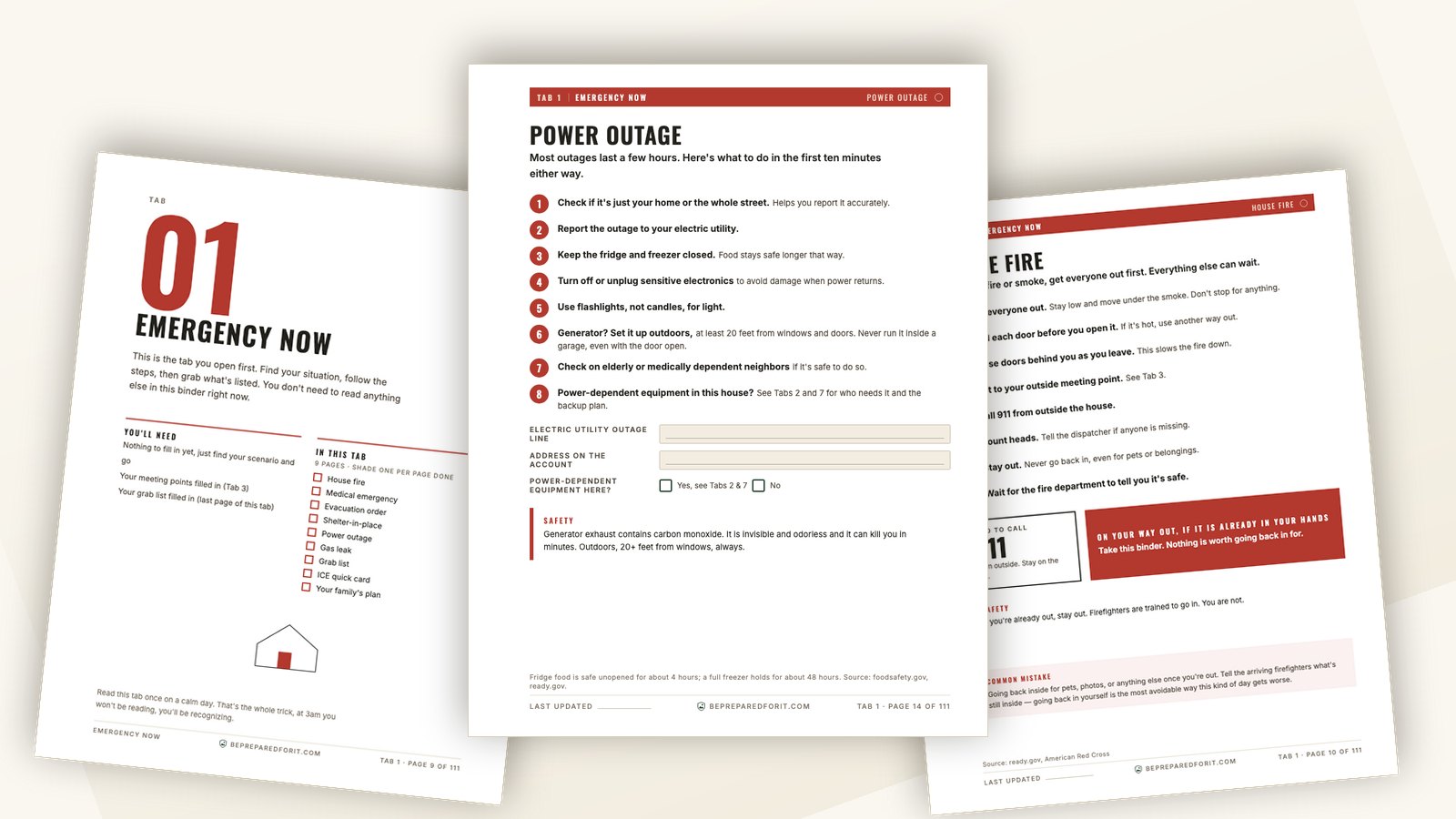
The Family Emergency Binder puts your family's contacts, documents, and plans in one place — a 15-minute quick start tonight, finished over a weekend. Join the list and we'll email you the moment it's ready, at the $19 launch price for a limited time.