We may earn a commission if you buy through our links, at no extra cost to you. We don't test every product ourselves. We read and weigh real buyer reviews to give a fair, balanced picture. How we research.
In this guide
For most trips, a LifeStraw beats purification tablets: it works instantly, removes bacteria and protozoa, and filters up to 1,000 liters, which is enough for wilderness travel in the U.S. and Canada. Tablets win where water may carry viruses, since a LifeStraw does not remove them, though treatment takes 30 minutes to several hours.
Planning a camping or backpacking trip means thinking about clean water. Many places lack safe water sources, so you need a reliable way to treat what you find. Either tool is worth a slot in your family’s 72-hour emergency kit too, not just your pack. This guide compares two common tools.
Either one can be the right pick under the right conditions. To decide, you need to know how water treatment works, how to size up your own needs, and why each tool fits some trips better than others.
How water treatment works
When you travel to places without reliable treated water, you have to plan how you’ll get safe drinking water. Sometimes bottled water works. But in remote areas, or on camping trips, you need an effective way to treat your water.
When you compare options, ask yourself six questions about each one:
- Does it filter out protozoa in adult and cyst forms?
- Does it remove viruses?
- Does it remove bacteria?
- How well does it filter out sediment and debris?
- How does it affect the taste of the water?
- How easy is it to use?
The first five are simple. The last one, convenience, has a few parts. Depending on where you go, how long you stay, and why you’re there, you may want quick access to drinkable water, or you may want to treat and store a large batch at once.
Taking time to learn how each option works makes the choice easier and helps you pick the one that fits your trip.
Why treating your water matters
A lot of people assume “natural” means “clean” or “healthy.” You see that idea all over advertising, and it shapes how people think about drinking water on the road.
Some folks know certain countries have unsafe tap water but assume the warning only applies to cities. In the U.S., travelers heading to Mexico are often told never to drink from the tap, and many think that only covers places like Tijuana and Mexico City.
Some water in very remote parts of the world is safe to drink. But modern water treatment is a big reason rural water can be safe to drink on wilderness trips in developed countries like the U.S.
Plenty of water that looks clean carries biological threats, so research your route and prepare if it passes through areas with unsafe water. Some facts on drinking water around the world:
- 1.8 billion people drink water contaminated with bacteria and viruses that “transmit diseases such as diarrhea, cholera, dysentery, typhoid, and polio.”
- Every country in Africa is considered to have “unsafe” tap water that needs treatment on remote trips.
- In Asia, only Brunei, Hong Kong, Israel, Japan, Singapore, and South Korea are considered to have safe tap water.
- Most of Eastern Europe is considered to have tap water you shouldn’t drink.
- In the Americas and Oceania, only the U.S., Canada, Australia, and New Zealand have tap water considered safe.
Safe water is about more than drinking. You need clean water to brush your teeth and wash dishes. Knowing whether a source is safe also tells you whether you can shower or swim in it.
How each option works
Water purification tablets and LifeStraw products treat contaminated water in different ways. To pick one, you need to know what each handles and how each works.
Water purification tablets
Water purification tablets come as chlorine, chlorine dioxide, or iodine. They break down pathogens like bacteria and viruses in the water. You collect water in a container, then drop in the number of tablets that batch calls for.
Depending on the brand, you may need one tablet per liter or several. Treatment time varies too, from 30 minutes to several hours. Tablets don’t last forever once they’re in your kit; see do water purification tablets expire before you count on an old box.
Tablets differ in what they handle. Some treat all kinds of contaminants, while others handle bacteria only. If you go with tablets, make sure the type you buy can treat the water from the sources you’ll use.
LifeStraw
Many companies make water purification tablets in many versions. LifeStraw products are one specific line of water purification devices, first made in 2005. The design was built to remove harmful microorganisms from water for people living in sub-Saharan Africa.
It started as a humanitarian product to help poor, remote communities get clean water and became a staple for travelers worldwide. Besides being popular with campers and backpackers, LifeStraw filters are still used in water access projects in dozens of countries.
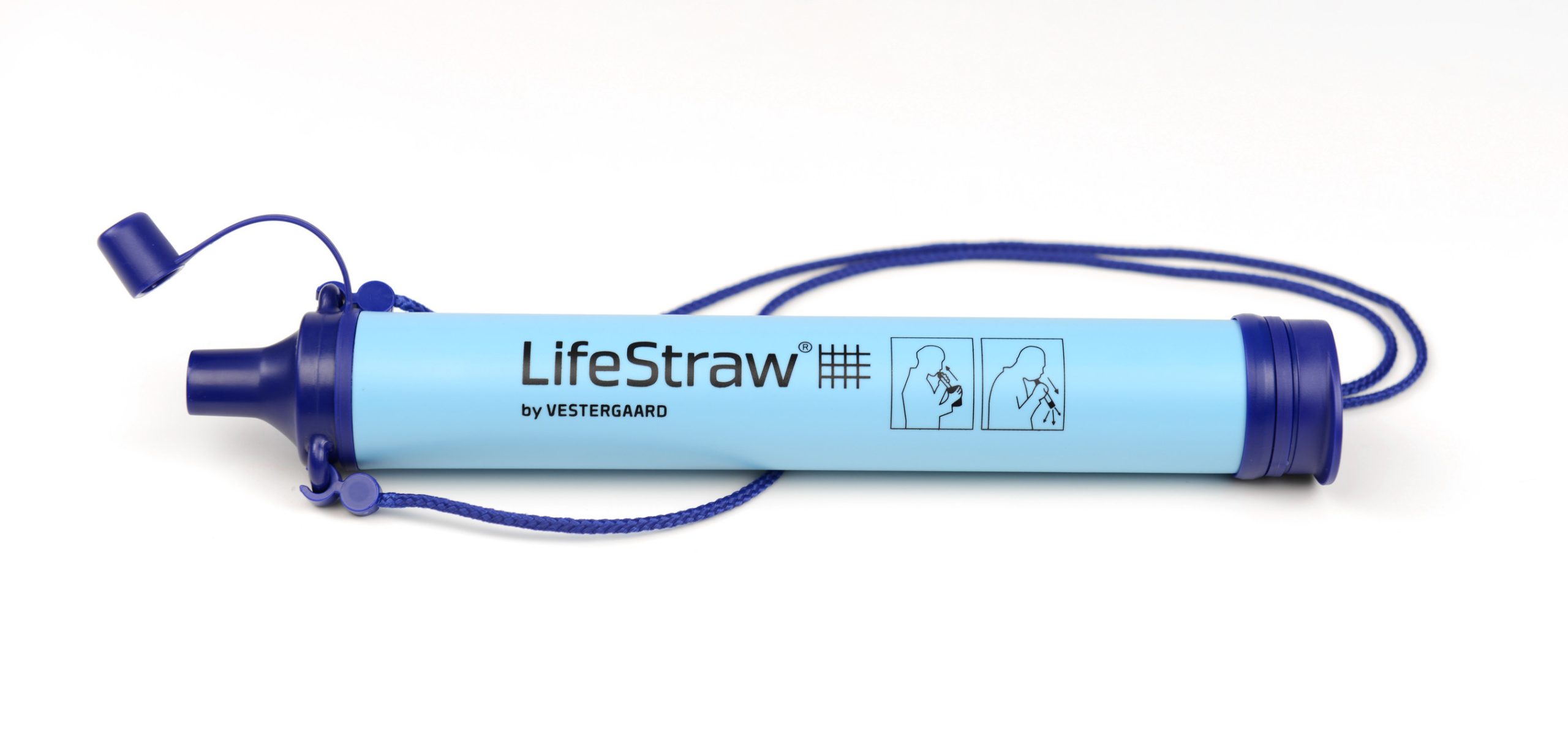
The name says it all. A LifeStraw is shaped and used like an oversized straw. You put the bottom end into a water source and draw water through the filter using the same suction you’d use on a normal straw.
The LifeStraw filter removes bacteria, protozoa, and debris. A single LifeStraw is rated to filter up to 1,000 liters of contaminated water straight from natural sources.
Pros and cons of each option
Each option has trade-offs that make it right for different places, trips, and preferences. Here are the upsides and downsides of both.
Water purification tablets
One of the biggest drawbacks of water purification tablets is the time they take. Some finish in as little as 30 minutes, but that’s not the norm. Most tablets that remove a wide range of contaminants take at least a couple of hours.
If you need water fast, like on a hard hiking day, you may not want to sit and wait for it to become safe. The fix is to treat the water before you need it.
That points to an upside of tablets: you can treat a large batch at once and store it for later. Traveling with a big group makes that even more useful. It won’t help backpackers who stay mobile and pack as light as possible, though.
Hauling a large container, full or empty, can be a real hassle, so tablets work best for long-term campers or people in parts of developing countries where bottled water isn’t ideal. Another downside to tablets is the taste they leave behind.
Tablets are one of the best ways to remove bacteria, viruses, and protozoa, but they won’t remove sediment, and they often leave an unpleasant taste, especially iodine tablets. You can fix the taste with other tablets, but that’s another cost and another item to carry.
LifeStraw
The LifeStraw’s biggest drawback is that it doesn’t remove viruses well. That’s not a flaw in the design. Most filters don’t have pores small enough to catch viruses. So if virus-contaminated water is a concern where you’re going, as it is in many developing countries, the LifeStraw isn’t the right tool.
But if you’re in rural or wilderness areas of a country like the U.S., the LifeStraw is an easy-to-carry, quick way to get drinkable water whenever you need it. In developed countries you can usually shower without treating natural water, so not being able to treat and store water with the LifeStraw is less likely to matter.
You also don’t have to count out the right number of tablets, since each tablet is single-use and you’ll need new ones when your treated water runs out. The LifeStraw’s 1,000-liter rating means a single straw can last a camper a long time.
Both options run a little pricey compared to other camping gear. The roughly $10 packs of tablets add up over time, while a single LifeStraw lasts months and costs $20. The straw also removes sediment and debris that can make natural water unpleasant to drink.
If you’re only traveling where water sources are reasonably safe, a filter is likely your best bet, since you won’t need protection from virus-borne diseases. Compared to other filters on the market, the LifeStraw is simple to use, with no batteries, assembly, or maintenance beyond regular replacements.
Keep one thing clear: despite what some LifeStraw fans claim, this product does not remove viruses. It isn’t recommended in less developed countries that are more likely to have contaminated water because of weak sewage systems and public water treatment.
Other ways to purify water
Water purification tablets and the LifeStraw are among the most popular choices, but there are other portable options too, including purifying with charcoal, UV purifiers, chemical tablets, and more.
Some backpacking and wilderness blogs recommend low-cost methods that might surprise you, like using sunlight or bleach.
Using sunlight has been done in developing countries for a long time. It works on the same idea as UV purifiers: UV light can neutralize harmful contaminants in water. The same UV light that damages your skin’s DNA breaks down bacteria and viruses in collected water.
You collect water in a clear container and leave it in direct sunlight for three or more hours. In that time, the UV light is expected to break down contaminants and treat the water. Another method is to add about eight drops of bleach and let it sit for a similar amount of time.
These methods can work, but they aren’t foolproof, especially where water is heavily contaminated or the contaminants don’t respond to these treatments. The sunlight method also depends on having reliably bright sun, which you won’t always get.
Boiling is more reliable, but you won’t always have a heat source, storage for the treated water, or time to boil it long enough. So boiling works best when you’ll stay in one place a while or you know it handles the local contaminants.
Choosing the right option for you
When you plan a trip, research the best ways to get clean water, because it matters for your health. Both water purification tablets and LifeStraw products can treat water from unknown sources, but the right pick depends on where you go and how long you stay.
For long-term campers or travelers visiting developed countries who’ll stay in one spot for days or weeks, the slower tablet method can be the best choice.
Waiting for water to treat gets old, but you’ll usually have the space and time for it, and it gives you clean water for showering, brushing your teeth, and other tasks. The LifeStraw, on the other hand, is a backpacking-friendly way to drink safely from natural water sources fast.
If your destination makes a LifeStraw reasonably safe, it’s both convenient and often cheaper, especially on a long trip where you’d buy several packs of tablets. Those costs can quickly pass the price of a LifeStraw that lasts several months before it needs replacing.
A LifeStraw also spares you the taste many tablets add, and it filters out sediment common in natural water. Put safety ahead of convenience and comfort. Whichever option you use should make your trip better, not leave you open to a serious illness.
Coming soon
The part of being prepared most families never finish
The Family Emergency Binder puts your family's contacts, documents, and plans in one place — a 15-minute quick start tonight, finished over a weekend. Join the list and we'll email you the moment it's ready, at the $19 launch price for a limited time.