Skills & Know-How
How to Store Water for an Emergency in a Small Space
We may earn a commission if you buy through our links, at no extra cost to you. We don't test every product ourselves. We read and weigh real buyer reviews to give a fair, balanced picture. How we research.
In this guide
For a small space, store one gallon of water per person per day, at least three gallons per person for 72 hours, using slim, stackable, or collapsible HDPE (#2) or PP (#5) containers tucked under beds, in closets, or above cabinets. Rotate self-filled water every six months; sealed bottled water keeps one to two years.
Water matters in any emergency, but a packed closet and a small kitchen make storing it feel impossible. The fix is not more space. It is the space you already have. Once you see where fifteen gallons can hide in a studio apartment, the square footage stops being the problem.
How much water you actually need to store
Figure out what you are storing for before you start filling bottles. A three-day power outage is different from a two-week event. The standard rule, from both Ready.gov and the CDC, is one gallon per person per day, which covers drinking and basic hygiene. That is three gallons minimum for a 72-hour kit. Both agencies recommend building up to a two-week supply if your space allows it. Adjust for your climate, how active you are, and your family size; hot climates and higher activity levels can push individual needs well past a gallon.
Break that gallon down and it goes further than you’d think. About half a gallon covers drinking. The rest stretches across cooking, a quick wipe-down or partial shower, and flushing the toilet if the water is out too. Add extra if you have pets, since they need water on top of your family’s supply, and add more for kids, who dehydrate faster than adults.
Store water in light, stackable containers and rotate it on a schedule, which helps a lot when you live in a small place. A heavy-duty manual can opener is worth keeping nearby for power outages, so you can open canned food without electricity. Do the math instead of guessing: a couple needs six gallons for three days. Do not overstock, since wasted space works against you. Know your number, then make every inch count.
The best containers for tight spaces
Once you know your target volume, the next job is finding containers that fit where you live. Look for ones that slide under beds, stack in closets, or tuck behind furniture. Rectangular jugs waste less space than round ones when you line them up.
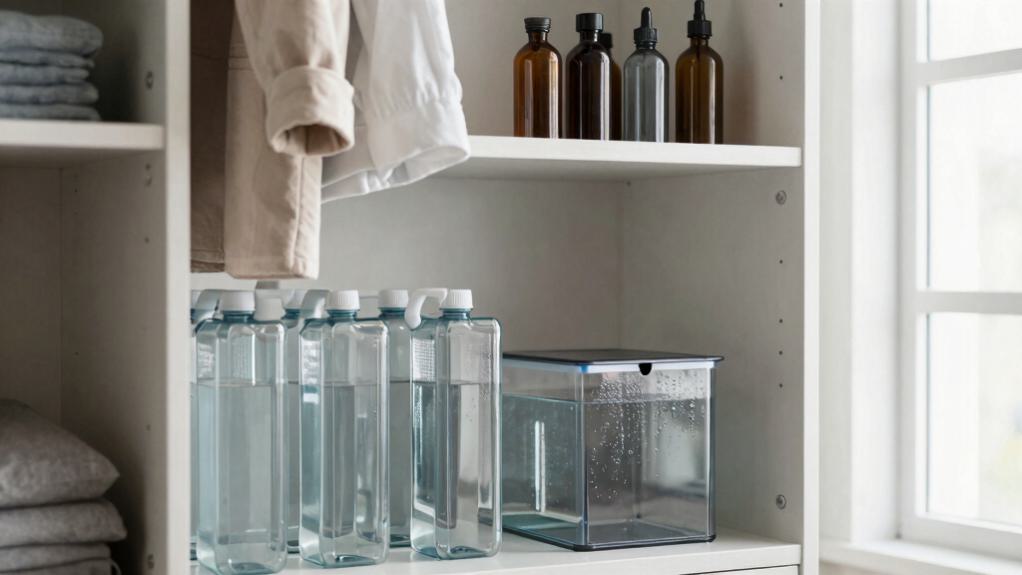
Good space-saving options include collapsible water bags that lie flat when empty, slim containers built for narrow gaps, and cubes that stack upward instead of spreading out. You can also reuse clean soda bottles or buy slim tanks made for tight spots.
Not every plastic is safe for long-term water storage, either. The CDC recommends FDA-approved food-grade containers specifically, and skipping anything that isn’t food-grade if you have a choice. As a practical guide, check the recycling number stamped on the bottom: HDPE (#2) and PP (#5) hold up well and don’t leach into the water, and LDPE (#4) works too, though it breaks down a little faster over time. Skip anything marked PVC (#3), and skip glass, since it’s heavy and breaks in a tight space where you can’t afford the mess. Never reuse a container that held milk or juice, or anything that held a toxic chemical like bleach or pesticide; those leave residue behind that’s hard to fully clean out.
Watch the weight. Full containers get heavy fast, so pick sizes you can actually move. Two to five gallons is the sweet spot for most small spaces. Collapsible water bags work well when space is very tight, and they pair nicely with other compact containers.
Where to hide 15 gallons in a tiny home
You have more storage than it feels like. Look at the dead space instead of the open floor.
- Under beds: slim, stackable containers slide in easily and stay out of sight. This alone can hold a family’s full 3-day supply.
- Closet floors: stand containers in the back corner behind shoes and bins. A shelf riser above them recovers even more room.
- Above kitchen cabinets: most kitchens have a gap between the top of the cabinets and the ceiling. It’s built for exactly this.
- Under the bathroom sink: a couple of slim jugs fit next to your cleaning supplies without crowding them out.
- Coat closet or entryway floor: stack collapsible containers there and they double as a grab point on your way out the door.
- Behind the couch or a bookcase: a few inches of gap along the wall holds more than you’d guess.
Spread your supply across two or three of these spots instead of one big stash. If you have to leave in a hurry, you’re not stuck digging one bag out from under a bed.
How to keep stored water safe long-term
Water you hide and forget can grow bacteria, so rotate your supply every six months to keep it fresh.
Start by treating it right. EPA’s emergency disinfection guidance calls for about 1/8 teaspoon (roughly eight drops) of unscented bleach per gallon, or boiling for one minute, if you are filling the containers yourself. Let everything cool fully before you seal it. If you’d rather skip the bleach math, purification tablets do the same job with less guesswork, though it helps to know how long they stay good on the shelf.
Label as you go: write the fill date on each container with a permanent marker. Cover it with clear packing tape so it does not smudge. Put newer containers behind older ones so you grab the oldest first.
Keep everything in cool, dark spots. Heat breaks down plastic and invites algae. Check the caps monthly and tighten any that have loosened. Your small-space setup only works if the water is still drinkable when you need it.
When and how to rotate your supply
You have tucked water into every clever spot in your apartment, but it will not stay fresh forever. You need a system for swapping it out before it goes stale.
Sealed store-bought bottles last one to two years. Containers you fill yourself need rotating every six months. Mark the dates and set phone reminders. A regular schedule keeps the taste fine and the contamination risk low.
Use the oldest first:
- Drink from your oldest containers during workouts or cooking
- Refill right away with fresh, treated water
- Clean empties with diluted bleach before refilling
- Replace any bottle that is cracked or cloudy
Do not pour old water down the drain. Use it on plants, to flush toilets, or for cooking. In a tight space, rotation doubles as an inventory check. You will spot leaks, algae, or pests hiding behind the couch.
Where to find backup water if you didn’t prepare in time
If your stored supply runs short, your home already has more water sitting in it than you’d expect.
Check the freezer first. Any ice you have melts down into safe drinking water, as long as it was made with clean water to begin with. Your water heater tank holds several gallons too; shut off its power source, then drain it from the tap at the bottom. The pipes themselves hold some water as well. Open a faucet at the highest point in the house to help pull down what’s sitting in the lines below it.
The toilet tank, not the bowl, is also usable in a real pinch, as long as no cleaning tablets or chemicals have ever been added to it. And if you’re eating canned vegetables or beans, don’t pour off the liquid. Drink it. It counts.
Treat anything from these sources the same way you’d treat tap water before you drink it: boil it for a minute, or add the bleach ratio above.
Frequently asked questions
Can I store water in my bathtub?
Yes. To get the most out of it, line the tub with a heavy-duty plastic bladder made for emergency water storage. Fill it right before an expected emergency, since you cannot use the tub otherwise. The liner keeps the water clean and prevents contamination. When you are done, drain it and get your bathroom back. It is a practical, short-term option for small-space living.
Is rainwater safe for emergency drinking?
No. Untreated rainwater is not safe to drink, so filter and purify it first.
Collect it from clean roof surfaces, then boil it for one minute or use purification tablets. Do not drink it straight, since rainwater picks up contaminants from the air and surfaces.
Store the treated water in food-grade containers. You have options, but the safety steps are not optional.
Should I add bleach to stored water?
Yes, unscented bleach helps stored water last longer. Use 8 drops per gallon, then wait 30 minutes before sealing. A few rules: never mix it with other chemicals, store it in a cool dark place, and label your containers clearly. Treated water stays safe for 6 to 12 months. Check for a faint chlorine smell after treatment. If there is none, repeat the process.
Can frozen water bottles replace stored gallons?
Frozen bottles can add to your supply, but they do not replace it. They give you drinking water and help keep food cold when the power is out, though freezer space limits how many you can keep. Rotate them every six months as the ice slowly evaporates. Use them day to day, then refill. Do not rely on frozen bottles alone. Keep room-temperature gallons for water you can grab right away.
Does stored water expire or go bad?
Properly stored water does not really expire, but it can go bad. Rotate your supply every 6 to 12 months to cut the risk from plastic leaching or airborne bacteria. Keep containers sealed, cool, and dark to make it last. If it tastes flat, shake it to add oxygen back in. Check for cloudiness or odd smells before drinking, and when in doubt, purify it.
Conclusion
You can handle this. Start small with stackable containers under beds or behind furniture, rotate every six months, and label everything clearly. Three gallons per person covers your 72-hour base, then build up as space allows. Stay consistent and you will rest easier knowing you are ready.
Coming soon
The part of being prepared most families never finish
The Family Emergency Binder puts your family's contacts, documents, and plans in one place — a 15-minute quick start tonight, finished over a weekend. Join the list and we'll email you the moment it's ready, at the $19 launch price for a limited time.