Skills & Know-How
How to Choose the Right Fire Extinguisher for Your Home
We may earn a commission if you buy through our links, at no extra cost to you. We don't test every product ourselves. We read and weigh real buyer reviews to give a fair, balanced picture. How we research.
In this guide
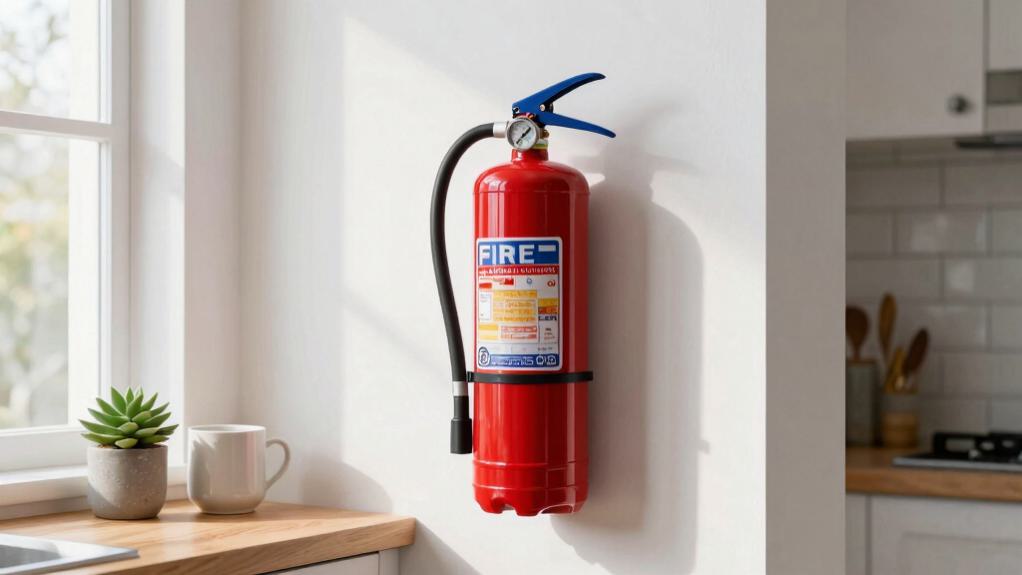
Most homes need one ABC-rated fire extinguisher per floor, mounted near exits, sized 2 to 5 pounds so anyone can lift and aim it fast. Add a Class K extinguisher in the kitchen if you deep fry; a standard ABC unit sprayed on a grease fire can scatter burning oil instead of putting it out.
Not every fire extinguisher works on every fire. Buy the wrong type, the wrong size, or stash it in the wrong spot, and it won’t help when you need it. Here is how to read the letters and numbers, what to check before you buy, and where to mount it so it’s ready when your kitchen (or garage, or car) needs it.
What fire class could start in your home
Pick an extinguisher based on the kinds of fires that can actually start where you live. Start by learning the fire class types and which rooms each one tends to show up in; the U.S. Fire Administration breaks each class down if you want the full picture.
Class A fires involve ordinary stuff that burns: wood, paper, and fabric. Think curtains, furniture, or trash. Class B fires come from flammable liquids like gasoline, paint, or cooking oils in the garage or kitchen. Class C fires come from electrical equipment such as faulty wiring, appliances, or overloaded outlets. Class K fires are cooking oils and fats in the kitchen. Class D fires involve burning metals; they’re rare outside industrial shops, so most homes don’t need to plan for one.
Most homes face more than one risk. Your kitchen alone carries Class A, B, and K hazards. Bedrooms and living areas carry Class A and C. Match the classes to the rooms and you’ll know what to buy before anything sparks.
Why ABC-rated extinguishers handle most household fires
An ABC-rated extinguisher covers three fire classes: ordinary combustibles, flammable liquids, and electrical equipment. One tool handles kitchen grease fires, garage oil spills, and a living room electrical short. That is why it works for most homes.
You don’t need a separate extinguisher for every room. That gets expensive fast. One ABC unit covers about 90% of what you’ll actually run into at home.
A few common mistakes to avoid. People reach for an extinguisher on a cooking fire when a lid works better, or they aim at the tips of the flames instead of the base. Read the label. Show your household how it works. Put extinguishers where you can grab them fast, by exits, not buried in a closet. How ready you are matters more than the rating.
How to read the numbers on an extinguisher label
You’ve got the right type. Now look at the numbers in front of the letters. Per the U.S. Fire Administration’s guide to reading the label, the number before the A is a multiple of 1.25 gallons of water-equivalent firefighting power on ordinary combustibles, and the number before the B is the size, in square feet, of a flammable-liquid fire the unit can put out. The C carries no number; it just means the agent is safe to use on live electrical equipment.
A 4-A rating is roughly equivalent to 5 gallons of water on wood or paper fires. A 20-B extinguisher can knock down 20 square feet of flammable-liquid fire, double what a 10-B unit covers. Those numbers decide whether you stop a kitchen grease fire or watch it spread.
Snap a photo of the label during your monthly checks. You’ll track the capacity without squinting at worn print. Replace a unit when the numbers fade. You can’t fight what you can’t measure.
Checking the label also confirms you have the right fire class ratings for your home. Where to place extinguishers and how many to keep depends on those same details, covered below.
What size fire extinguisher can you actually use
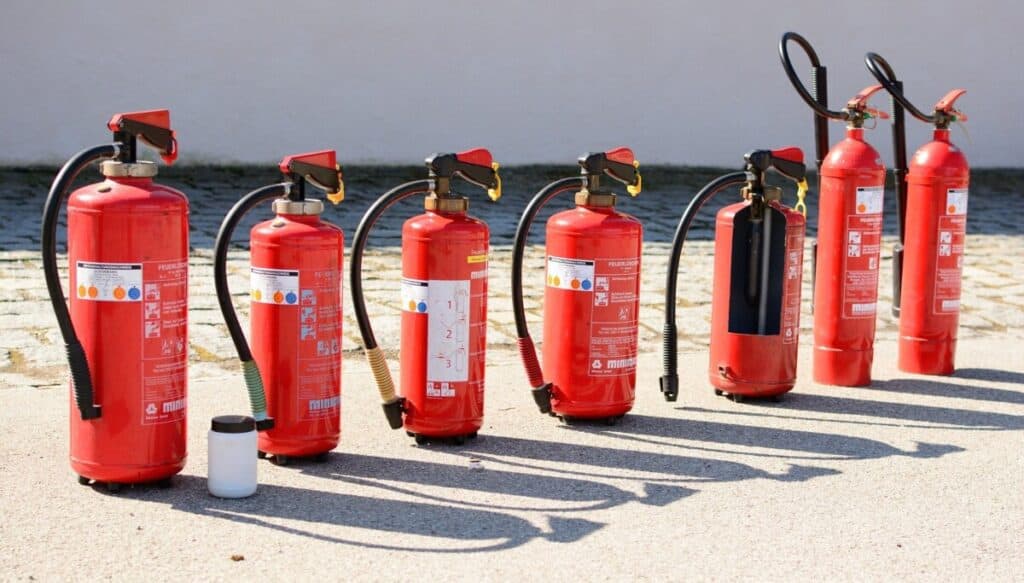
Size matters more than people think. A 10-pound extinguisher won’t help if you can’t lift it fast in an emergency.
Think about what you can handle first. Most adults can manage a 2- to 5-pound unit with one hand. Those smaller sizes fit kitchen cabinets and vehicle mounts. Weight isn’t the only thing, though. Check your reach and how easily you can move with it.
Larger extinguishers, 10 pounds and up, work in a garage or workshop but need two hands. Don’t count on a burst of strength under stress to make up for a unit that is too heavy.
Mount extinguishers where you can reach them. Test the weight before you buy. A smaller extinguisher you can actually use beats a heavy one you leave on the wall. Match the size to your ability, not just your fire risk.
Sizing an extinguisher comes down to whether you can lift it, aim it, and move with it. Your own ability should guide the choice.
What to check before you buy
A few basics matter more than the brand name.
Look at the pressure gauge before you leave the store. It should read in the green, or “full,” not low or empty. Check the manufacture date on the label too. You want one made within the last year or so, not one that’s sat on a shelf for a decade.
Price is a rough guide to what you’re getting. Small single-use extinguishers for a car or a drawer run about $15 to $20. Multi-purpose units built for a whole home usually run $30 to $80. You don’t need the priciest option; you need one you’ll actually use.
Once you get it home, register it with the manufacturer. That’s how you’ll hear about a recall on your model, and it takes two minutes.
Where to place extinguishers for fast emergency access
Keep things so you’re never more than 40 feet from an extinguisher. Mount them along your exit routes, not behind clutter or inside cabinets.
Put a multi-purpose extinguisher on each floor, near kitchens, garages, and workshops where fires start most. Keep them in plain sight. Eye-level mounting beats floor storage, where flames could block your reach. Bedrooms need coverage too, since you can’t run through fire to grab one somewhere else.
Check monthly that the pressure gauge reads green and the pull-pin is intact. Replace a unit after any use or once the expiration date passes. Lift it now and then to feel the weight, since a full extinguisher gets heavy and you’ll want a hand free for your way out.
Placement decides whether you fight the fire or get out. Plan for both. It also helps to line up your extinguishers with the rest of your home safety setup, like smoke and carbon monoxide alarms that warn you early.
Where to store it
Placement tells you which room. Storage tells you how to mount it there so it’s actually ready to use.
Store extinguishers upright, not on their side. Lying flat lets the suppressant settle at the bottom of the tank over time, so it won’t discharge evenly when you need it. Mount larger, heavier units lower on the wall, aiming for 3 to 5.5 feet off the floor, so any adult in the house can reach and lift it without straining. NFPA is direct that kids shouldn’t be the ones operating an extinguisher, even in a pinch; the safer instruction for a child in your house is to get out and call 911, not to grab the unit off the wall.
They hold up fine across a wide temperature range, roughly -40°F to 120°F, so a garage or a car works fine. Above 120°F the discharge time can drop; below -40°F the valve and hose can crack. If your garage regularly runs hotter than that, find another spot.
Keep it visible. A wall-mounted bracket in plain sight beats one buried in a cabinet, and simple signage (the red, white, and black PULL-AIM-SQUEEZE-SWEEP graphic you’ve probably seen) helps a guest or babysitter find and use it fast if you’re not home when it matters.
Beyond the kitchen and garage, a few more spots deserve their own unit:
- Laundry room. Dryer lint fires start here more than people expect. Keep the vent clean and an extinguisher close.
- Near the fireplace. Add a fire screen too, so embers can’t reach anything flammable nearby.
- Car. A small 2-pound disposable unit with mounting hardware keeps it from rolling around your trunk. See our guide on keeping a fire extinguisher in your car for what’s worth knowing before you buy one for the road.
If you store gas cans or spare fuel for a generator in the garage, keep the extinguisher within easy reach of that too. Our guide to storing fuel safely covers the rest of that setup.
When you need a Class K for kitchen grease fires
Grease fires burn hotter than ordinary flames, and they reignite if you use water or the wrong extinguisher. That is when you need a Class K.
Class K extinguishers use wet chemical agents that cool the burning oil and cut off oxygen. They’re worth it if you do serious cooking: deep frying, wok work, or a commercial-style range at home. They’re built for vegetable oils, animal fats, and other cooking fuels.
Using the wrong extinguisher here is dangerous. Spray a standard ABC unit on grease and it scatters burning oil. Use the right tool and mount it within 30 feet of your cooking surface, but not directly above the stove, where heat could damage it.
Check your Class K once a year. Replace it after any use, since a partial discharge drops the pressure. A Class K extinguisher handles cooking-oil fires with wet chemical agents that form a soapy layer and help stop reignition.
Rechargeable vs. disposable: which saves money long-term
Disposable extinguishers have plastic valves and get thrown out once they’re used or expired. They’re the cheaper upfront option, usually $15 to $20 for a single-use home unit.
Rechargeable extinguishers have metal valves and can be inspected, serviced, and refilled instead of replaced. They cost more upfront, usually $30 to $80 for a multi-purpose home unit, but refilling one after use costs far less than buying a new one. If you’ll actually keep up with the inspections, rechargeable pays for itself. If you won’t, buy disposable and replace it on schedule.
Frequently asked questions
How long do fire extinguishers last before expiring?
Most last 5 to 15 years, though the expiration date varies by type and manufacturer. Check the label or pressure gauge monthly. If you see corrosion, damage, or a passed date, replace the unit. Don’t wait for an emergency to find out it’s dead. While you’re at it, check your first aid kit for expired supplies too; the same rule applies there.
Can I use an extinguisher on a person on fire?
You can, but be careful. For small flames, stop, drop, and roll works better.
A fire extinguisher can hurt someone, since the chemical agents can cause breathing trouble and burns. Aim at the flames, not the person, and get medical help right away.
Do I need training to operate a home extinguisher?
You don’t need formal training, but learn the basics. Grab your extinguisher and practice the PASS steps: Pull, Aim, Squeeze, Sweep. You’ll feel readier if you’ve held it before you ever need it. Read the instructions now, because panic makes reading hard later. A quick run-through beats nothing.
Should I buy a fire extinguisher online or in-store?
Either works. Buying in store lets you inspect the unit and ask staff questions. Online gives you more selection, but you wait for delivery. If you need one today, grab it locally. If you’re comparing options or want a specialty unit, order online. Either way, check the manufacture date and pressure gauge before you buy.
How do I safely dispose of old extinguishers?
Don’t put old extinguishers in your trash or recycling bin. Check your local recycling options first, since many household hazardous waste facilities take them. You can also ask your fire department or the manufacturer. If it’s partly used, discharge it safely outdoors first, then follow your community’s disposal instructions.
Conclusion
You’ve got what you need to set this up. Get an ABC-rated extinguisher that’s light enough to handle fast, put one on each floor near the trouble spots, and add a Class K for the kitchen. Store it upright, check the gauge monthly, and schedule yearly service. A few smart choices now could save your home later, so go pick yours out before you forget.
Coming soon
The part of being prepared most families never finish
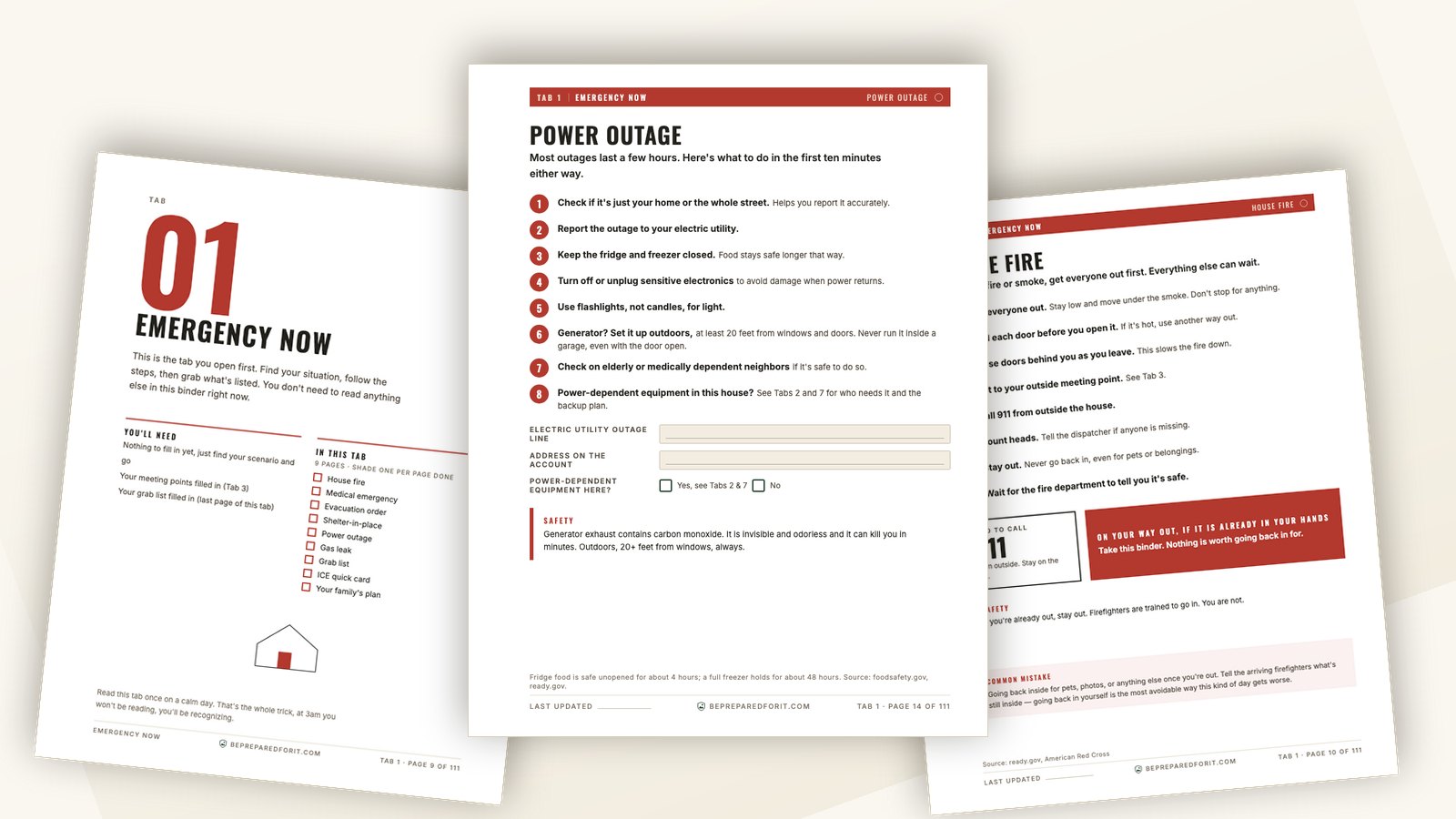
The Family Emergency Binder puts your family's contacts, documents, and plans in one place — a 15-minute quick start tonight, finished over a weekend. Join the list and we'll email you the moment it's ready, at the $19 launch price for a limited time.