Emergencies & Disasters
Boil Water Notice: What to Do, What's Safe, and a Free Fridge Card
General information only, not professional advice. In an emergency, call 911 and follow local officials. How we use sources
In this guide
During a boil water notice, first read your utility’s notice and check three things: whether your address is in the affected area, whether it is a boil, do-not-drink or do-not-use advisory, and how long it says to boil. For a boil notice, the CDC baseline is bottled water or a rolling boil for 1 full minute (3 minutes above 6,500 feet, or your utility’s time if it is longer) for drinking, cooking, brushing teeth, ice, formula and the pet bowl, while showering without swallowing, laundry and handwashing with soap are generally fine. The free printable puts those rules on a card for the fridge, with a second page for the day the notice lifts.
Austin Water explains that it issues notices after events like a large main break, a widespread loss of pressure or a routine sample result, sometimes as a precaution while lab results are pending.
First, check that the notice covers you and what kind it is
Start with your water utility’s website, text alerts or social accounts, and look for a map or street list of the affected area. Atlanta’s watershed department, for example, says its advisory is “only in effect for the affected areas identified on the map.”
Then read which kind of advisory it is, because they are not the same. The CDC describes three types of drinking water advisories:
- Boil water: germs may be in the water. Boiling kills them.
- Do not drink: use commercially bottled water for drinking and cooking. Boiling will not make water with chemicals or toxins safe.
- Do not use: use bottled water for everything, because even touching the tap water could be dangerous.
This article covers the first one. Under a “do not drink” notice, skip the boiling and use bottled water for drinking and cooking. Under “do not use,” use bottled water for everything.
What you can and can’t use tap water for
If it goes in your mouth or touches food, boil it. If it only touches your skin or your clothes, tap water is generally fine, with two exceptions: sponge-bathe babies and toddlers, and keep it out of deep or post-surgical wounds. This table follows the CDC’s guidance for boil water advisories at home and the TCEQ’s customer list.
| Use | Tap water OK? | What to do |
|---|---|---|
| Drinking, coffee, tea, juice from concentrate | No | Boiled and cooled, or bottled |
| Cooking and washing produce | No | Boiled or bottled |
| Wiping food prep surfaces | No | Boiled water |
| Brushing teeth | No | Boiled or bottled |
| Ice | No | Make new ice from boiled or bottled water |
| Baby formula and bottles | No | Ready-to-use formula if possible; sanitize bottles |
| Pets | No | Boiled and cooled, or bottled |
| Washing hands | Usually yes | Soap and water, scrub 20 seconds |
| Showers and baths | Yes | Don’t swallow any; sponge-bathe babies and toddlers; keep it out of deep or post-surgical wounds |
| Laundry | Yes | Wash as usual |
| Dishwasher | Usually, with conditions | Final rinse of at least 150°F or a sanitize cycle, unless your utility says not to |
| Hand-washing dishes | Depends on your notice | Hot wash plus a bleach soak (CDC, TCEQ), or boiled water if your utility says so |
Handwashing is the one to double-check against your own notice. The CDC says that “in many cases” you can use tap water and soap, and to follow your local public health officials. If you have no soap and water, a hand sanitizer with at least 60% alcohol is the fallback.
How to boil water so it is safe
Here is the method from the CDC’s guide to making water safe in an emergency:
- If the water looks cloudy, pour it through a clean cloth, paper towel or coffee filter first.
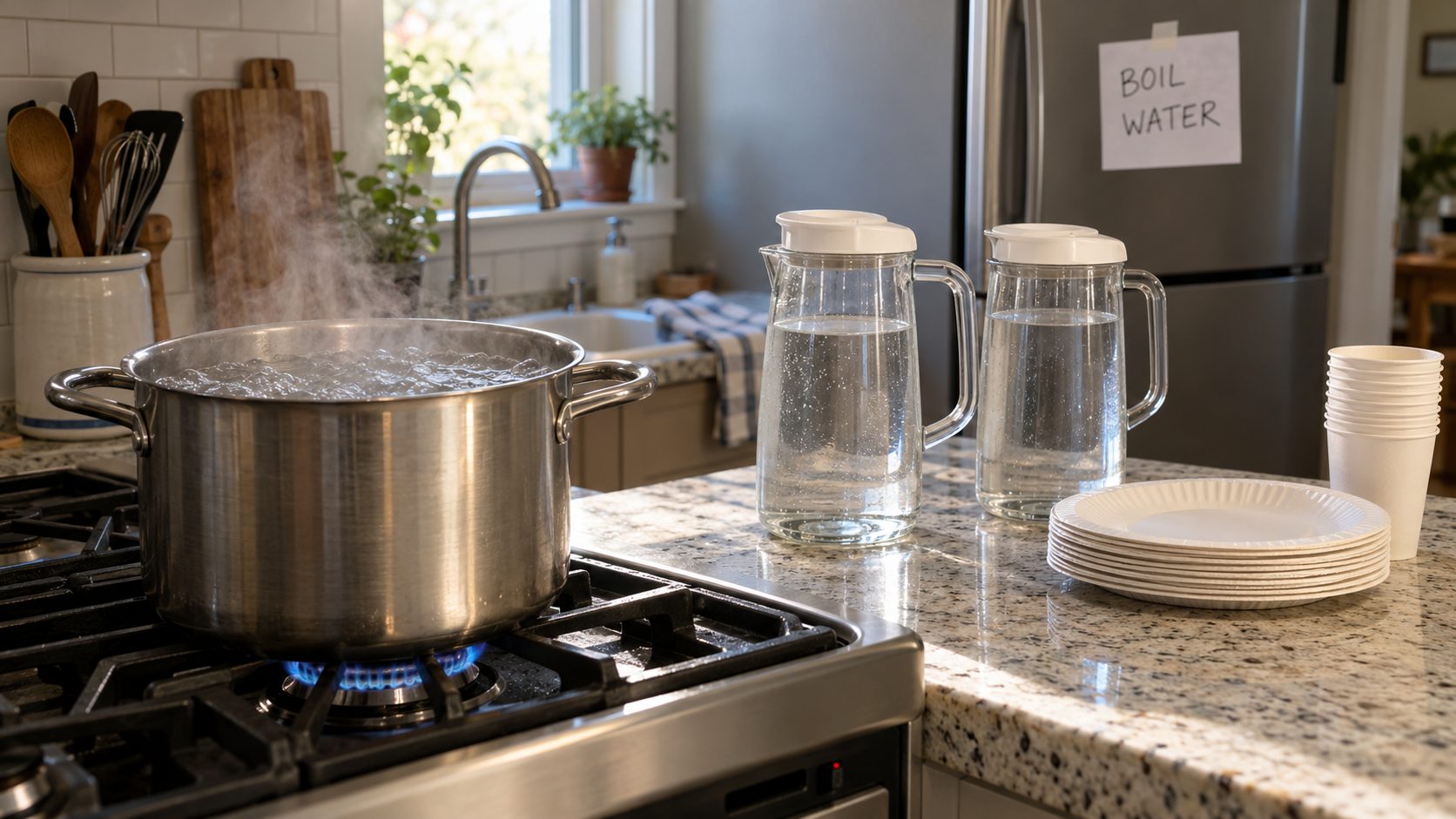
- Bring it to a rolling boil, where big bubbles keep rising from the bottom of the pot.
- Keep it there for 1 minute. Above 6,500 feet, go 3 minutes.
- Let it cool, then store it in clean, sanitized containers with tight covers.
Your notice may give a different number. The Texas Commission on Environmental Quality and Austin Water both tell customers to boil for 2 minutes. The CDC baseline is 1 minute, but if your utility asks for longer, do what your utility says.
Can’t boil? Bleach is a backup with limits
Boiling comes first. The CDC calls it “the best way to kill germs in water” and warns that chemical disinfectants “may not kill parasites.” If you truly can’t boil and have no bottled water, the CDC says unscented household chlorine bleach can kill most germs in clear water. This backup is for a boil water notice only. If your notice says do not drink or do not use, the CDC says boiling or disinfecting will not make water with chemicals or toxins safe, so use bottled water. These are the CDC’s bleach amounts. Check the label for the bleach strength first.
| Water | Bleach at 5% to 9% | Bleach at 1% |
|---|---|---|
| 1 quart or liter | 2 drops | 10 drops |
| 1 gallon | 8 drops | 40 drops |
| 5 gallons | 40 drops | 200 drops |
Double the amount if the water is cloudy, murky, colored or very cold. Stir, then let it stand at least 30 minutes before drinking. Use only regular, unscented bleach, and never mix bleach with other cleaners.
Purification tablets are another backup, with a catch. The CDC says iodine and chlorine tablets kill most germs but not Cryptosporidium, while chlorine dioxide tablets do if you follow the instructions correctly. If you have tablets in a kit, check whether they have expired before you count on them.
Your fridge, ice maker and water filter don’t make water safe
Anything plumbed into your water line counts as tap water. For drinking and food, the CDC says not to use water from any appliance connected to the line, “such as ice and water from a refrigerator.” Dishwashers have their own rule, covered below. Atlanta’s boil water FAQ names coffee makers, ice machines and soda dispensers on the line too.
Throw out the ice in your bin. The TCEQ says to throw out all ice made with tap water, and Austin Water points out that freezing does not kill bacteria. Turn the ice maker off until the notice lifts.
Your filter doesn’t count either. The CDC says to boil tap water even if it is filtered by a home filter or a filtering pitcher. The Virginia Department of Health adds that devices built to improve taste, odor or chemical quality, such as activated carbon filters, “will not remove harmful microorganisms.” According to the CDC, a portable filter needs an absolute pore size of 0.3 micron or smaller to remove bacteria, and 1 micron or smaller for parasites like Giardia and Cryptosporidium. Even those will not remove viruses, which is why the CDC pairs filtering with boiling or a disinfectant. For how portable filters and tablets compare, see LifeStraw vs. water purification tablets.
How to cook and do dishes with less boiled water
- Use paper plates, cups and plastic utensils if you have them. Atlanta’s FAQ suggests disposable dishes when possible.
- Lean on food that needs no water to prepare: bread, canned goods and ready-to-eat meals. Produce still gets washed with boiled or bottled water.
- Start pasta and rice in boiled or bottled water. The TCEQ says to bring water to a rolling boil for 2 minutes before adding food to cook.
Dishwasher: the CDC, the TCEQ and Austin Water all say a household dishwasher is generally safe if the final rinse reaches at least 150°F or it has a sanitize cycle. Not every utility agrees. Atlanta’s FAQ lists the dishwasher among the appliances not to use and says to wash by hand with boiled water and dish soap. Follow your own notice, and if you are not sure what your machine reaches, hand-wash with the bleach soak below.
By hand: the CDC and TCEQ method is to wash and rinse as normal with hot water, then soak the dishes for at least 1 minute in a separate basin with 1 teaspoon of unscented bleach per gallon of warm water, and let them air dry completely. If your utility says to wash with boiled water instead, as Atlanta’s does, follow your utility.
Babies, older adults and anyone who gets sick
Austin Water notes the risk is higher for infants, older adults and people with weakened immune systems.
- Atlanta’s FAQ says to continue breastfeeding. If you use formula, the CDC recommends ready-to-use formula if possible. The TCEQ says to mix powdered or concentrated formula with bottled water, or boiled water if you have no bottled water.
- Wash bottles and nipples with bottled or boiled water, never untreated tap water. The CDC’s emergency guide to cleaning infant feeding items says to sanitize them by boiling in safe water for 5 minutes, then air dry without rinsing.
- Give babies and toddlers a sponge bath so they don’t swallow bath water.
- Keep tap water out of deep open or post-surgical wounds, and ask your doctor about wound care, the Virginia Department of Health advises.
If someone already drank some tap water, Atlanta’s FAQ says to contact your local health department if you are concerned. Austin Water lists the symptoms these germs can cause as nausea, cramps, diarrhea and headaches, and says to see a doctor for severe symptoms.
How long does a boil water notice last?
Austin Water says the need to boil typically lasts 24 to 48 hours but can run for several days or more, depending on the cause, how fast it is fixed and how long lab results take.
In Texas, the TCEQ says a system can lift a notice only after it is back to normal operating conditions, including required pressure and minimum disinfectant levels, and its special bacteria samples come back negative for coliform. Atlanta says its testing alone takes at least 24 hours. So a notice can outlast the repair itself.
Don’t decide for yourself that the water looks fine. Wait for the official “lifted” or “rescinded” message from your utility. Austin Water adds that you don’t need to have your own tap tested afterward.
What to do after the boil water notice is lifted
Use your utility’s flush instructions, since they vary by system. Austin Water, for example, tells its customers to run each cold tap for 1 minute. If your lift notice gives no flush time, call or check your utility before you start. This household checklist comes from Austin’s and Atlanta’s lift guidance. Use it alongside your utility’s instructions, and skip any step your utility says you don’t need:
- Run every cold tap. Kitchen, bathrooms, laundry sink, for the time your utility gives.
- Flush the fridge line by following the flushing steps in the fridge manual, as Atlanta advises for appliances on the water line.
- Reset the ice maker. Austin Water says to make three batches of ice and throw them out.
- Replace water filters, as Austin Water advises.
- Run the water softener through a regeneration cycle if you have one.
- Flush and clean plumbed appliances like a coffee maker on the water line, following the owner’s manual, as Atlanta advises.
If the water comes out milky, Austin Water says that usually means air in the water, and the bubbles clear if you let a glass sit. For brownish water, Atlanta suggests running it at least 2 to 4 minutes. If it still looks off after flushing, call your utility.
The free boil water notice card, page by page
The printable is two letter-size pages. Page 1 is the card that goes on the fridge so everyone in the house follows the same rules. Page 2 is the checklist for the start and the end of the notice. The boxes are fillable, so you can type into them in a PDF reader, or print the pages blank and use a pen.
Page 1: the fridge card
The top line is the shortcut from this guide: if it goes in your mouth or touches food, boil it, and if it only touches your skin or your clothes, tap water is generally fine. The shower row adds the two exceptions: sponge-bathe babies and toddlers, and keep tap water out of deep or post-surgical wounds. Under the red “Boil water notice in effect” banner are three blanks:
| Blank | What to write |
|---|---|
| Started | The date your utility issued the notice |
| Boil for how many minutes (our utility says) | Your utility’s number. If it says 2, write 2. If it gives none, write the CDC’s 1 minute, or 3 above 6,500 feet. |
| Lifted | Leave it empty until the official “lifted” or “rescinded” message comes |
Next comes the type of notice, with three tick boxes: boil water, do not drink and do not use. Tick the one your notice names. The line under the boxes is the reason it matters: boiling only handles germs. If you tick do not drink, use bottled water for drinking and cooking, and if you tick do not use, use bottled water for everything. The rest of the card is written for a boil notice.
The boxed “How to boil” line gives the time again, then a 12-row table answers “tap water OK?” for each household use. Seven rows say NO: drinking and coffee, cooking and wiping food prep surfaces, brushing teeth, ice, fridge water and filters, baby formula and bottles, and pets. The fridge row spells it out: “Don’t drink from the dispenser or use its ice. Use boiled or bottled water.” Handwashing says USUALLY YES, and showers and laundry say YES. The two CHECK rows, the dishwasher and hand-washed dishes, are where utilities disagree. The CDC, the TCEQ and Austin Water allow a dishwasher with a 150°F final rinse or a sanitize cycle, while Atlanta’s FAQ says not to use it. Read your notice and cross out whatever it doesn’t allow.
The two blanks at the bottom are your water utility’s name and phone number, and where you check for updates, such as the utility’s website, text alerts or social account.
Page 2: after the notice
The top box is the first-hour check from this guide: is your address in the affected area, is it a boil, do-not-drink or do-not-use notice, and how long does it say to boil. Tick each one once you’ve read the notice.
The left column is for the day it lifts. It opens with the rule to wait for the official message and follow your utility’s flush steps, then lists the six-step flush checklist from this guide as tick boxes: run every cold tap, flush the fridge line, reset the ice maker, replace water filters, regenerate the water softener and flush plumbed appliances. Two blanks sit under it: “Flush time my utility gave” and “Notice lifted on.” If the lift notice gives no flush time, leave the blank empty and call your utility before you start. A small box covers water that looks off: milky usually means air, brownish means run it at least 2 to 4 minutes, and if it still looks wrong, call the utility.
The right column repeats the boiling steps and has a short “Be ready for the next one” list. A notes box runs across the bottom. The bleach drop table isn’t on the printable, so if you keep bleach as your backup, copy the line for your bleach strength into the notes box. For regular 5% to 9% bleach, the CDC says 8 drops per gallon of clear water, double that if the water is cloudy or very cold, and let it stand at least 30 minutes before drinking. Copy all three parts.
The last box, “Write where, not what,” says to keep your utility’s name, phone and alert sign-up in your family plan, and to leave your account number off.
How to be ready for the next one
- Keep bottled water on hand. Ready.gov recommends at least 1 gallon per person per day for several days, stored sealed in a cool, dark place. Water you bottle yourself should be replaced every six months. Short on space? Here is how to store emergency water in a small home.
- Keep a bottle of plain unscented bleach and an eyedropper with your emergency supplies, so the drop table above works when you need it.
- Stash paper plates and cups, and print a blank copy of the free printable to keep with them.
- Sign up for your utility’s alerts. Then write the utility’s name, phone number and where you signed up in your family emergency plan. Just the name and phone, never your account number.
Frequently asked questions
How long do I boil water during a boil water notice?
The CDC says 1 minute at a rolling boil, or 3 minutes above 6,500 feet. Use your utility’s time if it is longer; the TCEQ and Austin Water both ask for 2.
Can I take a shower during a boil water notice?
Yes, in most cases. The CDC, the TCEQ and Austin Water say you can bathe or shower if you are careful not to swallow any water. Give babies and toddlers a sponge bath, and keep the water out of deep or post-surgical wounds.
Can I brush my teeth with tap water during a boil water notice?
No. The CDC says to brush teeth with boiled or bottled water and not to use tap water you have not boiled first.
Can I wash dishes by hand during a boil water notice?
Yes. The CDC and TCEQ say to wash and rinse with hot water as usual, soak the dishes for at least 1 minute in 1 teaspoon of unscented bleach per gallon of warm water, and let them air dry. Atlanta’s FAQ says to use only boiled water and dish soap instead, so follow your own notice.
Can I use my dishwasher during a boil water notice?
Usually, if your utility allows it. The CDC, the TCEQ and Austin Water say a household dishwasher is generally safe if the final rinse reaches at least 150°F or it has a sanitizing cycle. Atlanta’s FAQ says not to use it, so check your own notice first.
What should I do when a boil water notice is lifted?
Wait for the official lift notice, then follow your utility’s flush steps. Austin Water’s list is to run each cold tap (it says 1 minute), make and throw out three batches of ice, run a water softener through a regeneration cycle and replace water filters.
Can I give my dog or cat tap water during a boil water notice?
No. The CDC says to give pets bottled water or boiled water that has cooled. For fish, reptiles and other aquatic pets, Atlanta’s FAQ says to ask your vet or pet store.
Do I need to boil water for my coffee maker?
Yes. Coffee is a drink, so it gets boiled or bottled water. Atlanta’s FAQ says a freestanding coffee maker you fill by hand is fine if you use boiled water. One plumbed into your water line should not be used until the notice lifts.
This article is general safety information, not medical advice. Your water utility’s notice and your local health department’s instructions come first.