In this guide
To prepare for a tornado, decide before the season where you’ll shelter: the safest spot in your home, or, if you live in a mobile or manufactured home, a sturdy building somewhere else that you’ll go to during the watch or as soon as a tornado threat is forecast. Then set up at least two ways to get warnings indoors, keep a small kit in your spot, and practice getting there, so that a watch means checking you’re ready and a warning means moving to the spot immediately. Our free printable puts all of it on two pages: a plan card for the fridge, and a shelter kit, spot test and drill log page.
A warning can come with very little time to act, so make these decisions before tornado season. The section after the drill walks through the printable, and the plan is also written out there if you’d rather copy it by hand.
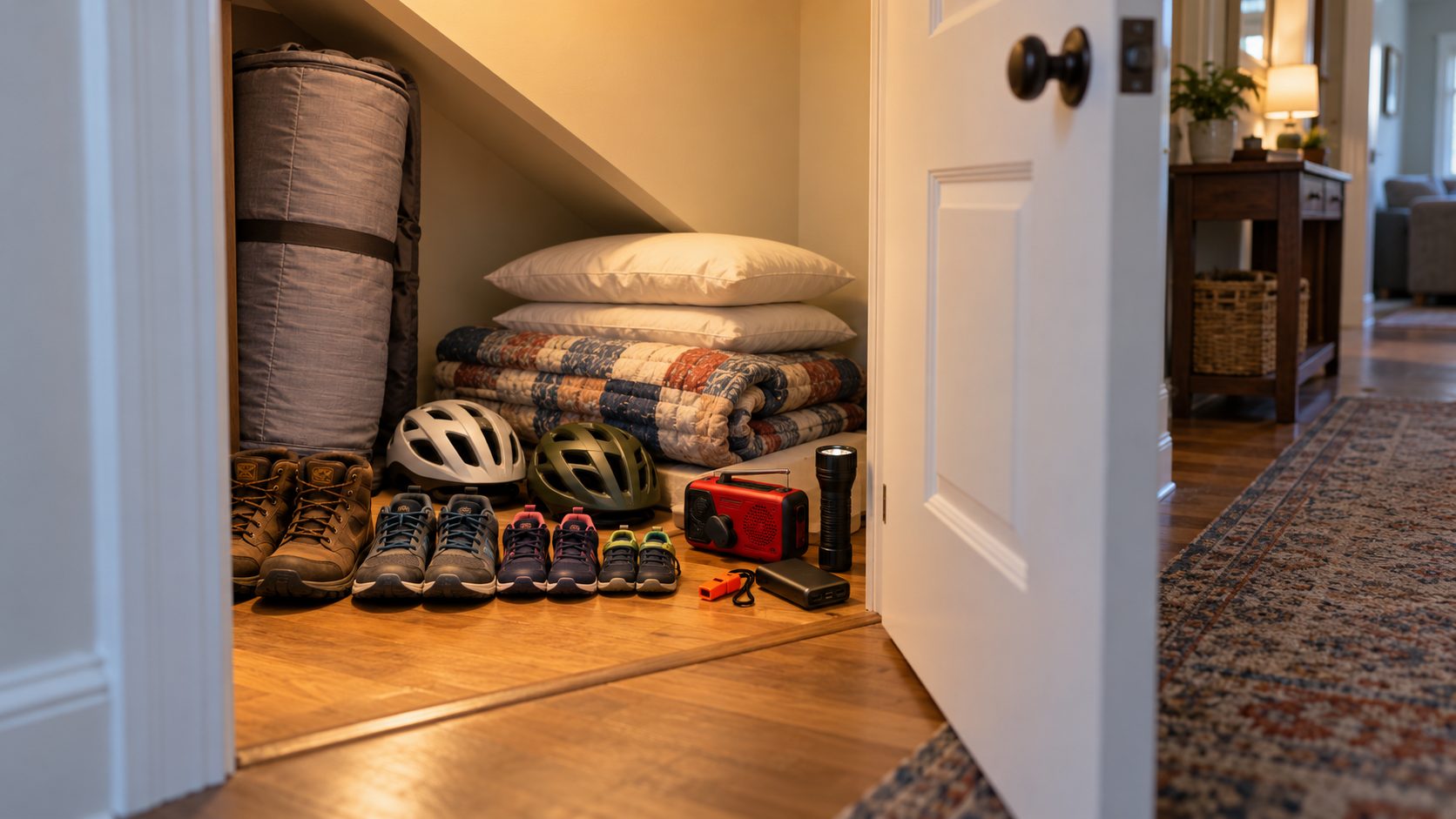
The picture above is an illustration of a staged shelter spot, not a photo of a real home. The alert definitions and the shelter, warning, myth and after-storm safety guidance below were checked against the National Weather Service, the Storm Prediction Center, Ready.gov, FEMA and the American Red Cross on October 21, 2026. The spot test, the printable plan card and the yard and insurance-photo tips are our own practical advice.
| Your home | Your tornado spot | When to go |
|---|---|---|
| House with a basement | Basement, under a heavy workbench or table or under a mattress, not below heavy furniture upstairs | At the warning |
| House with no basement, or a ground-floor apartment | Small windowless interior room, closet, hallway or the space under the stairs, on the lowest floor | At the warning |
| Upper-floor apartment | An interior hallway, the space under a stairwell, or a windowless room on the lowest floor you can reach quickly | At the warning, or sooner if getting down takes time |
| Mobile or manufactured home | A sturdy building you picked ahead of time, such as a relative’s house, a church or a community shelter | During the watch, or when a tornado threat is forecast |
| Any home with a safe room or storm shelter | The safe room or shelter | At the warning |
What’s the difference between a tornado watch, warning, and emergency?
A watch means get ready, a warning means take shelter now, and a tornado emergency means a violent tornado has already touched down. The National Weather Service (NWS) uses these three alerts, and each one should trigger a different action in your house.
| Alert | What it means | What your family does |
|---|---|---|
| Tornado watch | Tornadoes are possible in and near the area. Watches are issued by the Storm Prediction Center and often cover many counties or even several states. | Review the plan, check your supplies and your shelter spot, and stay ready to move fast. Mobile home households go to their sturdy building now if they haven’t already. |
| Tornado warning | A tornado has been sighted or shows up on radar. Danger is imminent. Warnings come from your local NWS office and cover a much smaller area, about the size of a city or small county. | Go to your shelter spot right away. If you’re in a mobile home, a vehicle, or outside, get to the closest sturdy building. |
| Tornado emergency | The NWS’s highest alert level. A violent tornado has touched down, and catastrophic damage is confirmed. | Take shelter immediately in the safest place you can reach. Don’t try to outrun it in a car. Only after you’re sheltered, and if you can do it safely, the NWS suggests calling family and friends in the area so they know. |
Where should you shelter in a tornado?
The safest place is a safe room built to FEMA criteria or a storm shelter built to the ICC 500 standard. The next best is a small, windowless interior room or basement on the lowest level of a sturdy building, per Ready.gov’s tornado guidance. What that looks like depends on the kind of home you live in, so decide it now.
House with a basement. Go down and get under something sturdy, like a heavy workbench or table, or cover yourself with a mattress or sleeping bag. Before the season, look at what sits on the floor directly above your spot. The Online Tornado FAQ from the NWS Storm Prediction Center (SPC) warns against sheltering under very heavy objects upstairs, such as a piano or refrigerator, because they can fall through a weakened floor.
House with no basement, or an apartment. Use the lowest floor and pick a small room in the middle of the building: a bathroom, a closet, the space under a stairwell, or an interior hallway with no windows. Crouch low, face down, and cover your head. The SPC says that even in an interior room you should cover yourself with thick padding, like a mattress or blankets, in case the roof and ceiling fail.
Mobile or manufactured home. Plan to leave. The SPC is blunt that most tornadoes can destroy even a tied-down mobile home, and its advice is to make staying with someone in a sturdy building part of your plan if a tornado threat is forecast. The American Red Cross says to pick that sturdy building ahead of time and practice getting there. It might be a relative’s house or a church, which are the NWS’s own examples, or a community shelter if your county runs one. Go during the watch rather than waiting for the warning.
A safe room. A safe room built to FEMA’s criteria gives what FEMA calls “near-absolute protection” in extreme wind. Two things are worth knowing before you shop. First, FEMA says it does not endorse, approve or certify any contractor or product, and that contractors may not claim to be “FEMA approved” or “FEMA certified.” Ask instead whether the room follows FEMA’s safe room guidance (P-320 for homes, P-361 for the full design criteria) and, for a factory-built unit, whether it is tested and labeled to ICC 500. Second, ask your county or state emergency management office whether safe room grants are available where you live. FEMA’s page points homeowners there.
If you have a safe room or storm shelter, the SPC suggests registering it with your local fire department, so rescuers know to look for you if debris blocks the door.
The spot test: four checks for the room you picked
If you live in a mobile or manufactured home, skip this test. Your spot is the sturdy building you picked, and your check is the trip there, which the drill section covers. If you have a safe room built to FEMA criteria or a storm shelter built to ICC 500, that’s your spot, wherever it sits in the house. For everyone else in a house or apartment, this is our own quick test, built from the SPC and Ready.gov guidance above. It’s also on page 2 of the printable as four tick boxes. Stand in the room you picked and check:
- Lowest floor? If there’s a basement or a lower floor you can reach quickly, you’re not there yet.
- No windows, and walls between you and outside? The SPC says flying debris is the biggest tornado hazard and advises putting as many walls as possible between you and the tornado. Count the interior walls between the room and the outside.
- Nothing heavy overhead? In a basement, check what sits on the floor above.
- Can everyone get here fast? Walk it from the farthest bedroom, in the dark, with the hallway light off. If someone has to go up or down stairs slowly, pick a spot they can reach.
If no room passes every check, choose the one that comes closest to what the SPC and Ready.gov stress: as low in the building as you can reach quickly, away from windows, and with as many walls as possible between you and the outside. Once you’re there, protect your head and neck with your arms and cover up with padding, as Ready.gov and the SPC advise.
Write the spot down as part of your family emergency plan, and make sure everyone in the house, including kids and anyone who visits often, knows where it is.
How will you know a tornado is coming?
You’ll know through alerts you’ve set up ahead of time, and sometimes through what you see and hear. Ready.gov says to sign up for your community’s warning system and notes that the Emergency Alert System and NOAA Weather Radio both carry alerts.
Don’t count on sirens if you’re inside. The SPC FAQ says there’s no nationwide siren requirement and that siren policy is set locally, and it puts it plainly: outdoor sirens are for outdoor use. Set up at least two indoor alerts that don’t depend on the same device:
- On your phones. Sign up for your county or city’s free alerts, which the Red Cross recommends, and leave emergency alerts turned on in your phone settings.
- Off your phones. A NOAA Weather Radio with a tone alarm and battery backup. The NWS says it sends a tone before most warnings that sets off receivers equipped for it even with the volume off, which it calls especially useful at night. A radio with SAME lets you set it to your own county. Once it’s set up, make sure you can hear the alarm from the bedrooms.
Then keep those alerts alive. The Red Cross recommends a backup battery or another way to charge your phone, and a battery-powered radio in case the power goes out.
Warnings aren’t guaranteed, either. The Red Cross notes that you may not always get one, so if you feel you’re in danger, take shelter. Ready.gov lists the classic signs: a rotating, funnel-shaped cloud, an approaching cloud of debris, or a loud roar like a freight train. The SPC adds a few that surprise people:
- Some tornadoes have no visible funnel, just whirling dust or debris on the ground under the cloud base.
- Many are wrapped in heavy rain and can’t be seen at all.
- Hail or heavy rain followed by a dead calm or a fast, intense wind shift can be a sign.
- A loud, continuous roar or rumble that doesn’t fade in a few seconds the way thunder does.
- At night, small bright blue-green to white flashes at ground level near a storm can mean power lines are snapping in very strong wind.
Tornadoes can happen at any time of day or night and at any time of year. The NWS says they’re most common in the Central Plains and the Southeast but have been reported in all 50 states, so it’s worth setting up alerts even if you’ve never thought of your area as tornado country.
What should you keep in your tornado shelter spot?
Keep a few protective items right in the spot, because you won’t have time to go looking. These are the tick boxes under “Keep this in the spot” on page 2 of the printable. The SPC suggests storing mattresses, sleeping bags, or thick blankets in or next to your shelter space so they’re ready on a few seconds’ notice. A short list that covers most families:
- Sturdy shoes for everyone, so nobody walks out over broken glass barefoot
- A helmet for each person if you have them, since the SPC says head protection like a helmet can improve your odds
- Pillows, blankets, or a mattress to cover up with
- A flashlight with fresh batteries
- A charged power bank for phones
- A whistle, so you can signal if you’re trapped instead of shouting
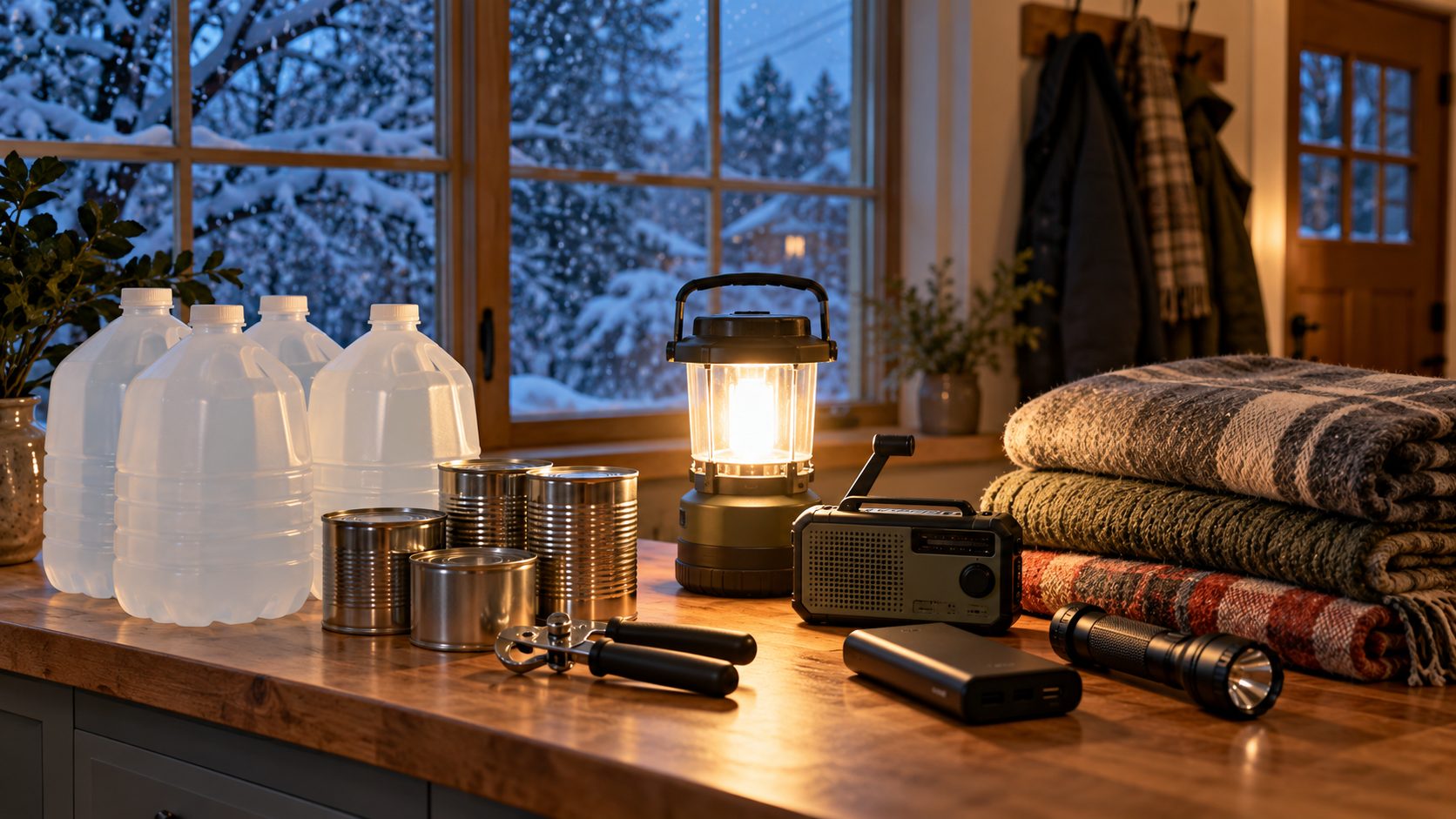
That kit stays put. If you live in a mobile or manufactured home and your spot is someone else’s building, keep the same items packed in one bag by the door instead, and grab it on the way out during the watch rather than stopping to gather things. Your bigger supplies can live wherever you normally keep them. Ready.gov recommends being ready for a long stay at home afterward with emergency supplies, cleaning supplies, non-perishable food, water, medical supplies, and medication, and the Red Cross suggests a Go-Kit with at least three days of supplies plus a one-month supply of medication. Our 72-hour emergency kit guide covers the portable version.
One more job before the season: on a clear day, walk the yard and put away or tie down anything that could blow around, like patio furniture, toys, and empty planters, and have dead branches taken down.
How do you practice your tornado plan?
Run a drill. The SPC recommends a family tornado drill at least once a year, and the NWS says to drill regularly so everyone knows to go to the spot when a warning is issued. A useful drill answers four questions:
- Can everyone get to the spot from wherever they usually are in the house, including from a bedroom at night?
- Who grabs the pets? The NWS and Ready.gov both say to include pets in the plan, and the NWS adds “if time allows.”
- Who helps the youngest kids, or an older relative who moves slowly?
- Where do you meet afterward if you get separated?
If you live in a mobile home, the drill is the trip to your sturdy building, not a room in your home.
Your tornado plan on paper: the free printable, page by page
The free printable is a two-page US Letter PDF. The tan lines and tick boxes are fillable fields, so you can type into them in Acrobat, Preview or most browsers, or print the pages blank and fill them in with a pen. It’s our template, not an official form, built from the NWS, SPC, Ready.gov and Red Cross guidance in this article.
Where you start depends on your home. In a house or apartment, do page 2’s spot test first, then fill in page 1’s plan, then run the drill. If you have a safe room built to FEMA criteria or a storm shelter built to the ICC 500 standard, that’s your spot, so go straight to the plan. In a mobile or manufactured home, skip the spot test: the plan is your sturdy building and the trip there, so time that trip in your first drill.
Page 1: the tornado plan card
Page 1 starts with the same five-row “Pick the spot for your kind of home” table as the top of this article. Find your row. Under it, “Our plan” has eleven lines and a note to tape the card inside the shelter spot door or on the fridge:
| Line on the card | What to write |
|---|---|
| Our shelter spot | House or apartment: the room that passed the spot test, named so a guest could find it, like “under-stairs closet, first floor.” Safe room: where it is. Mobile home: write “see the sturdy building line below.” |
| Backup spot if that one is blocked | House or apartment: the next room that comes closest on the spot test. Safe room: the indoor room that comes closest, in case you can’t reach the safe room. Mobile home: a second sturdy building. |
| Mobile home only: our sturdy building, and how we get there | The building you picked ahead of time and the route or who drives |
| Alert 1 (for example, county alerts on phones) | Your county or city alert service |
| Alert 2 (for example, NOAA Weather Radio) | A second alert that doesn’t depend on the same device |
| Who gets the youngest kids | One named adult per child |
| Who gets the pets (if time allows) | One named person, and where the carrier is |
| Who helps anyone who moves slowly | A named person for an older relative or anyone who needs help on stairs |
| Where we meet after if we get separated | A spot near home everyone knows |
| Out-of-area contact everyone texts | Name and number |
| Date of our last drill | Fill it in after each drill |
Below the plan, a watch box lists five things to tick when a watch is issued (including “Mobile home: leave now for the sturdy building”), and a warning box says, in large type: “Everyone goes to the spot. No checking outside first.”
Page 2: shelter kit and drill
Page 2 has a six-item “Keep this in the spot” list (shoes, helmets, padding, flashlight, power bank and whistle), with a note that mobile and manufactured home households pack the same six items in one bag by the door. Under it, a separate “One more job before the season” note covers the yard. Beside it is the spot test, labeled for a house or apartment, with the mobile-home reminder that your check is the trip to the sturdy building. Below them is a six-row drill log: after each drill, write who went where and what you’d change, then copy the date to the last line of the plan card. Two short boxes at the bottom repeat the two-alert rule and what to do during a warning.
If you’d rather not download anything, copy the plan table above onto a sheet of paper or an index card, add the five watch items (phones and power bank charged; shoes, flashlight and helmets in the spot; weather radio on; everyone knows a watch is in effect; mobile home: leave now for the sturdy building) and the warning line, and tape it inside the shelter spot door or on the fridge.
What should you do during a tornado warning?
Go to your shelter spot immediately. Ready.gov says to cover your head and neck with your arms, put furniture or blankets around or on top of you, and stay away from windows, doors, and outside walls. Keep listening to your weather radio or phone alerts for updates.
At work or school, follow the building’s drill. The NWS says to stay away from windows and avoid large open rooms such as cafeterias, gyms, and auditoriums.
In a car, Ready.gov says there’s no safe option, just slightly less dangerous ones. The NWS says the best move is to drive to the closest shelter if you can make it. If you can’t:
- If the tornado is visible, far away, and traffic is light, you may be able to drive out of its path by moving at right angles to it.
- If you’re caught by extreme wind or flying debris, park out of the traffic lanes, stay buckled, get your head below the windows, and cover it with your hands and a coat or blanket.
- If you can safely get noticeably lower than the road, like a ditch, you can leave the car and lie there with your head covered.
- Don’t shelter under a bridge or overpass.
Outside, get into a sturdy building if you can. Sheds, tents, and mobile homes don’t count, according to the NWS.
Which tornado myths can get you hurt?
A few old tips still circulate, and the SPC’s FAQ addresses them directly.
- Opening windows to “equalize pressure.” The SPC calls it useless, a waste of time, and dangerous. You can be cut by flying glass while doing it, and if the tornado hits your house, it will blast the windows open anyway.
- The southwest corner of the basement. No safer than any other corner. Tornadoes can arrive from any direction, and because they’re mostly circular, the damaging wind can blow from any direction. Get under sturdy protection instead.
- Hiding under an overpass. A very dangerous idea. Wind can speed up in the tight space, debris can still be blasted in, and people have been blown out from underneath. On May 3, 1999, the SPC says, a violent tornado blew people out from under bridges on I-44 and I-35 in Newcastle and Moore, Oklahoma, killing two and injuring several others. The SPC adds that parking in the traffic lanes to get under a bridge is illegal and dangerous, because it can trap other drivers in the storm’s path or block emergency vehicles.
- The bathtub as a shield. Partly true. A metal tub may give some protection, but plastic and fiberglass tubs don’t stop flying debris. Cover yourself with padding either way.
What should you do after a tornado?
The Red Cross says to stay in your shelter until the tornado warning is over and to keep listening to radio, TV or other news. Check those before you come out, because the NWS notes that more than one round of tornado-producing storms is possible during an outbreak. Then move carefully. The Red Cross, Ready.gov and the NWS all cover the after-storm hazards:
- Text, don’t call. Save calls for emergencies and use texts or social media to tell family you’re okay. Our family communication plan guide sets up an out-of-area contact for exactly this.
- Stay out of damaged buildings. If you smell gas, leave right away, and don’t use matches or lighters.
- If you’re trapped, cover your mouth with cloth to avoid breathing dust, and text, bang on a pipe or wall, or blow a whistle instead of shouting.
- Wear protective clothing for cleanup: thick-soled shoes, long pants, work gloves, and a mask if you’re cleaning up mold or debris. Keep kids out of cleanup.
- Stay clear of downed power lines, and report them to local authorities, per the NWS.
- Watch for carbon monoxide. The Red Cross says never to use gasoline, propane, natural gas, or charcoal-burning devices inside a home, basement, or garage, or even outside near an open window.
- If your home was damaged, watch out for insurance scammers, as the NWS warns.
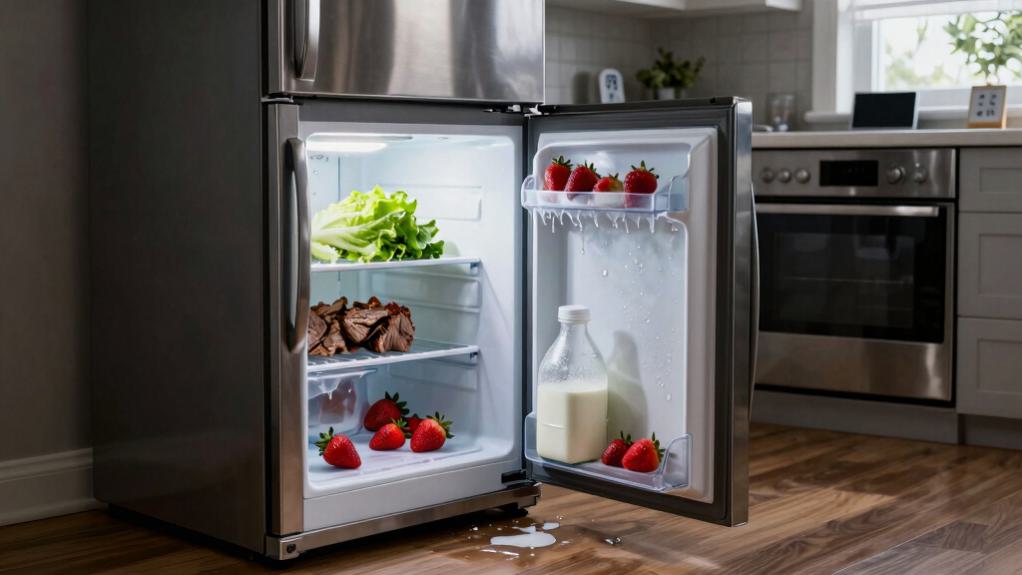
If the power stays out, we cover generator distance from the house, what to do during a power outage at night, and how long food lasts in the fridge.
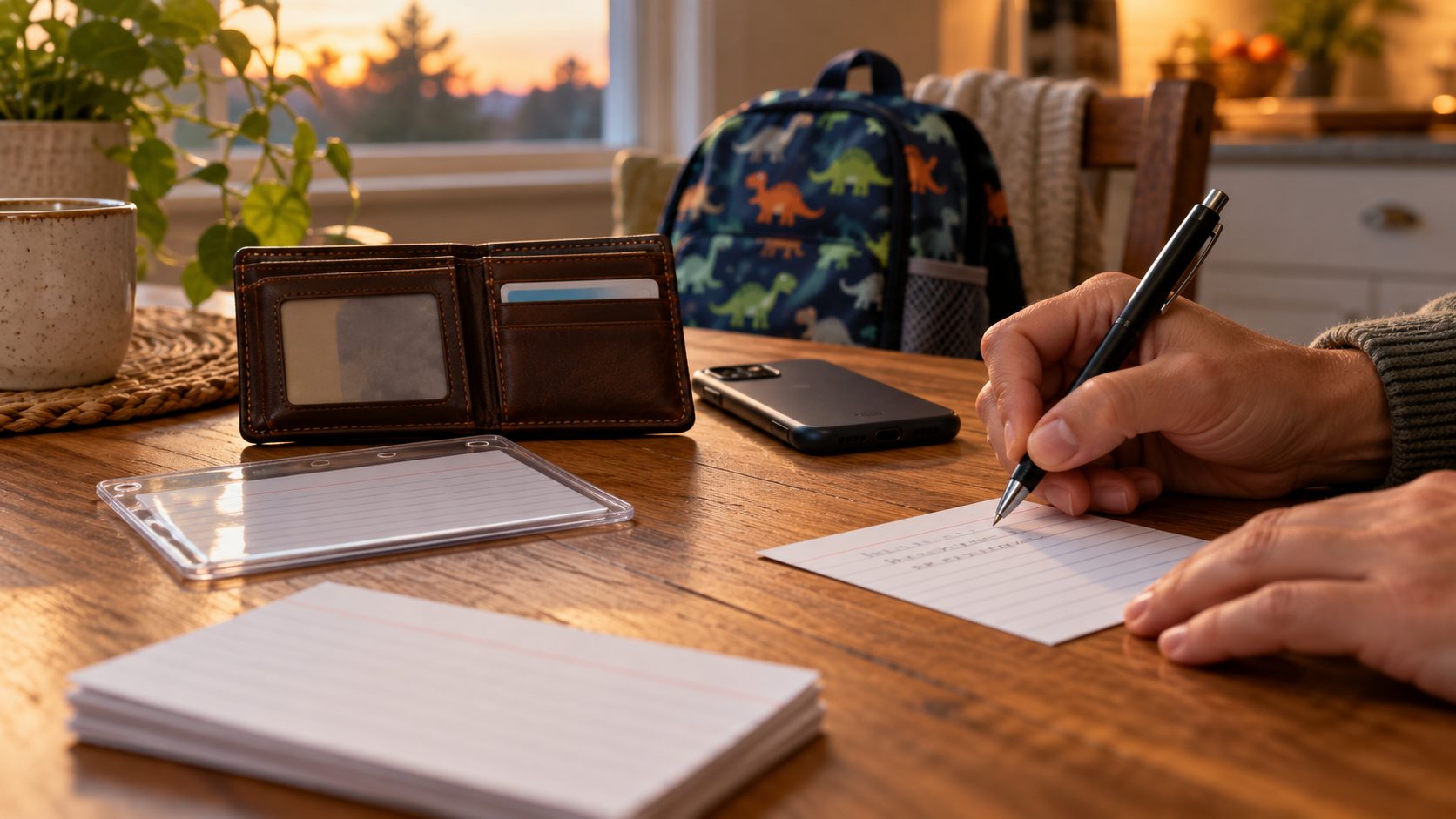
For insurance, take photos of your home and belongings before the season, and know where your policy and IDs are kept. A family emergency binder is one way to keep that list. It records where each original is kept and which carrier you use, not the policy or account numbers themselves.
If you or someone in your family is struggling emotionally after the storm, the Disaster Distress Helpline, run by the federal agency SAMHSA, is free and open around the clock, by call or text, at 1-800-985-5990.
Frequently asked questions
When is tornado season?
It depends on where you live. The SPC says tornado season shifts north from late winter through midsummer. In the southern Plains the peak runs from May into early June, on the Gulf Coast it comes earlier in the spring, and in the northern Plains and upper Midwest it’s June or July. Tornadoes can happen in any month, so keep your alerts on year-round.
How much warning will I get before a tornado?
Don’t plan on much. The Red Cross says you may not always receive a tornado warning, and the SPC tells schools and businesses to plan for a tornado that hits with little or no warning. That’s why the spot, the kit and the drill all happen ahead of time.
Are tornado sirens enough?
No. The SPC says outdoor sirens are meant for people outdoors, and there’s no nationwide requirement to have them. Use at least two indoor alerts, such as phone alerts and a NOAA Weather Radio.
Is there a printable tornado plan?
Yes. Ours is free: a two-page fillable PDF with a plan card (spot by home type, an 11-line family plan, the watch checklist and the warning rule) and a page with the shelter kit checklist, the spot test and a drill log. Enter your email in the signup box on this page to get it.
What if I live in an apartment on an upper floor?
Get to the lowest floor you can reach quickly and find an interior hallway, the space under a stairwell, or a small windowless room away from outside walls, which follows the SPC’s no-basement advice. Ask your building manager or a neighbor on a lower floor ahead of time, so you know where you’re going.
Where to start
Pick the spot tonight and run it through the four checks. In a mobile or manufactured home, pick your sturdy building instead and time the trip there. Turn on your phone’s emergency alerts, put batteries in the weather radio, and put shoes and a flashlight in the spot. Then fill in the plan card from the free printable and run the drill this weekend. If you live on the Gulf Coast, the same habits carry over to our hurricane timeline.
The binder
The part of being prepared most families never finish
The Family Emergency Binder puts your family's contacts, documents, and plans in one place: start with the essentials, then build on it a few sittings at a time. $19, instant download.
See what's inside