Emergencies & Disasters
How to Prepare for a Hurricane: A Timeline That Starts Now
In this guide
Preparing for a hurricane happens in four windows: before the season starts (know your zone, build the kit, copy the documents), when a watch is issued about 48 hours out (fuel, cash, medications, and your decision on leaving), when a warning follows about 36 hours out (leave if told, or shelter), and after (floodwater, carbon monoxide, and food).
A checklist tells you what to buy. A timeline tells you when to act, and that’s the part that actually keeps a family safe. Most of the scrambling you hear about after a storm, the empty gas stations, the sold-out water, the last-minute drive out of town, happens because someone waited until the final six hours to start.
Before the season starts (June 1)
Hurricane season in the Atlantic runs June 1 to November 30, and the work you do before it starts is worth more than anything you do once a storm is already in the forecast.
Know your zone first. The National Weather Service’s pre-season checklist starts with finding out whether you live in a hurricane evacuation area, and the way to find out is to contact your local government or emergency management office, not to guess based on how close you feel to the coast. Ready.gov backs the same instruction and adds the reason: local emergency managers issue the actual evacuation order for your specific zone once a storm is real, so their number is the one worth having.
Review your insurance and gather your documents next. Read your homeowners or renters policy while you still have time to ask questions, not after a claim is already pending. Make copies of the policy, your ID, and anything else you’d need to prove who you are or what you own, and note where each original lives rather than writing down the account numbers themselves. A family emergency binder is one place to keep that note.
Build two kits, not one. The American Red Cross separates supplies into a Go-Kit and a Stay-at-Home Kit: a three-day Go-Kit you can grab and carry if you’re told to leave, and a two-week Stay-at-Home Kit for a storm that keeps you in place with the power out. Our 72-hour emergency kit guide walks through exactly what goes in the portable version. If you want to store more water than that for a longer stay-at-home stretch, here’s how to do it in a small space. Either kit should include a one-month supply of any medication you take, in a container a child can’t easily open.
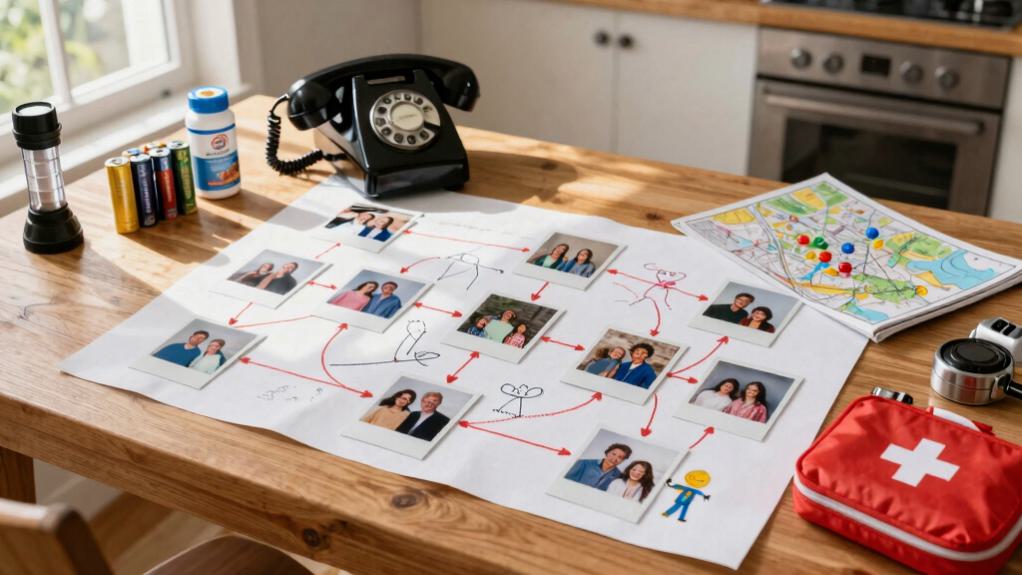
Write the family plan while everyone’s calm, not after a storm’s already in the forecast. Our family emergency plan walks through the whole conversation, meeting spots, an out-of-state contact, and a job for everyone including the kids, in about 30 minutes.
Get the house ready last. You don’t need a contractor for this part: put up shutters or pre-cut plywood before a storm is bearing down, clear the gutters and yard of anything that could become a projectile, bring in or tie down anything loose, and trim back branches close enough to fall on the roof.
When a hurricane watch is issued (about 48 hours out)
A hurricane watch means hurricane-force winds, sustained winds of 74 mph or higher, are possible in your area. The National Hurricane Center issues a watch about 48 hours before tropical-storm-force winds are expected to start, which the CDC frames as your signal that final prep, not planning, is what’s left.
Use those 48 hours for the things you can’t do quickly once a warning hits:
- Fill your car’s gas tank, and move it under cover if you have a garage or carport.
- Get some cash. ATMs and card readers don’t work without power.
- Refill any prescription you’re getting close to running out of.
- Charge every phone, battery pack, and device in the house.
- Bring in or tie down anything in the yard that wind could turn into a projectile.
- Freeze water in any container you have room for, and turn the fridge and freezer to their coldest settings. A cold start buys you extra hours if the power goes out.
- Decide, today, whether you’re leaving or staying, and tell your out-of-town contact which one. Don’t leave that call for the last six hours.
When a hurricane warning is issued (about 36 hours out)
A hurricane warning means those same winds are expected, not just possible, in your area. It follows the watch by about 36 hours before tropical-storm-force winds arrive, and it can stay in effect for dangerous water even after the wind itself drops.
If officials tell you to leave, leave. The American Red Cross is direct about this: go right away, follow the route officials recommend even if it’s slower than your own, and don’t take a shortcut, since it may already be blocked. Never drive into moving water. Six inches is enough to sweep a car off the road or stall it, no matter how solid your vehicle feels.
If you’re staying, set up now, not at midnight. Pick your safe interior room, an inside space with no windows on the lowest level that won’t flood, and put the shutters up if you haven’t already. Fill tubs and any spare containers with water for washing, make sure everything is charged, and move your kit into the room you’ll actually shelter in. If you’re settling in for a multi-day outage, here’s what to expect if you can’t flush without running water.
During the storm
CDC and Red Cross guidance for these hours is the same: stay inside, away from windows and glass doors. Weather can turn calm in the middle of a hurricane and then get dangerous again within minutes, so don’t treat a quiet stretch as the all-clear. Keep listening to the radio or your phone until local officials confirm the storm has passed.
After the storm: the three things that hurt people
A hurricane passing doesn’t mean the risk is over. Floodwater, carbon monoxide, and unsafe food cause real, preventable harm in the days that follow, and each one has a straightforward way to avoid it.
The CDC warns that standing water after a storm can carry sewage, chemicals, and downed power lines you can’t see. Don’t touch floodwater and don’t drive through it; if you do make contact, wash your hands or use sanitizer right away.
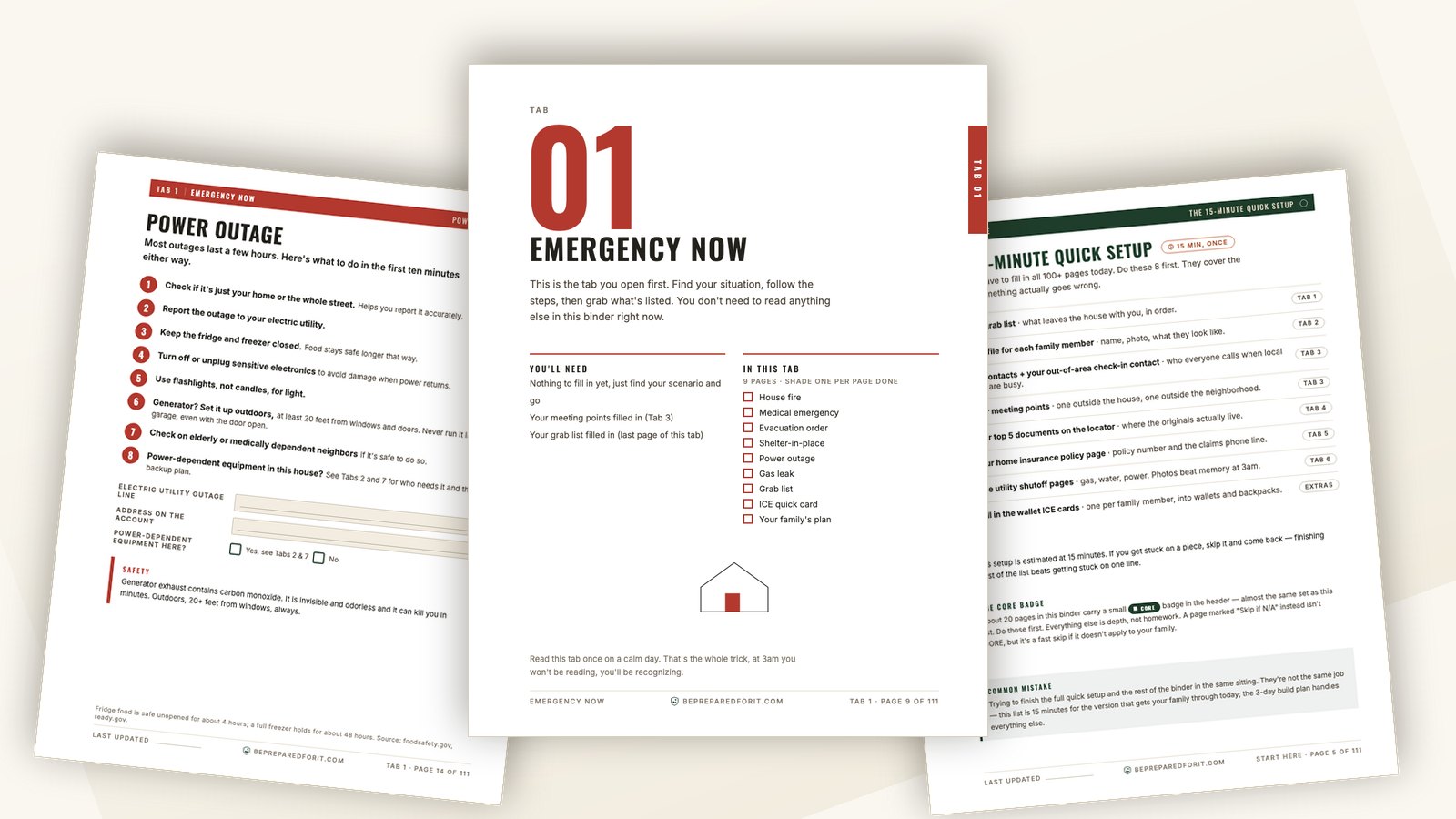
Carbon monoxide is the hazard that’s easiest to get wrong with a generator running. Keep it at least 20 feet from any window, door, or vent, never in a garage or basement, and run a battery-backed CO detector the entire time it’s on. That distance isn’t a suggestion: carbon monoxide can’t be seen or smelled, and it can hurt you before you notice anything’s wrong. If you lose power overnight, our guide to a safe power outage at night covers generator placement and lighting in more detail.
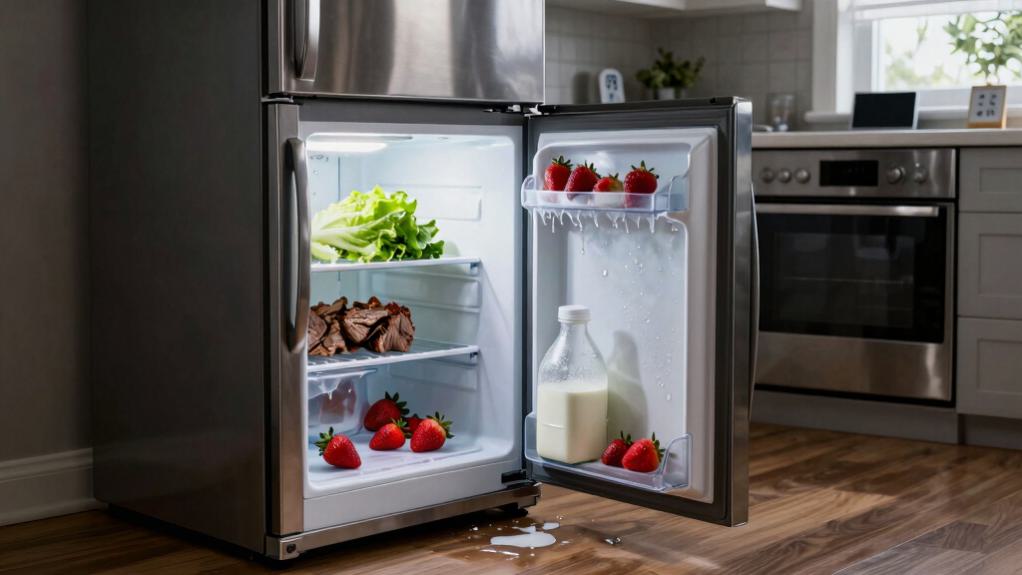
Food is the last one, and the rule is simple: when in doubt, throw it out. That covers anything that touched floodwater as well as anything that sat unrefrigerated too long during the outage. The fridge won’t stay safe nearly as long as you’d hope, and the freezer buys you more time than you’d guess; our food-cold guide has the exact windows and how to stretch them.
Hurricane preparedness checklist
Three short lists, pulled straight from the timeline above.
Before hurricane season
- Know your evacuation zone
- Review your insurance and copy your documents
- Build your Go-Kit and Stay-at-Home Kit
- Write your family plan
- Put up shutters or plywood, and clear the yard and gutters
When a watch is issued (about 48 hours out)
- Fill the gas tank
- Get cash
- Refill prescriptions
- Charge every device
- Bring in or tie down loose items
- Freeze water, and set the fridge and freezer to their coldest settings
- Decide whether you’re leaving, and tell your contact
When a warning is issued (about 36 hours out)
- Leave immediately if told to, by the recommended route
- Or set up your safe room, fill tubs with water, and move your kit in
For a hurricane supplies list specifically: the kit guide above already has the full contents. The hurricane-specific extras are cash, a full tank of gas, as much of a one-month medication supply as you can get in a container a child can’t easily open, and copies of your documents.
Frequently asked questions
When should you start preparing for a hurricane?
Start before hurricane season begins on June 1, while you still have time to review your insurance, build your kit, and confirm your evacuation zone without a storm already in the forecast.
What is the difference between a hurricane watch and a hurricane warning?
A watch means hurricane-force winds are possible in your area and is issued about 48 hours before tropical-storm-force winds are expected; a warning means those winds are expected and is issued about 36 hours out, which leaves you less time to finish preparing.
Should I evacuate or stay home during a hurricane?
Evacuate immediately if local officials tell you to, using the route they recommend. If you haven’t been ordered to leave and you’re not in a flood-prone or evacuation zone, sheltering in an interior room away from windows is the accepted alternative.
What do you do after a hurricane?
Wait for officials to confirm it’s safe before going outside, avoid floodwater and downed power lines, keep any generator well away from doors and windows, and throw out food that got wet or lost power for too long.
What should be on a hurricane supplies list?
Start with the basics already in a 72-hour emergency kit, then add the hurricane-specific extras: cash, a full tank of gas, as much of a one-month medication supply as you can get, and copies of your important documents.
Pick your next step
The timeline is the plan. You don’t have to finish everything on the checklist to be meaningfully more ready than you were an hour ago. Pick the piece that matches where you are right now, whether that’s checking your zone or filling the tank, and do that one next.
Coming soon
The part of being prepared most families never finish
The Family Emergency Binder puts your family's contacts, documents, and plans in one place — a 15-minute quick start tonight, finished over a weekend. Join the list and we'll email you the moment it's ready, at the $19 launch price for a limited time.