In this guide
A death binder is one folder that tells your family what you want and where everything is if you die or can’t speak for yourself. It should cover medical wishes, a first-day call list, funeral wishes, the facts the funeral home will need for the death certificate, legal documents, money and insurance, property, digital accounts, and the people and pets who depend on you.
You don’t need every page filled in for it to help. This guide follows the order your family would reach for things, so the first few sections give them something useful even if you stop there.
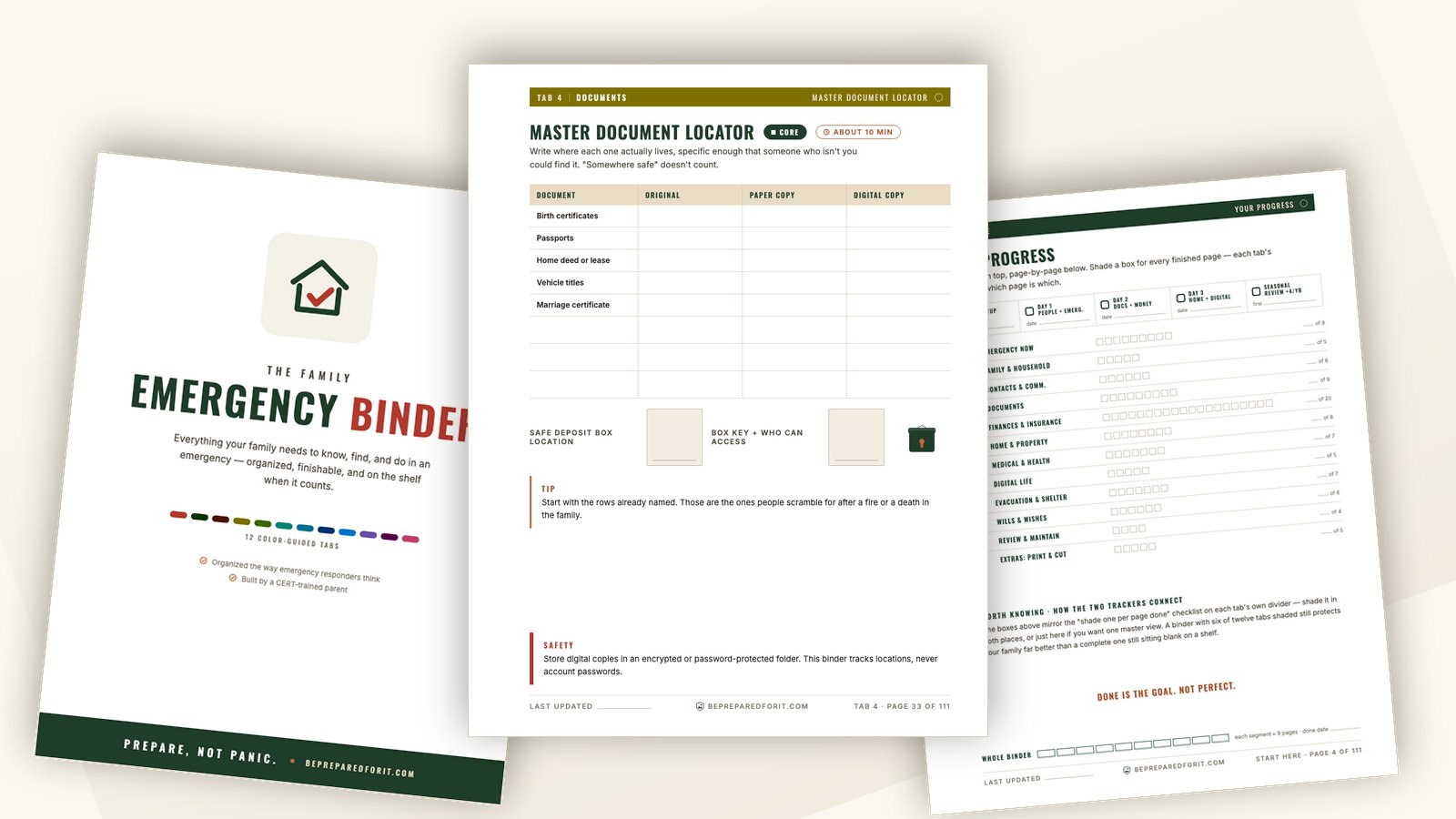
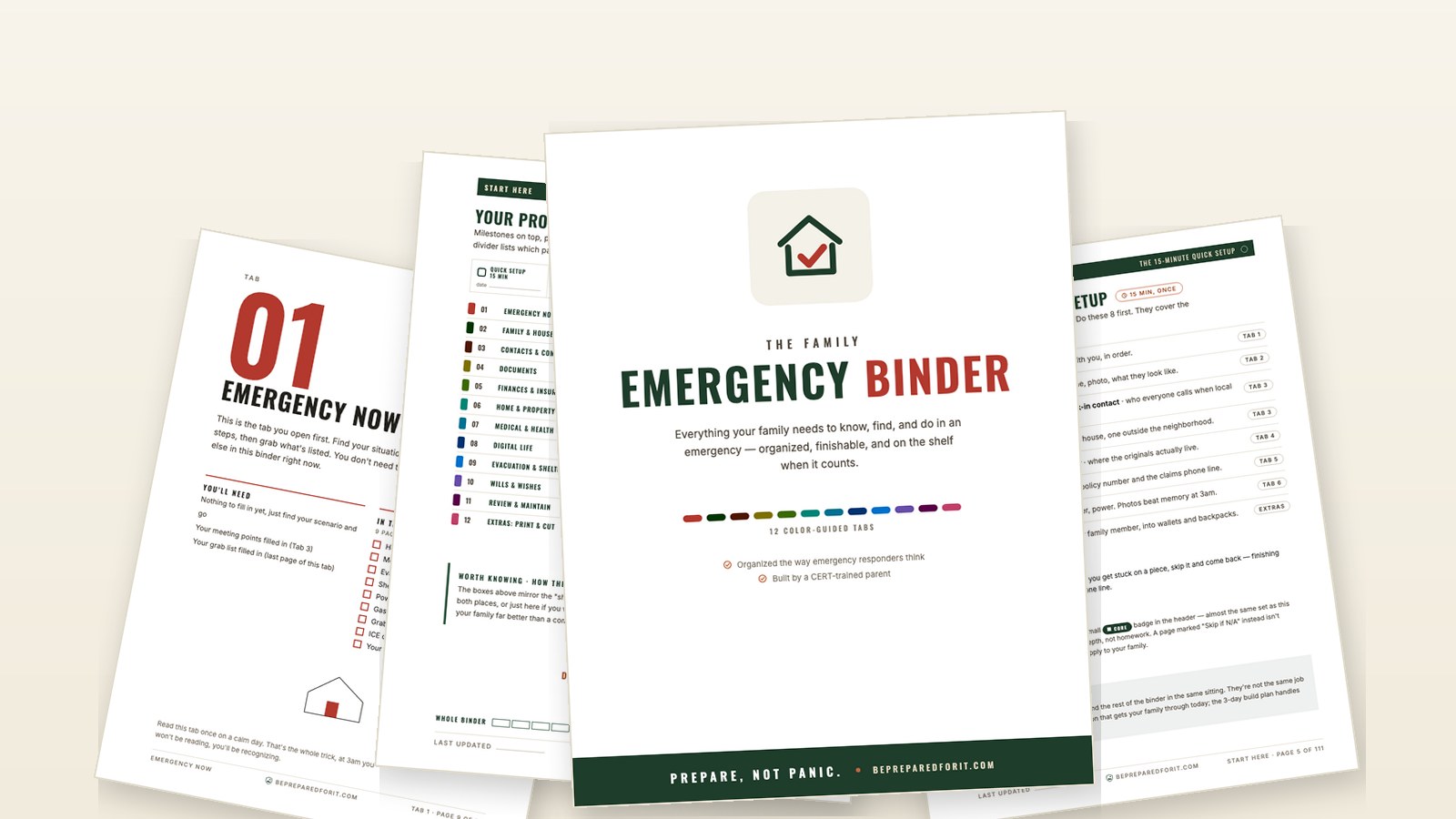
The image at the top is an illustration, not a photo of a real binder.
What is a death binder?
A death binder (also called an in-case-of-death binder, a when-I-die file, or a death box when it lives in a box) is a practical guide for the people handling your affairs. It isn’t a legal document. It holds copies of some papers and points to the rest: where the will is, who the insurance carrier is, which drawer has the car title.
It also covers more than death. The National Institute on Aging’s checklist opens with the line that “no one ever plans to be sick or disabled,” and frames this planning around emergencies as well as the end of life. Being unable to speak for yourself can come well before the end, which is why the first section below is about being sick.
What to put in a death binder
Here is what to include, grouped by when your family is likely to need it. The first four sections matter most in the first hours and days. The rest matter in the weeks of paperwork that follow.
| Section | When it gets used | What goes in it |
|---|---|---|
| If I’m seriously ill | While you’re alive but can’t speak for yourself | Advance directive, powers of attorney, DNR or POLST, doctors |
| The first 24 hours | The first phone calls | 3 to 5 people to call, who has authority, children, keys, pets |
| Funeral and burial wishes | The first few days | Burial or cremation, service, prepaid plans, your FTC rights |
| Death certificate facts | When the funeral home fills in the certificate | Full legal name, birthplace, parents’ names, occupation |
| Legal documents | The first weeks | Where the will, trust and certificates are kept |
| Money, insurance and bills | The first weeks and months | Institutions, carriers, benefits, debts, bills |
| Home, vehicles and property | The first months | Deed, titles, keys, storage units |
| Digital accounts and devices | Any time | Legacy tools you set up, who knows passcodes |
| People, pets and personal wishes | Any time | Contacts, pet care, personal items, a letter |
If I’m seriously ill or can’t speak for myself
These pages get used while you’re still alive, so put them first.
- Advance directive. An advance directive usually pairs a living will (the medical care you would or wouldn’t want) with a health care power of attorney (the person who speaks for you). The NIA notes that these documents “only go into effect if you cannot communicate your own wishes.”
- Durable power of attorney for finances. In the NIA’s words, it “names someone who will make financial decisions for you when you are unable to.”
- Permission for your doctors to talk with a caregiver. The NIA points out this is different from naming a health care proxy, and you may need to sign a form with each doctor’s office. Note which offices have one on file.
- DNR or POLST, if you have one. A DNR is a doctor’s order about CPR. A POLST is a set of medical orders for people who are seriously ill or frail, filled out with a doctor. CaringInfo says both are honored by EMTs if presented. It also says an advance directive isn’t valid outside a medical setting, so if 911 is called and there’s no DNR, or POLST specifying DNR, EMTs will resuscitate. If you have one of these orders, keep a copy at the very front of the binder, and ask your doctor how to keep the order where responders will see it under your state’s rules.
- Organ donation. Note whether you’ve registered as a donor. The NIA says you can register when you renew your driver’s license or state ID, or online.
- Doctors and medical basics. Names and phone numbers for your doctors, where your current medication list is kept, and the name of your health insurer.
Each state has its own advance directive form, and CaringInfo says the health care power of attorney must be witnessed or notarized depending on where you live, so use your state’s version. The NIA says you don’t need a lawyer for health care advance directives and most states provide the forms free. It also says to give copies to your health care proxy, your doctors and your lawyer. Keep one in the binder.
The first 24 hours
This is the page someone grabs first. Keep it to one sheet.
- Three to five people to call right away, with phone numbers
- Who can act for you, kept separate from who to call. While you’re alive, that’s your agent under a power of attorney, within what the document allows. After you die, whoever handles your affairs usually needs a probate court’s appointment first. If you have a will, write down who it names as executor
- Who picks up and cares for your children or other dependents right away, and where your will names a guardian, if it does
- A one-line summary of your funeral or cremation wishes, with “see the funeral section” beside it
- Who takes the pets, and where the pet care notes are
- Who has spare house and car keys
- Your employer’s HR contact, so pay and benefits questions start early
Funeral and burial wishes
Your family may have to make these decisions within days, sometimes before anyone has found the will. Write down:
- Burial, cremation, or another option, and any place you want your ashes kept or scattered
- The kind of service you’d like, or no service at all
- Religious, spiritual or cultural traditions you want followed
- Any prepaid funeral plan, and where its paperwork is kept
- Readings, music, or people you’d like to speak, if you care about that
The NIA says to put these preferences in writing and give copies to your loved ones and, if you have one, your lawyer. It also helps to add a short note about your family’s rights. The FTC Funeral Rule covers funeral providers. The FTC says it doesn’t apply to third-party sellers such as casket and monument dealers, or to cemeteries without an on-site funeral home. With a funeral provider, your family has the right to:
- Buy goods and services separately instead of accepting a package with items they don’t want. If a law, cemetery or crematory requires them to buy something, the funeral home must say so in writing
- Get price information over the phone without giving their name, address or phone number first
- Get a written General Price List to keep when they visit a funeral home
- Make arrangements without embalming. The FTC says no state law requires routine embalming for every death, though some states require embalming or refrigeration if burial or cremation is delayed
- Use an alternative container instead of a casket for cremation
- Bring a casket or urn bought elsewhere, without the funeral home refusing it or charging a fee to handle it
If you want a simple funeral, say so in plain words on this page, so your family has your wishes in writing when they’re deciding what to buy.
Death certificate facts sheet
When someone dies, the funeral director completes the personal details on the certificate, and the form records an informant: the person who supplied them, and their relationship to you. Each state has its own form. The CDC’s model, the U.S. Standard Certificate of Death, asks for the items below, and your state’s version may differ a little. Print this page and fill in the last column, or copy the list onto a sheet in your binder.
| Death certificate item | Write down | Your answer |
|---|---|---|
| Legal name, plus any other names used | Full first, middle and last name, and maiden or other names | |
| Social Security number | Where the card is kept (not the number, see below) | |
| Date and place of birth | City and state, or country | |
| Residence | Address, county, and whether it’s inside city limits | |
| Ever in the U.S. armed forces | Yes or no, and where discharge papers are | |
| Marital status and spouse’s name | Spouse’s name before first marriage, if that applies | |
| Father’s name | First, middle and last | |
| Mother’s name before first marriage | First, middle and last | |
| Education | Highest degree or level of school completed | |
| Hispanic origin and race | What you consider yourself to be | |
| Usual occupation and kind of business | The work you did for most of your working life, not “retired” |
Your family may not know your mother’s maiden middle name or the industry you worked in for 30 years, especially in the first days. One filled-in page saves them guessing on a legal record.
Legal documents
List where each one is kept, and include a copy where it makes sense.
- Will (note where the original with your signature is kept) and any trust documents. The NIA notes a will can also address care for children under 18
- Powers of attorney (also listed in the first section)
- Birth certificate, marriage certificate, divorce decree
- Military discharge papers
- Citizenship or adoption papers, if they apply
- The names and phone numbers of your lawyer and tax preparer
Not sure whether a given paper should go in as an original, a copy, or just a note about where it lives? Our guide to the important documents section of a binder walks through that decision for each one.
Money, insurance and bills
This is where a locator approach matters most. Record the institution and a nickname for the account, never the number itself.
- Banks and credit unions (“credit union checking, joint with spouse”)
- Retirement and investment accounts, and the advisor’s name and phone number
- Life, home, auto, and long-term care insurance: carrier name and agent’s phone number
- Employer benefits, including any life insurance through work, and pensions
- Any union, fraternal, or employer death benefit (small ones are easy to miss)
- Mortgage, car loans, property tax and other debts: who they’re owed to and how they get paid
- Recurring bills and autopays: utilities, phone, internet, streaming and other subscriptions
- Where last year’s tax return is kept
Don’t skip the bills list. Utilities and subscriptions are easy to forget, and a spouse who doesn’t handle the household accounts will want a list of which companies to call.
Home, vehicles and property
- Where the deed or mortgage paperwork is kept
- Car titles and registrations
- Location of the safe deposit box and its key
- Storage units, sheds, or a second property, and where those keys are
Digital accounts and devices
Phones, email and photo libraries are where families get stuck now. Don’t write passwords in the binder. Set up the official tools while you can, and use the binder to say that you did.
- Password manager: if yours offers emergency or trusted-contact access, turn it on, and note in the binder which manager you use and who has that access.
- Apple: add a Legacy Contact for your Apple Account. After your death, that person can request access to data such as photos, messages and notes, using the access key you give them plus your death certificate. Apple says a Legacy Contact can’t get purchased movies, music or books, or anything in iCloud Keychain, including passwords.
- Google: set up Inactive Account Manager. You choose how long Google waits, and up to 10 people can be notified or receive the data you pick. Google says it may delete an account that has been inactive for at least two years.
- Phone and computer passcodes: decide who should know them, and tell that person directly. The binder can say “Sarah knows my phone passcode” without containing it.
- Social media: say whether you want each account memorialized, deleted, or left alone.
People, pets and personal wishes
- A contact list: close family, friends, your clergy or faith community if you have one
- Pet care notes: food, vet, medications, and who you’d like to take each animal
- Personal items you want to go to specific people. A binder note isn’t a will, so anything that needs to be legally binding belongs in your will
- A personal letter, if you want to leave one, or a letter of instruction that explains your wishes and where things are in your own words
For a longer list across every category, use our full emergency binder checklist.
What to leave out of a death binder
Leave out passwords, PINs, full account numbers, your Social Security number, and answers to security questions. Write down where things are instead.
Plenty of binder guides tell you to record every login and security question, and some go as far as the password manager’s master password. We don’t, for a simple reason. A death binder only works if people know about it, and once two or three people hold copies, a lost copy holds everything someone needs to get into your accounts. To be fair, the NIA’s own checklist includes Social Security and account numbers, so this is our call, not theirs. The binder says which bank, which carrier, and where the paperwork lives. That’s enough for an executor to make the right phone call.
It also answers a common objection from people who say “I’m not writing my bank details down.” With a locator binder, you aren’t.
Where to keep it and who should know
Keep the binder somewhere your family can reach fast and a stranger can’t. The NIA suggests a fireproof and waterproof safe for added security. If your originals are in a bank safe deposit box, the NIA says to keep copies in a file at home. Ask your bank who can open the box after a death, and write the answer in the binder.
Then tell someone. The NIA’s advice is to let someone you trust, or a lawyer, know where to find your important papers, even if you’d rather not discuss what’s in them. We’d tell two people, usually a spouse and the executor or an adult child, so the binder isn’t lost if one is out of reach. Because the binder holds locations rather than numbers, a second copy is far less dangerous than a copy full of account numbers, but it still shows where your papers and keys are, so whoever holds it should keep it somewhere private.
How to make a first version you’ll actually finish
Work through it in this order, and stop after step five if that’s all you have in you right now.
- Fill in the “if I’m sick” page. List whether you have an advance directive and powers of attorney, and where they are. If you don’t, that’s your first to-do.
- Write the first 24 hours sheet. Names, numbers, keys, pets.
- Write your funeral wishes, even as three bullet points, and fill in the death certificate facts sheet.
- List everything else as locator notes. One line per item: what it is and where it’s kept.
- Tell one or two people where the binder is.
- Put a yearly review date on the calendar.
Steps one through five give you a working binder. If you’d like a page to start on, our free emergency binder template has a fill-in household info sheet you can print.
If you’d rather not build the structure yourself, our Family Emergency Binder is this same idea already organized into tabs, built around writing down where things are instead of the numbers. A homemade version works just as well if you finish it.
Frequently asked questions
Is a death binder the same as a will?
No. A will is a legal document that says who gets your property and who manages your affairs after you die. A death binder is an organizer that tells your family where the will is, along with everything else they need.
Is a death binder the same as a death box?
Usually, yes. A death box keeps the papers and notes in a box or fireproof container instead of a three-ring binder. What matters is what’s inside and that someone knows where it is.
What if my spouse thinks a death binder is morbid?
Start with the “if I’m sick” page and the bills list. Those are about keeping the household running during an emergency, which is an easier conversation than planning a funeral. You can also make your own half without them. A binder for one person still helps.
How often should I update a death binder?
At least once a year, and after any big change: a marriage, divorce, move, new job, new baby, or a major health change. The NIA recommends reviewing your plans at least once a year and after major life events.
Do I need a lawyer to make a death binder?
Not for the binder itself, and not for health care advance directives, which the NIA says you can complete yourself using free state forms. A will, trust, or financial power of attorney is a different matter. Talk to an attorney about those.
Final thoughts
Start with the two pages your family would need first: the “if I’m sick” page and the first 24 hours sheet. Then tell one person where the binder lives. That’s enough for a working death binder, and you can add the rest a section at a time.
This article is general information, not legal or medical advice. Laws on wills, powers of attorney and advance directives vary by state.
Coming soon
The part of being prepared most families never finish
The Family Emergency Binder puts your family's contacts, documents, and plans in one place — a 15-minute quick start tonight, finished over a weekend. Join the list and we'll email you the moment it's ready, at the $19 launch price for a limited time.