The Family Emergency Binder
Important Documents Binder: What to Keep and in What Form
In this guide
An important documents binder holds three kinds of paper: originals you’d need in hand, like birth certificates, passports, titles, and wills; copies of things you’d only need to reference; and locator notes for anything that carries a number someone could use. Where a document lives belongs in the binder. The account number does not.
The guides that rank for this search either skip that question, or they answer it by telling you to photocopy everything, including the things you’d least want a stranger to find in one place. That’s what makes a binder worth having instead of a stack of loose paper: not just that it’s organized, but that it’s organized in a way that doesn’t turn into a liability if someone else ever opens it.
The rule: original, copy, or locator note
Every document you’re considering for the binder fits one of three forms. Ask these three questions, in order, and the answer tells you which one:
- Would you need the physical original in a hurry (an evacuation, a hospital visit, a passport application)? If yes, it’s an original.
- Would you only ever need to reference it, not hand it to anyone? If yes, a copy is enough.
- Does it carry a number, code, or password someone could use if they found it? If yes, it doesn’t go in as itself at all. It goes in as a locator note: where the real thing is kept, not what it says.
That third category is the one the guides that rank for this search tend to get wrong, and it’s the one that matters most. A birth certificate sitting in a binder is just a birth certificate. A binder full of account numbers, card numbers, and passwords is a single, portable target. The fix isn’t to leave that information out of the binder. It’s to record where it lives instead of what it is.
Which documents go in as originals or copies
For identity, property, legal, and medical-authorization paperwork, the form usually follows how you’d actually use the document:
| Category | Examples | Usual form |
|---|---|---|
| Identity | Birth certificates, passports | Original (copy if the original stays in a safe) |
| Property | Vehicle titles, deeds | Copy, unless a transaction needs the original |
| Legal | Wills, power of attorney | Copy; the original often lives with an attorney |
| Medical authorization | Guardianship or care-authorization forms | Copy, so it’s on hand without moving the original |
This isn’t the full list. BPFI’s own emergency binder checklist covers all seven document categories a family binder should account for; this page is about the decision that list doesn’t make for you, which is what form each document takes once you’ve gathered it.
If the binder is mainly for your family after you die, what to include in a death binder puts these same documents in the order they’d be needed, starting with your medical wishes. A letter of instruction pulls it together in your own words, telling your family where each of these documents is kept.
Which documents go in as a locator note only
Bank and retirement accounts, credit and debit cards, Social Security cards, and passwords all go in as locator notes only: a record of where the real thing lives, never the number itself. Insurance policies are the exception worth making: a policy number isn’t a secret, and having it on paper speeds up a claim. This is where a popular way of building these binders and a safer one part ways. A widely shared DIY binder guide tells readers to file the original Social Security card for each family member directly into the binder, and to include photocopies of every credit and debit card alongside it. That guide’s own reasoning for building a binder in the first place was the trouble of hunting down account numbers and cards after a family member died. Its solution puts the same sensitive numbers right back in one place, just organized this time.
In practice, that looks like this:
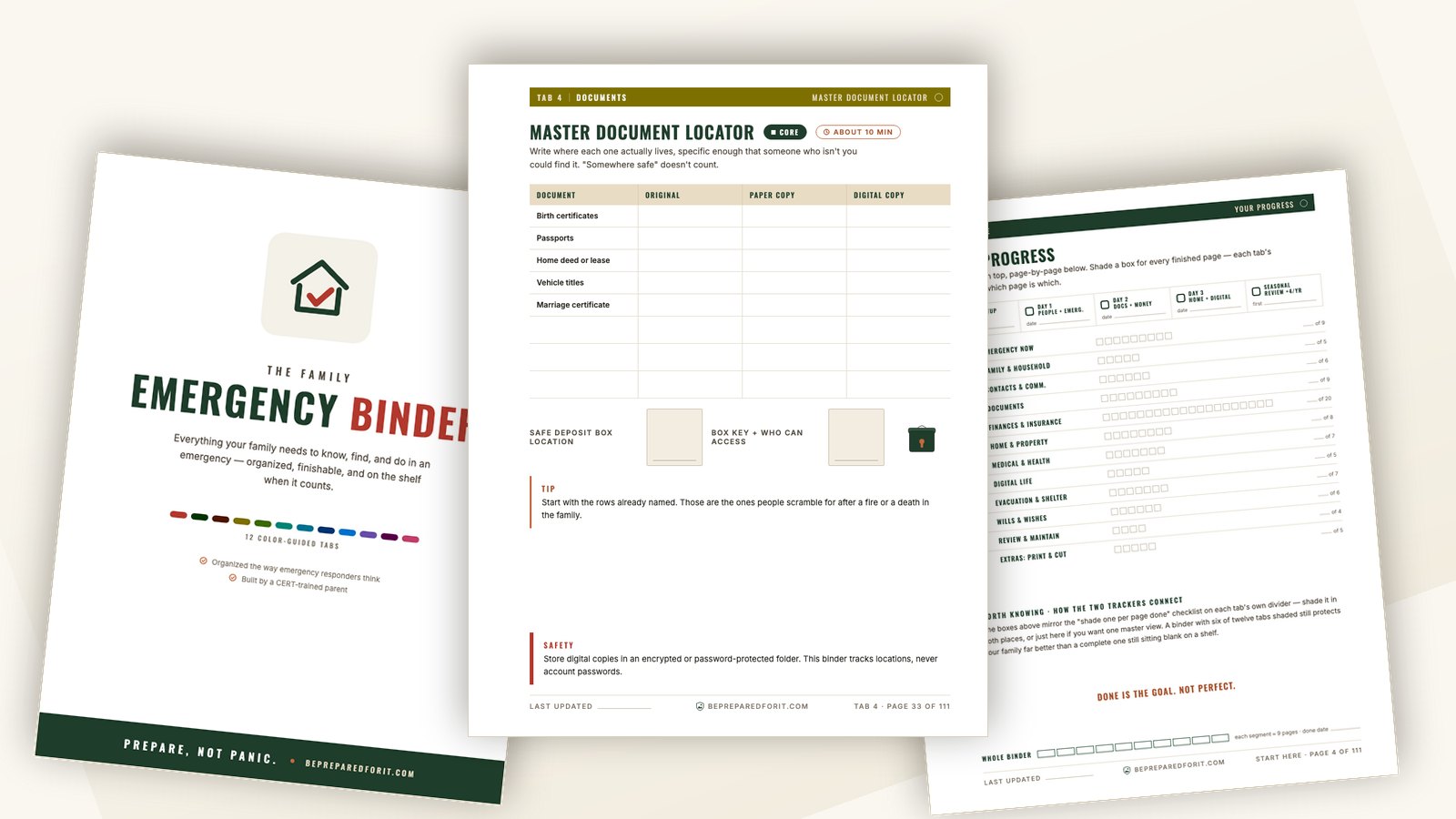
- Bank and retirement accounts. Write the institution name and account type. Skip the number.
- Credit and debit cards. Note the issuer and what to do if it’s lost, not a photocopy of the card face.
- Insurance policies. Record the carrier’s name and where the policy paperwork is kept, not the policy number.
- Social Security cards. Note where the actual card is stored (a safe, a lockbox), not the card itself and not the number. The card is one of the most useful items to a thief, so treat it like something to protect rather than something to file.
- Passwords. Never write these down in a binder anyone might page through. Name the password manager you use, or the location of a sealed envelope, instead.
Even the federal government’s own guidance is split on this. FEMA’s Emergency Financial First Aid Kit includes a fillable form that asks only for the last four digits of a bank or retirement account number, alongside the institution’s name and phone number. That’s locator-safe. But the same document’s separate records-to-gather checklist tells readers to write down a credit card’s full account number, its routing number, and the verification code off the back. Two sections of one federal worksheet, two different answers. Ready.gov’s own financial-preparedness guidance is more consistent, cautioning against sharing your bank account number, Social Security number, or credit card number. That’s the standard worth following, even where FEMA’s own paperwork doesn’t quite hold to it.
How long to keep the paperwork
Tax records are the one category with a real answer instead of a guess. The IRS’s general record-keeping guidance says to keep most tax returns and supporting records for 3 years from when you filed. A few specific situations push that further out (underreported income, a bad-debt or worthless-securities claim, or employment tax records), and property records need to be kept until the deadline for challenging your taxes passes for the year you sell or dispose of the property. That guidance is written for small-business and self-employed filers, but the retention periods it lays out are the same ones commonly applied to individual returns.
Outside of taxes, there isn’t a single clean number. Keep insurance policies while they’re in force, plus through any claims period after that. Keep warranties for as long as the product’s coverage runs. For anything the ledger here doesn’t cover, the safest move is to ask the issuer directly rather than guess at a rule that may not apply to your document.
How to organize the binder so it stays useful
A binder that’s accurate the day you build it and stale a year later isn’t much better than no binder. A few habits keep it current:
- Tabs by category, not by however the paper happened to land in the pile.
- Sheet protectors for anything you’d hand over intact, so a coffee spill doesn’t end a document’s usefulness.
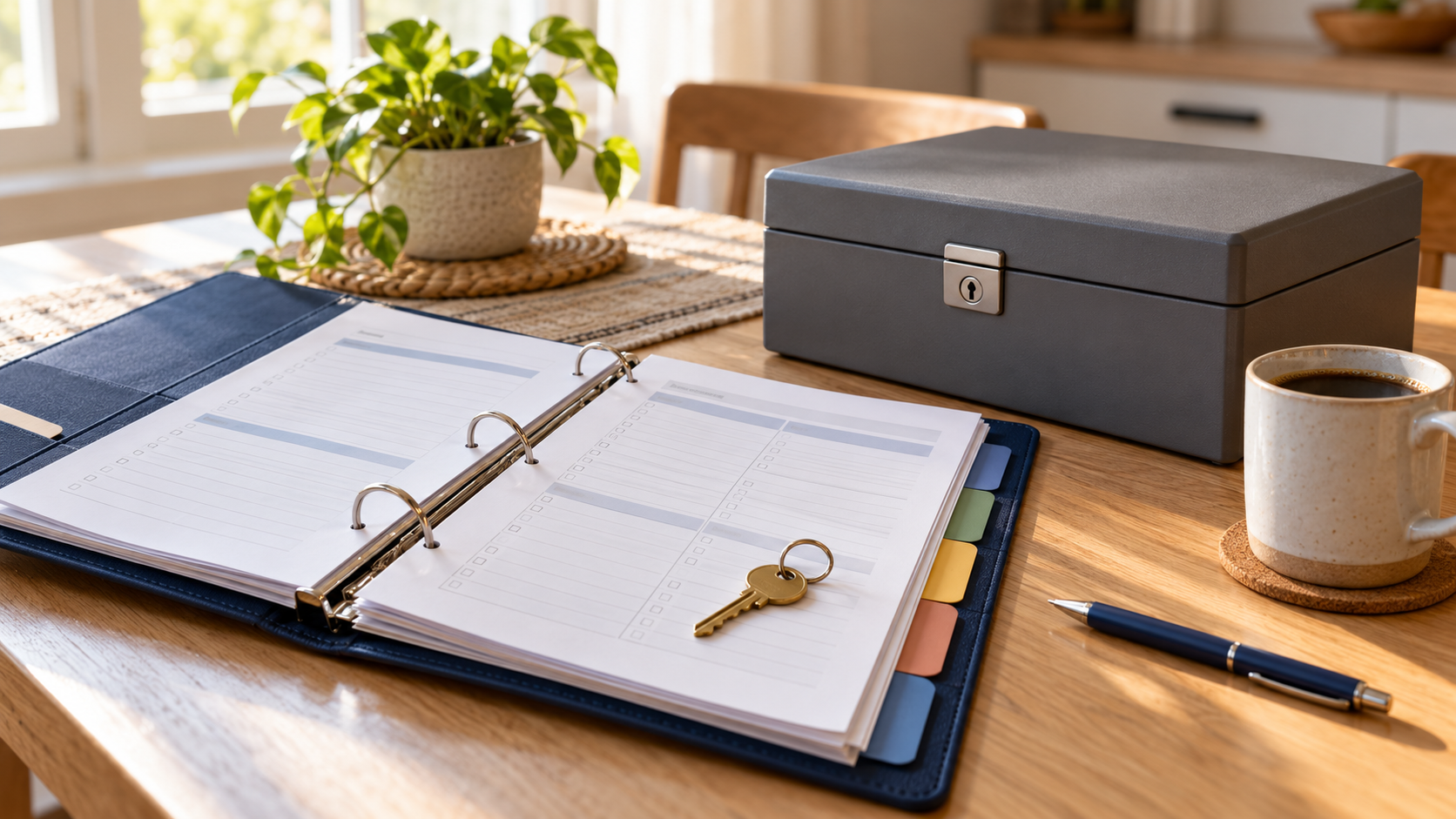
- A front page that states where the binder lives in the house and when it was last updated. If you haven’t built one, a free Household Info Sheet is a fast first page to fill in and gives the rest of the binder somewhere to start.
- A digital backup of the locator pages and scans, kept encrypted, in case the physical copy is ever lost in the same event that made you need it.
- One copy somewhere off-site if you can manage it, so a house fire or flood doesn’t take out your only copy along with the originals it was protecting.
Do you need a PDF or a printable pack?
Not necessarily. Search for “emergency binder pdf” and you’ll find plenty of downloads, but a PDF sitting on a hard drive doesn’t help much the moment the power’s out and the laptop’s dead. That’s why BPFI’s free printables live directly on the page instead of behind an email download: fill them out in the browser, print them, and they’re done, without an extra step where the file gets lost in a downloads folder.
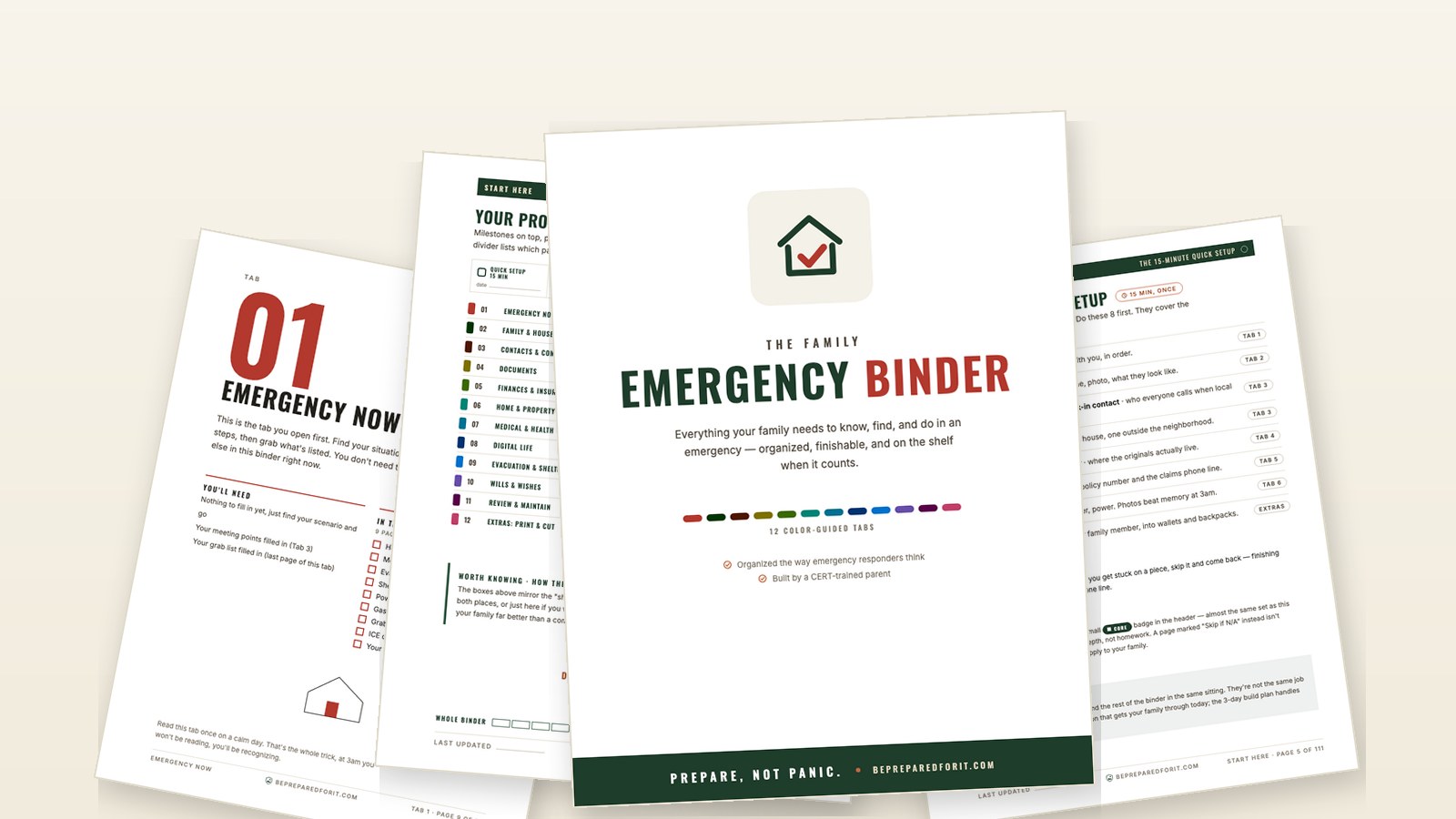
If you’d rather start from a finished system than build the tabs and sections yourself, the Family Emergency Binder is 12 tabs built around this same locator rule: it records where each original is kept rather than the account numbers themselves, and it never asks for a full password, Social Security number, or PIN.
Frequently asked questions
What documents should be in an important documents binder?
Identity papers (birth certificates, passports), property records (titles, deeds), legal documents (wills, power of attorney), and medical-authorization forms, plus locator notes for anything with a number attached to it, like accounts, cards, and policies. See the full category-by-category checklist above for the complete gather list.
Should I keep my Social Security card in the binder?
No. Keep the card itself somewhere more secure, like a safe, and put a note in the binder saying where it’s kept. The card is one of the most useful items to a thief, so it shouldn’t sit in something a house sitter, guest, or burglar could page through.
How long should I keep tax records?
The IRS’s general guidance is 3 years from when you filed for most returns, longer in specific situations like underreported income, and until the assessment period ends for the year you dispose of any property tied to those records.
Is there an important documents checklist I can print?
Yes. BPFI’s emergency binder checklist (linked above) covers all seven categories and is free to fill out directly on the page, no download or email required.
What is the difference between an important documents binder and an emergency binder?
Nothing, functionally. They’re the same object described two ways. This site treats the “emergency binder” as the finished, organized version of the important documents binder you’re building.
Start with what you already have in a drawer somewhere. Sort it against the three questions above, and you’ll know within an afternoon which pile is originals, which is copies, and which is just a list of where things live.
Coming soon
The part of being prepared most families never finish
The Family Emergency Binder puts your family's contacts, documents, and plans in one place — a 15-minute quick start tonight, finished over a weekend. Join the list and we'll email you the moment it's ready, at the $19 launch price for a limited time.