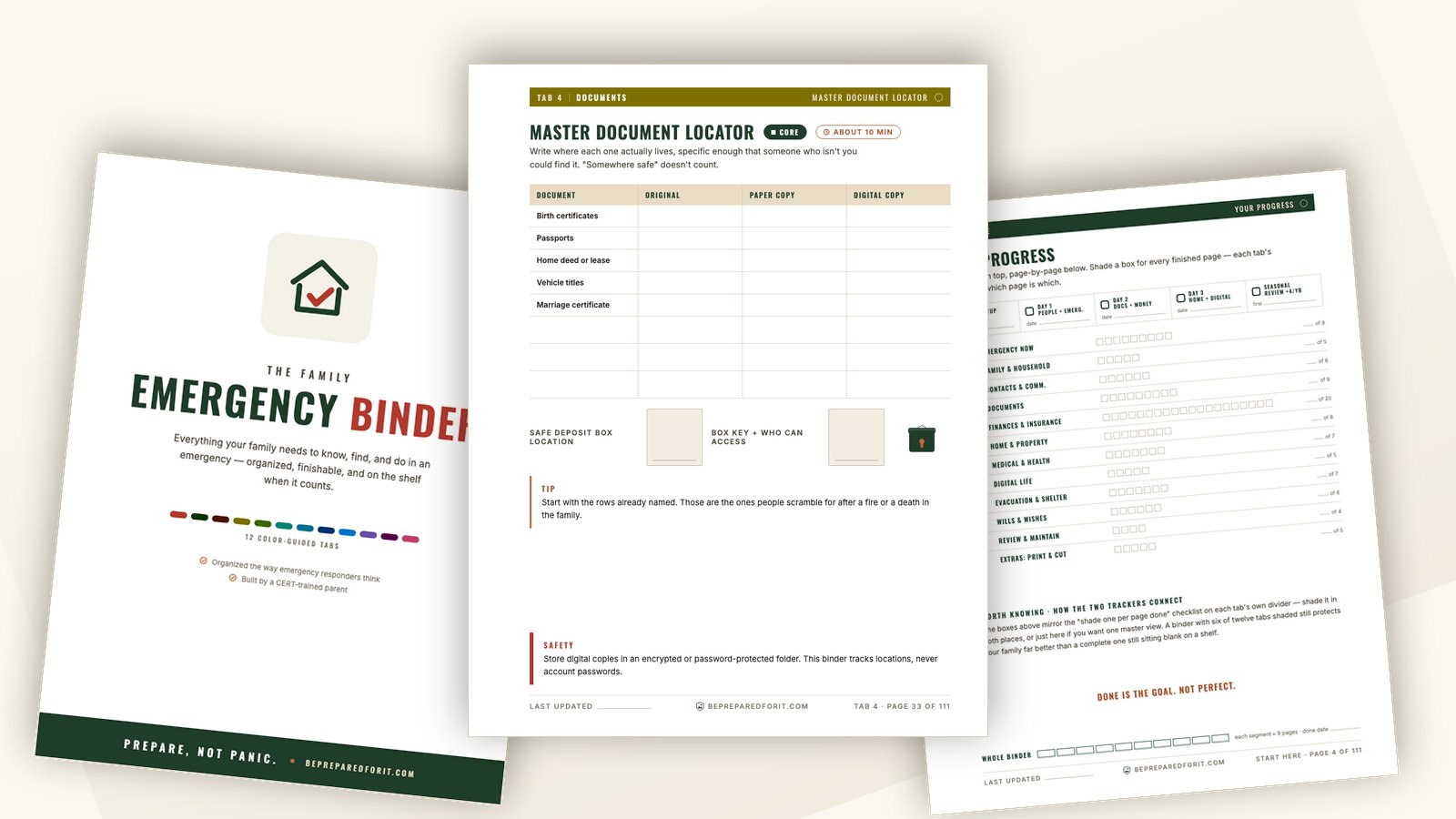
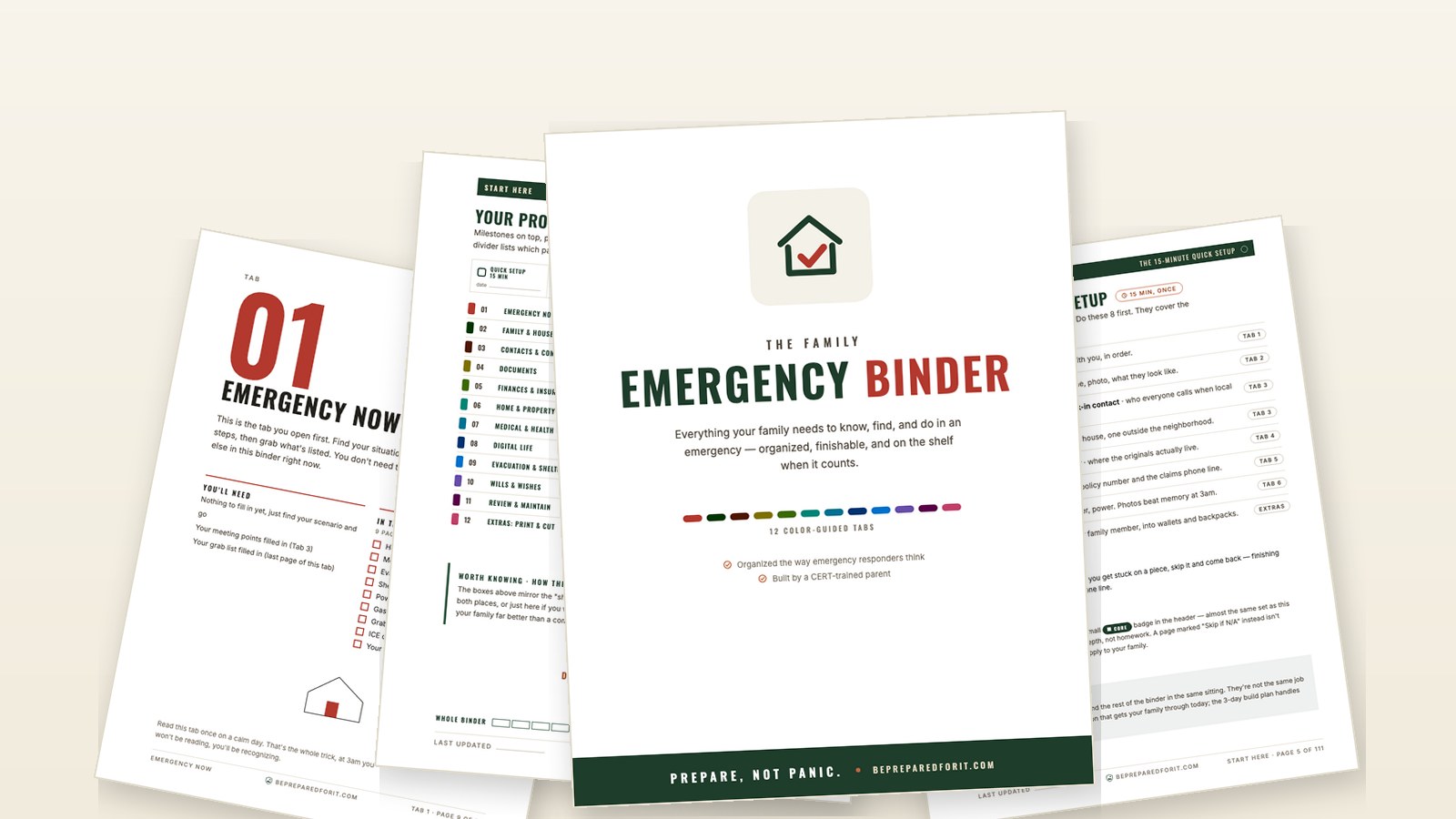
The Family Emergency Binder
Letter of Instruction: What to Put in It (Free Template)

In this guide
A letter of instruction is an informal letter to your family or executor that explains your final wishes and tells them where everything is: funeral preferences, who to call, where your documents are kept, your accounts and bills, and who gets personal items. Some guides call it a letter of last instructions. It isn’t legally binding, so it works alongside a will, not instead of one.
Some of what your family needs to know comes up within hours, long before anyone acts on a will. A letter they can open on day one answers those questions in your own words.
The image above is an AI illustration.
What a letter of instruction can and can’t do
A letter of instruction is a practical guide for the people you leave behind. According to Ohio State University Extension’s fact sheet on letters of instruction, there’s no legal requirement for one, it isn’t legally binding, it can be typed or handwritten, and you don’t need an attorney to write it. The fact sheet suggests you tell your attorney it exists.
Because the letter isn’t binding, it can’t change your will, and it should never contradict it. The OSU fact sheet says the will takes precedence. Fidelity warns that informal changes to an estate plan made through a letter may lead to litigation, the kind of dispute you’re trying to prevent. Anything you need enforced belongs in a legal document, such as your will, a trust, or the beneficiary form on an account. Ask an attorney which one fits.
The letter can still carry real weight. The OSU fact sheet says that in most cases the family’s wish to carry out what you wanted gives the letter authority even without legal backing. If you doubt your family will follow a particular wish, put that wish in your will instead.
| Letter of instruction | Will | |
|---|---|---|
| Legally binding | No | Yes, if made the way your state requires |
| Needs an attorney | No | Often written with one; state rules vary |
| Easy to update | Yes, rewrite, sign and date it | Changes follow your state’s formal rules |
| Best for | Wishes, contacts, where things are, the reasons behind your choices | Who inherits, who’s executor, guardians for minor children |
| If the two conflict | The will controls | The will controls |
What to put in it, in the order your family will need it
Write the sections in the order your family will reach for them, so the first few help even if you stop partway.
1. Funeral and burial wishes
Start here. The OSU fact sheet says the first order of business is the details that will help your family through the first hours after a death. Chuck McDonald, a former financial advisor, describes this in a video about letters of instruction: when his mother-in-law died suddenly, nobody knew whether she wanted burial or cremation, and the family was being asked almost right away.
Write down your choices on:
- Burial or cremation, and where (including what to do with ashes)
- Organ donation, whether you’ve registered as a donor, and whether you object to an autopsy or embalming
- Viewing, type of service, and where you’d like it held
- Music, readers or speakers, and any religious leader to call
- Flowers or a charity for donations
- Any prepaid plan or burial plot, and where that paperwork is
- Facts for an obituary, and where to send it
If you’d rather put more of your end-of-life planning in one folder, our guide to what to include in a death binder covers funeral rights, medical wishes and the facts the funeral home will ask for.
2. Who to call
Next, give your family a call list so they aren’t digging through your phone. A University of Florida extension guide suggests a name, address, phone number and email for each person or office. Include:
- Close family and friends, and who should call whom
- Your executor and attorney
- Your accountant or tax preparer, financial advisor, and insurance agents
- Your employer or former employer
- Your bank and other financial institutions
- Social Security and, if you served, the VA
- Clergy, clubs, or groups you belong to
If you already have a family emergency plan, copy most of the contacts from there.
3. Where your documents are
This is the section people make too vague. “Papers are in the office” isn’t enough. The UF guide recommends describing locations exactly, like “bottom right drawer of my home office desk,” and giving the bank name and address for a safe deposit box.
List where to find:
- Your will, any trust, and powers of attorney
- Your living will or medical directive
- Birth and marriage certificates, divorce papers, and military discharge papers
- Your Social Security card
- Life, home, and auto insurance policies
- Deeds, car titles, and mortgage papers
- Recent tax returns (the UF guide suggests the last five years)
- The safe deposit box key, and who’s allowed to open the box
Write where each document lives, not the numbers on it. Here’s the difference:
| Too vague | Useful | Too much for a letter |
|---|---|---|
| ”Will is in the office" | "Original will: gray fire box, top shelf of the hall closet. Copy with our attorney.” | The will’s contents copied out in the letter |
| ”Bank stuff is online" | "Checking and savings at our credit union, Main Street branch. Statements come by email.” | Account numbers and the online banking login |
| ”Insurance is handled" | "Life insurance: one policy through my employer, one through our agent. Paper policy in the fire box.” | Policy numbers next to your Social Security number |
The UF guide asks for a lot of numbers in the letter itself. We suggest a stricter rule, because you’ll hand out copies: a letter that several people hold is a poor place for a Social Security number. Our guide to what to keep in an important documents binder goes deeper on this.
The UF guide also lists what the death certificate asks for, including your parents’ names, your birthplace, and your military history. Tell your family where the papers that answer those questions are kept.
4. Money, property, and bills
Give your executor a map of your money. Name each place and leave the numbers off:
- Banks and credit unions, by institution name and account nickname (“joint checking,” “kids’ savings”)
- Retirement and brokerage accounts, by company
- Life insurance and annuities, by company and agent
- Benefits your family may be able to claim, such as from Social Security, the VA, an employer, or a fraternal group (the UF guide lists these)
- Debts: mortgage, car loans, credit cards, and who to call about each
- Money other people owe you, and where any paperwork is
- Bills on autopay, and which ones your executor should keep paying for now (insurance, utilities) or can stop
- Property: the house, vehicles, a storage unit, anything valuable that isn’t obvious
While you’re here, look at your beneficiary forms. Life insurance, retirement accounts, and annuities usually pay whoever is named on the form the company has on file, which can be different from what your will says. A 2009 Supreme Court case shows how this can go wrong. In Kennedy v. Plan Administrator for DuPont, a man divorced but never filed a new form for his employer savings plan. His ex-wife had given up her interest in the divorce decree, but the plan paid her anyway because the form still named her, and the Court said the plan was right to follow its documents.
If you’re unsure how your accounts are set up, ask each company or your attorney. Then note in the letter which accounts have beneficiaries named.
5. Your digital life, without the passwords
It’s tempting to write down your passwords. Don’t. Several people may hold copies of this letter, and every copy of a login list is one more place it can leak. The White Coat Investor’s guide to letters of instruction says the same: if you keep a password list, keep it separate from the letter so it can be locked up.
What the letter should say instead:
- Which password manager you use, and which trusted person has emergency access to it
- That your phone and computer exist, and who knows how to unlock them
- Which email, photo, and social media accounts matter, by name only
- What you want done with them: kept, memorialized, or closed
Missing logins cause real trouble. A reader wrote to the caregiving blog Minding Our Elders after their father, a widower in his 70s in excellent health, died of a sudden heart attack. He had done his legal planning, but the family found no record of the logins and passwords for his online accounts, and sorting it out took time, money, and emotional energy.
Two free tools help, and both have to be set up ahead of time:
- Apple Legacy Contact. You pick a person who can request your photos, messages, notes, files, and backups after you die. Apple says they need the access key you generate plus your death certificate, and that the key can be printed and saved with your estate planning documents. The person doesn’t need an Apple device. It doesn’t give them purchased media or anything in iCloud Keychain, which holds saved passwords, passkeys, and payment info. Apple’s Legacy Contact page has the setup steps.
- Google Inactive Account Manager. You choose up to 10 people to be notified or to receive the data you pick for each one, after your account sits unused for a period you set. Google says that without a plan, it reserves the right to delete an account that’s been inactive across Google for at least two years. Set it up from Google’s Inactive Account Manager help page.
The letter alone won’t open those accounts. Fidelity notes that state and federal laws may bar others from accessing your accounts and files without your written consent, and suggests naming someone to handle them in your estate planning documents. The letter’s job is to tell your family which accounts exist and which tools you already set up.
6. Personal items and who gets them
The OSU fact sheet calls the letter a good place for keepsakes and selected personal property, and says a written list beats name stickers on the backs of things, because stickers can fall off or be switched. Your family may not know which pieces are valuable, either, so say so: the ring that’s real, the painting that was appraised.
Two limits. If an heir is likely to dispute an item, OSU says to put it in the will. And Fidelity notes that many states let you make a separate list of personal property that your will refers to, which can carry legal weight. Ask your attorney whether that applies where you live.
7. Pets and the house
If you have pets, name who should take them and where the vet records are. For the house, a few lines save guesswork: where the water and gas shutoffs are, which plumber or electrician you trust, and when the bills come due.
If you rent a storage unit or a post office box, say where the keys and codes are. The White Coat Investor guide suggests asking the provider ahead of time to list someone who’s allowed access, because otherwise many providers may require a court order.
8. The why
This section is optional. A will says who gets what, but not why. The UF guide suggests using the letter to explain unusual parts of your will, such as leaving a child out or forgiving a debt. Fidelity adds that these explanations aren’t legally binding, but they can help prevent family squabbles.
The OSU fact sheet tells a story about a missing sentence. A widow’s will split her assets equally among her children, and some of them believed she wanted one child to buy the home farm for $800 an acre. The farm was later appraised at $1,200 an acre and sold to that child at $800 without the others being included. The children have not discussed it since. The authors say none of the hurt came from greed: the mother’s wish simply wasn’t shared with the whole family, and a single sentence in a letter of instruction would have been enough.
Some people add personal messages here, or write a separate “ethical will” about their values and what they hope for the people they love.
Letter of instruction sample
Here’s how a few filled-in lines might read. The details are made up; the point is the level of detail, with locations and names but no numbers.
1. FUNERAL AND BURIAL
Burial or cremation: Cremation   Where: Ashes scattered at the lake cabin
Prepaid plan or plot (paperwork is in): None

3. WHERE MY DOCUMENTS ARE (exact location)
Will and trust: Original in the gray fire box, top shelf of the hall
closet. Copy with our attorney.

4. MONEY, PROPERTY, AND BILLS (names only, no numbers)
Banks: Joint checking and kids' savings at our credit union,
Main Street branch
Accounts with named beneficiaries: 401(k) at work, life insurance
through my employer
A fill-in letter of instruction template
Copy this into a document or onto paper. Skip any section that doesn’t apply, and remember the rule: write where things are, not account numbers, Social Security numbers, PINs, or passwords.
LETTER OF INSTRUCTION
Written by: ______________________   Date: ____________
This letter explains my wishes and where to find things. It does not
change my will. If anything here conflicts with my will or another
legal document, such as a beneficiary form, follow that document.

1. FUNERAL AND BURIAL
Burial or cremation: __________   Where: __________________
Organ donation: Yes / No   Registered donor? Yes / No
Prepaid plan or plot (paperwork is in): ______________
Service type and place: ______________________________
Music, readers, clergy: ______________________________
Flowers or donations to: ______________________________
Obituary notes (or where my draft is): _________________

2. WHO TO CALL FIRST
Executor: ____________________  Phone: __________  Email: __________
Attorney: ____________________  Phone: __________
Accountant / advisor: _________  Phone: __________
Insurance agent(s): ___________  Phone: __________
Employer / pension: ___________  Phone: __________
Others to tell: _______________________________________

3. WHERE MY DOCUMENTS ARE (exact location)
Will and trust: ______________________________________
Powers of attorney / medical directive: ________________
Birth, marriage, divorce, military papers: ______________
Social Security card: __________________________________
Insurance policies: ___________________________________
Deeds, titles, mortgage: _______________________________
Tax returns: __________________________________________
Safe deposit box (bank and branch, where the key is): _____

4. MONEY, PROPERTY, AND BILLS (names only, no numbers)
Banks (institution and nickname): _______________________
Retirement / investment accounts (company): ______________
Life insurance / annuities (company): ____________________
Accounts with named beneficiaries: ______________________
Benefits to claim (Social Security, VA, employer): ________
Debts and who to call: __________________________________
Money owed to me (who, where the paperwork is): __________
Autopay bills (keep paying or stop): _____________________
Property and valuables: _________________________________

5. DIGITAL LIFE (no passwords)
Password manager used: ________  Emergency access person: ________
Who can unlock my phone and computer: ___________________
Apple Legacy Contact set up? Yes / No   Key kept in: _______
Google Inactive Account Manager set up? Yes / No
Accounts to keep, memorialize, or close: _________________

6. PERSONAL ITEMS (my wishes, not legally binding)
Item: ______________________  Goes to: ___________________
Item: ______________________  Goes to: ___________________

7. PETS AND HOUSE
Pet caregiver: ______________  Vet and records: ___________
Water / gas shutoffs: ________  Trusted repair people: ______
Storage unit or PO box (where keys are, who's listed): ______

8. WHY I MADE THESE CHOICES (optional)
______________________________________________________

Signed: ______________________   Date: ____________
What to leave out
- Changes to your will. If you’ve changed your mind about who inherits, update the will, and for any account with a named beneficiary, update that form too.
- Copies of what the will already says. Fidelity suggests leaving out statements that are already in your estate planning documents; the letter adds detail around them.
- Numbers and passwords. No account numbers, card numbers, PINs, Social Security numbers, or logins. Write where they’re kept instead.
- Anything you need enforced. If it has to happen, it goes in a legal document.
Where to keep it and who to tell
A letter nobody can find doesn’t help anyone. The OSU fact sheet puts it bluntly: if your loved ones don’t know the letter exists or where it is, it’s useless.
When you finish:
- Sign and date it. The UF guide says to destroy earlier versions, so nobody follows the wrong one.
- Keep a copy with your will and other estate papers.
- Give a copy to your attorney and your executor, and if you’re comfortable, go over it with your executor.
- Keep one where your family would look first.
- Tell at least one person where it is.
If you’re putting together an emergency binder, the letter fits in the section for final wishes, next to the pages that note where your will and insurance policies are kept. Our free emergency binder template is a good place to start if you don’t have one yet, and the emergency binder checklist lists the rest of what a binder holds.
When to update it
The UF guide says to review the letter every year, especially after a death, divorce, or birth in the family. A marriage, a move, or a big change in your accounts is a good reason, too. Pick a date you won’t forget; McDonald uses his birthday or tax time. Each review, cross out what’s stale, add what’s new, re-sign and re-date it, and swap out the copies you gave your attorney and executor. The White Coat Investor guide suggests checking your beneficiary forms at the same time.
Frequently asked questions
Is a letter of instruction legally binding?
No. It guides your family and executor, but it can’t change or override your will. If the two conflict, the will controls.
Do I need a lawyer to write a letter of instruction?
No. The OSU and UF extension guides both say you don’t need an attorney. It’s still smart to tell your attorney it exists and keep it consistent with your will.
Does a letter of instruction need to be notarized?
Generally, no. The OSU fact sheet says there’s no legal requirement for a letter of instruction, and the UF guide’s advice is to sign and date it. If a wish has to be legally binding, ask an attorney to put it in your will or another legal document instead.
Should I put my passwords in my letter of instruction?
No. Several people may hold copies, so name the password manager you use and who has emergency access to it instead. If you keep a written password list, store it separately and lock it up.
How many death certificates will my family need?
The University of Florida extension guide says six to twelve are usually needed. Insurance companies, banks and other financial institutions, pension plans, the IRS, and Social Security may each want a certified copy.
Can a married couple write one letter of instruction together?
Yes. The White Coat Investor guide says joint letters are common for married or partnered couples. Mark anything that applies to only one of you, and update it when either person’s situation changes.
Is a letter of instruction the same as an ethical will?
Not quite. A letter of instruction covers practical matters like your wishes, your contacts, and where things are. An ethical will is about values and what you hope for the people you love.
Final thoughts
You don’t have to finish all eight sections tonight. Write the first three (funeral wishes, who to call, and where your documents are), then sign and date it and tell one person where it is. Fill in the rest over the next week, and put a yearly review on your calendar.
This article is general information, not legal advice. Estate rules vary by state, so check anything that needs to be legally binding with an attorney.
Coming soon
The part of being prepared most families never finish
The Family Emergency Binder puts your family's contacts, documents, and plans in one place — a 15-minute quick start tonight, finished over a weekend. Join the list and we'll email you the moment it's ready, at the $19 launch price for a limited time.