Emergencies & Disasters
How to Prevent Frozen Pipes (and What to Do If They Freeze)
General information only, not professional advice. In an emergency, call 911 and follow local officials. How we use sources
We may earn a commission if you buy through our links, at no extra cost to you. We don't test products ourselves. We choose picks from the maker's own specs, the retailer listing and, where a safety rule applies, official government guidance. Specs shown are the maker's or seller's claims, and we have not tested any safety or fire rating. How we choose.
In this guide
To keep pipes from freezing during a cold snap, let your taps drip, open the cabinet doors under sinks so warm air reaches the plumbing, keep the house warm, and wrap exposed pipes in insulation before the cold arrives. If a pipe does freeze, open the faucet and thaw it slowly with warm air from an electric hair dryer, never a torch. If one bursts, shut off the water at the main valve. Everything below comes from the CDC, the National Weather Service, Ready.gov, and the American Red Cross, and where those agencies’ words are exact, they appear in quotation marks. Follow your local water utility and emergency officials if their advice differs, and call 911 in an emergency.
Why pipes freeze, and which ones are at risk
Water pipes freeze when the cold outside, or in a cold part of the house, gets to them. The CDC puts it this way: “Extreme cold can cause water pipes in your home to freeze and sometimes rupture or break.”
The American Red Cross says the pipes most likely to freeze are the ones outdoors or in spots the heat doesn’t reach: hose spigots, pool and sprinkler lines, and pipes in basements, crawl spaces, attics, garages, and kitchen cabinets. It adds pipes that run along poorly insulated outside walls. If you have a spot like that, it is the first place to protect.
We didn’t find an official source that gives a dependable number for how cold, or how long, it takes. So watch your forecast and act early instead of waiting for the thermometer to hit a magic number.
Before the cold arrives
Ready.gov’s winter weather page lists this under home preparation: “Prepare your home to keep out the cold with insulation, caulking and weather stripping. Learn how to keep pipes from freezing.” Here is what that looks like in practice.
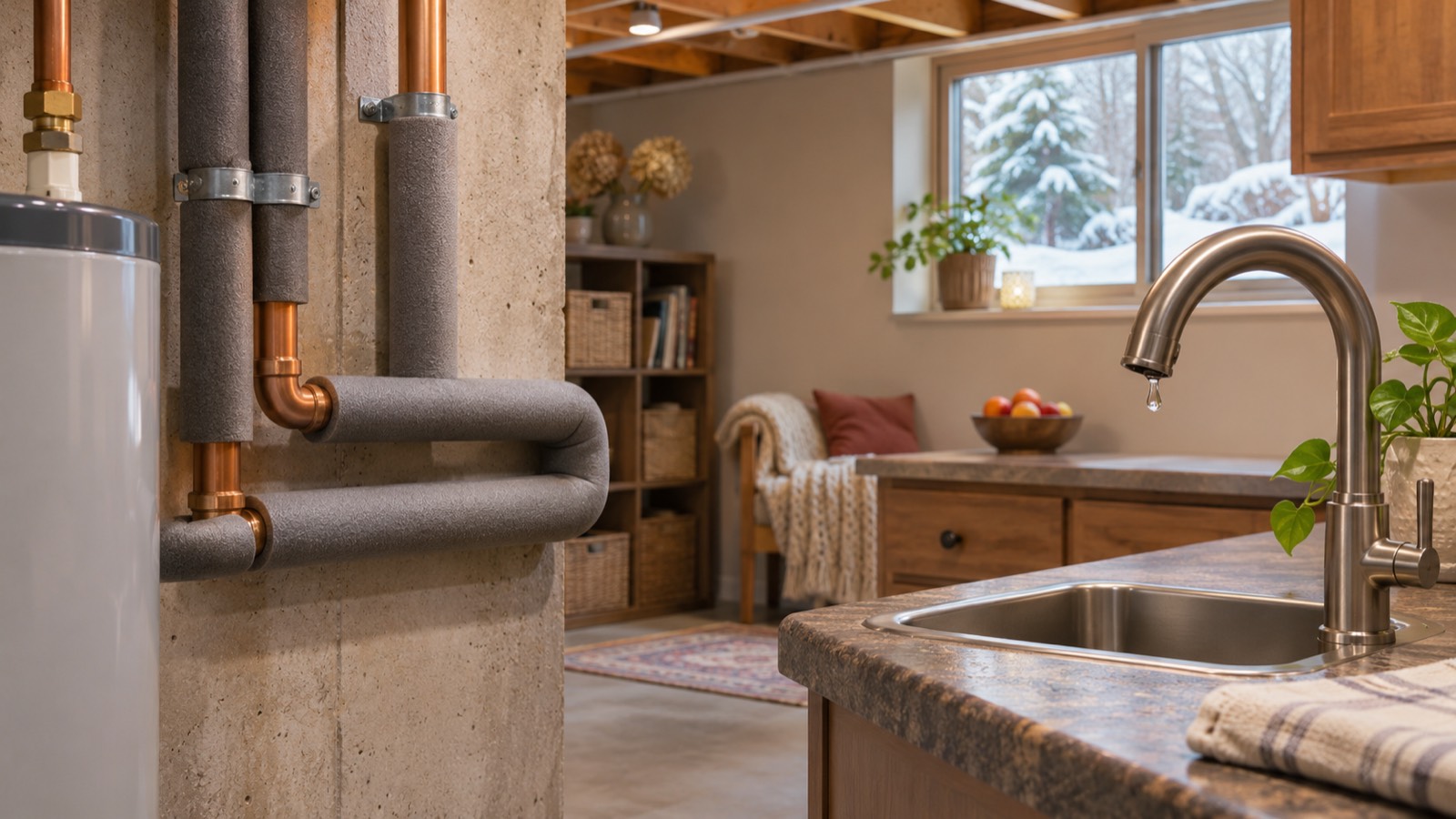
Insulate exposed pipes. The National Weather Service says: “To keep pipes from freezing, wrap them in insulation or layers of newspapers, covering the newspapers with plastic to keep out moisture.” The Red Cross recommends insulating both hot and cold pipes in the cold spots listed above, for example with pipe sleeves or UL-listed heat tape. If you use heat tape, follow the maker’s instructions exactly.
Deal with the outdoors. The Red Cross says to remove, drain, and store garden hoses and to drain outdoor faucets before a freeze.
Find your water shutoff now. If a pipe bursts, you want the water off fast. Our guide to how to shut off your water main covers finding the valve and turning it. The National Weather Service says, “Learn how to shut off your water if a pipe bursts.” Take a photo of the valve and put the picture in your family emergency binder so anyone in the house can find it.
Check the rest of your plan. Frozen pipes often arrive with a winter storm, which can also take the power. Our winter storm preparation guide has the full checklist.
During a cold snap
The CDC’s list for when you are expecting very cold or freezing temperatures reads:
“Leave all water taps slightly open so they drip continuously.”
“Keep the temperature inside your home warm.”
“Allow heated air to reach pipes. For example, open cabinet doors beneath the kitchen and bathroom sinks.”
Source: CDC, “Safety Guidelines: During & After a Winter Storm” (cdc.gov), accessed November 2026.
The National Weather Service adds this: “Allow a trickle of warm water to run from a faucet that is farthest from your water meter or one that has frozen in the past. This will keep the water moving so that it cannot freeze.” Source: National Weather Service, Winter Weather Preparedness (weather.gov/box), accessed November 2026.
The two agencies describe the drip a little differently, the CDC saying taps and the Weather Service pointing at one faucet with a warm trickle. The Red Cross, for its part, says to let cold water drip from faucets served by exposed pipes. If your water utility gives you a different instruction, follow the utility. A dripping tap uses water, so check what your utility prefers.
Two more Red Cross points that are easy to forget. Keep the thermostat at the same temperature day and night. And if you will be away, leave the heat on, set no lower than 55 degrees Fahrenheit.
None of this is a guarantee, and our winter storm guide also suggests filling the bathtub before a hard freeze, so you have water for flushing if the pipes do go. We cover how to use it in flushing a toilet when the power is out.
If the power is out too, keeping the house warm gets harder, and our guide to staying warm without power covers which heat sources are safe. Do not run a generator, grill, or camp stove inside to keep a pipe from freezing. Carbon monoxide is the risk, and our winter storm guide has the CPSC’s distance rule for generators.
If a pipe freezes
You turn on a tap and get a trickle or nothing at all. That may mean ice in the line. Here is what the agencies say to do.
Open the faucet first. The National Weather Service says: “If pipes freeze, remove insulation, completely open all faucets and pour hot water over the pipes or wrap them with towels soaked in hot water, starting where they are most exposed to the cold. A hand-held hair dryer, used with caution, also works well.” An open faucet gives melting ice, and the water behind it, somewhere to go.
Use gentle heat only. The CDC says: “If your pipes do freeze, do not thaw them with a torch. Thaw the pipes slowly with warm air from an electric hair dryer.” Source: CDC, “Safety Guidelines: During & After a Winter Storm” (cdc.gov), accessed November 2026. No open flame, no propane torch, and no heater placed against the pipe. Keep the hair dryer and its cord away from any standing water.
Know when to stop. If you can’t find the frozen section, can’t reach it, or the pipe is in a wall or ceiling, call a licensed plumber. We can’t see your house from here, and opening a wall is a plumber’s job.
Plan for water in the meantime. The CDC says: “If you cannot thaw your pipes, or the pipes have broken open, use bottled water or get water from a neighbor’s home.” Source: CDC, “Safety Guidelines: During & After a Winter Storm” (cdc.gov), accessed November 2026. If you have stored drinking water, this is the time for it. Our guide to storing water in a small space has ideas. If you get a boil water notice after the pipes are repaired, here is what to do.
If a pipe bursts
A burst pipe is a flood, and a flood sits near your electrical system.
- Shut off the water at the main valve if you can reach it safely. A round wheel turns clockwise until it stops, and a lever turns a quarter turn. Our water main shutoff guide has the details, including what to do if the valve is stuck.
- Mind the electricity. Ready.gov’s flood guidance says: “Do not touch electrical equipment if it is wet or if you are standing in water. Turn off the electricity to prevent electric shock if it is safe to do so.” If reaching the breaker panel means walking through water, stay out and call your electric utility or 911.
- Call a plumber, and your water utility if the leak is at the meter or the street side of your shutoff.
When in doubt, don’t. If anyone is hurt, or you smell gas or see sparks, leave and call 911.
Gear that makes this easier
Two small items help. We link to Amazon search results so you can compare current options, and we earn a commission if you buy through them, at no extra cost to you. We haven’t tested these ourselves. We read the product descriptions and buyer reviews and keep to the basics.
- Foam pipe insulation sleeves. Check that the inner diameter matches your pipe. Measure before you buy.
- Outdoor faucet covers. For hose spigots after you’ve drained and disconnected the hose.
Heat tape is a heating device, so we aren’t recommending a particular product here. If you choose one, look for a listing by a recognized testing lab and follow the instructions to the letter.
The short checklist
| When | What to do |
|---|---|
| Before the cold | Insulate exposed pipes; drain and store hoses; cover outdoor faucets; find and photograph the water main shutoff; keep a plumber’s number handy |
| During a cold snap | Let taps drip (follow your utility if it says otherwise); open cabinet doors under sinks; keep the house warm, day and night; leave the heat on, no lower than 55°F, if you’re away |
| If a pipe freezes | Open the faucet; thaw slowly with an electric hair dryer or hot towels; never a torch; call a plumber if you can’t reach it |
| If a pipe bursts | Water main off; watch for electrical hazards; call a plumber; use bottled water if needed |
Frequently asked questions
How cold does it have to be for pipes to freeze?
We didn’t find an official source that gives one temperature or time, and it varies with wind, insulation, and where the pipe runs. The sources above tell you to act when you are “expecting very cold or freezing temperatures,” so use the forecast, not a number.
Should I drip hot or cold water?
The CDC says to leave taps slightly open so they drip, and the National Weather Service says to let a trickle of warm water run from the faucet farthest from your meter or one that has frozen before. The Red Cross says to let cold water drip from faucets served by exposed pipes. If your water utility says otherwise, follow it.
Can I use a space heater to thaw a pipe?
None of the sources we read name a space heater for this. They name a hair dryer, hot water, and hot towels. Ask a plumber if those don’t work. Our guide to staying warm without power covers which heaters belong indoors at all.
Should I shut off the water if I’m leaving for a trip?
The Red Cross says to leave the heat on, set no lower than 55°F, when you’re away. Whether to also shut off the water is a question for your plumber or insurer, since we don’t have an official source on it.
What should I do if my apartment’s pipes freeze?
Call your landlord or building manager right away, since you may not have access to the main shutoff. Ask now where it is and who to call after hours. The same drip and cabinet-door steps apply in your unit.
Your next step
Do two things this week, while it’s still dry. Find your water main and take a photo of it, and walk the house looking for pipes in the garage, crawl space, and along outside walls that nothing is wrapped around. Then put the forecast on your phone, and check it before the first hard freeze. Our winter storm checklist covers the rest of the house.