Gear & Supplies
Space Heater Safety for Cold Snaps and Power Outages
General information only, not professional advice. In an emergency, call 911 and follow local officials. How we use sources
We may earn a commission if you buy through our links, at no extra cost to you. We don't test products ourselves. We choose picks from the maker's own specs, the retailer listing and, where a safety rule applies, official government guidance. Specs shown are the maker's or seller's claims, and we have not tested any safety or fire rating. How we choose.
In this guide
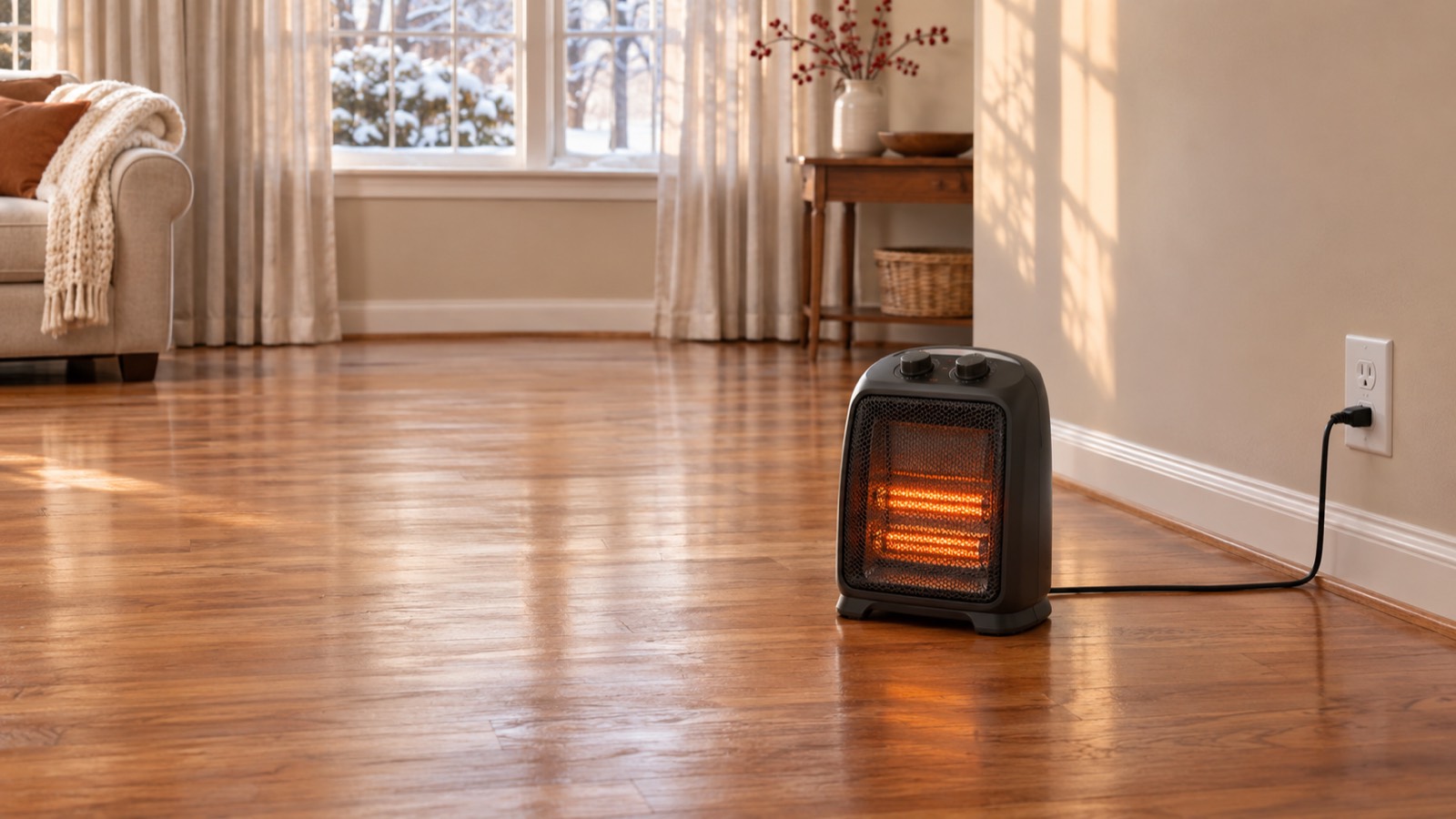
Keep a space heater at least 3 feet from anything that can burn, plug it straight into a wall outlet, put it on a flat surface where it can’t be knocked over, and turn it off when you leave the room or go to sleep. Those four habits cover most of what the federal agencies ask of you.
This page is the short version of what the U.S. Fire Administration (USFA), the Consumer Product Safety Commission (CPSC), the CDC, and Ready.gov say about space heaters. It matters most in a cold snap or a long outage, when a heater runs for hours and people get creative. We are not testing or ranking heaters here. If you want to know how to stay warm when the power is off and a plug-in heater won’t work, our guide to staying warm without power covers that side.
Why a small heater deserves this much attention
The USFA puts the problem in one line:
Home portable heater fires were only 3% of all home heating fires annually for 2017-2019, but they accounted for 41% of fatal heating fires in homes.
Source: USFA, “Heating Fire Safety” (usfa.fema.gov), accessed November 2026.
Portable heaters start fewer fires than other heating equipment, but the fires they start are the ones people don’t survive. The CPSC adds a count for the whole country:
CPSC estimates that portable heaters are involved in about 1,700 fires per year, resulting in about 80 deaths and 160 injuries annually.
Source: CPSC, “Seasons Change, but Fire and Carbon Monoxide Safety Is Year-Round” (cpsc.gov), 2022 news release, accessed November 2026.
What to look for when you buy one
A few features separate a safer heater from a risky one, and the federal agencies name them. The USFA handout lists these for any space heater:
Make sure the heater has an automatic shut-off, so if it tips over, it shuts off.
Only use portable heaters from a recognized testing laboratory.
Source: USFA, “Heating Fire Safety” handout (usfa.fema.gov), accessed November 2026.
In plain terms, check the box or the back of the unit for a mark from a testing lab, and check that the manual says it shuts off if it falls. The CDC also tells people to use “electric space heaters with automatic shut-off switches and non-glowing elements.” (CDC, “Stay Safe During and After a Winter Storm”, accessed November 2026.)
The CPSC has also said that older space heaters may not meet newer safety standards (CPSC, December 2005 news release), so a hand-me-down from the garage is worth a second look, and the CPSC posts product recalls you can search by model. We can’t tell you which heater is best for your room, and we haven’t tested any. What we can say is that a heater with the basics above is a better starting point than one without them.
Where to put it
Distance is the rule every agency repeats. The USFA’s heater flyer reads:
Place space heaters on a solid, flat surface. Keep them at least three feet from things that can burn.
Source: USFA, “Portable Heater Fire Safety” (usfa.fema.gov), accessed November 2026.
The CPSC gives examples of what counts as “things that can burn”:
Your space heater needs space. Keep flammable objects, such as curtains, sofas, beds, clothes and papers at least 3 feet away from your space heater at all times.
Source: CPSC, “CPSC Reminds Consumers to Warm Up to Safety this Winter” (cpsc.gov), 2020 news release, accessed November 2026.
The CDC adds a few placement rules:
Keep heat sources, like space heaters, at least 3 feet away from drapes, furniture, bedding, or other flammable materials. Never cover your space heater.
Never place a space heater on top of furniture or near water.
Source: CDC, “Stay Safe During and After a Winter Storm” (cdc.gov), accessed November 2026.
So the corner behind the couch and the spot under the curtains are out, and so is the bathroom counter. A bare floor in the middle of a room with a clear radius is the picture the agencies describe. Laundry drying on a rack next to the heater is also something that can burn.
How to plug it in
The cord is where a lot of homes go wrong, especially during an outage when outlets are scarce. The USFA says:
Check your space heater for cracked or damaged cords and plugs. Plug space heaters directly into wall outlets, don’t use an extension cord or power strip.
Source: USFA, “Portable Heater Fire Safety” (usfa.fema.gov), accessed November 2026.
The CDC covers the rest of the cord:
Make sure that the cord of an electric space heater is not a tripping hazard, but do not run the cord under carpets or rugs.
If your space heater has a damaged electrical cord or produces sparks, do not use it.
Source: CDC, “Stay Safe During and After a Winter Storm” (cdc.gov), accessed November 2026.
Never leave it running
The USFA message is short: “Turn space heaters off when leaving the room or going to bed.” (USFA, “Heating Fire Safety”, accessed November 2026.) The CPSC says to turn heaters off when you sleep or when you leave the room, and it names a second risk that gets less attention:
A CPSC staff report found that space heaters can also present a hyperthermia (overheating) hazard to consumers, particularly children, people with disabilities and senior citizens, who may be more susceptible because of their limited ability to act or react to the elevated ambient temperature.
Hyperthermia can result in death. DO NOT leave space heaters running unattended in a confined space around infants, or individuals with reduced physical, sensory or mental capabilities.
Source: CPSC, “Seasons Change, but Fire and Carbon Monoxide Safety Is Year-Round” (cpsc.gov), 2022 news release, accessed November 2026.
The CDC’s line on children is a plain one: “Never leave children unattended near a space heater.”
That puts a limit on the “heat one room and sleep in it” plan people reach for in an outage. Since the agencies say to turn the heater off at bedtime, plan for the night with blankets and a place to go if the house gets too cold, not a heater left on. Our winter storm guide and the overnight outage page cover those options.
What never belongs indoors as a heater
During an outage the temptation is to use whatever makes heat. A few of those are dangerous in a closed house. Ready.gov says:
Avoid carbon monoxide poisoning. Only use generators and grills outdoors and away from windows and never heat your home with a gas stovetop or oven. Using an oven or stovetop for heat can also increase the risk of fires, burns and could damage the appliance.
Source: Ready.gov, “Winter Weather” (ready.gov), accessed November 2026.
The CDC’s carbon monoxide page lists more things that stay out of the house:
Never burn charcoal indoors. Burning charcoal - red, gray, black, or white - gives off CO.
Never use a portable gas camp stove indoors.
Do not use portable flameless chemical heaters indoors.
Source: CDC, “Carbon Monoxide Poisoning” (cdc.gov), accessed November 2026.
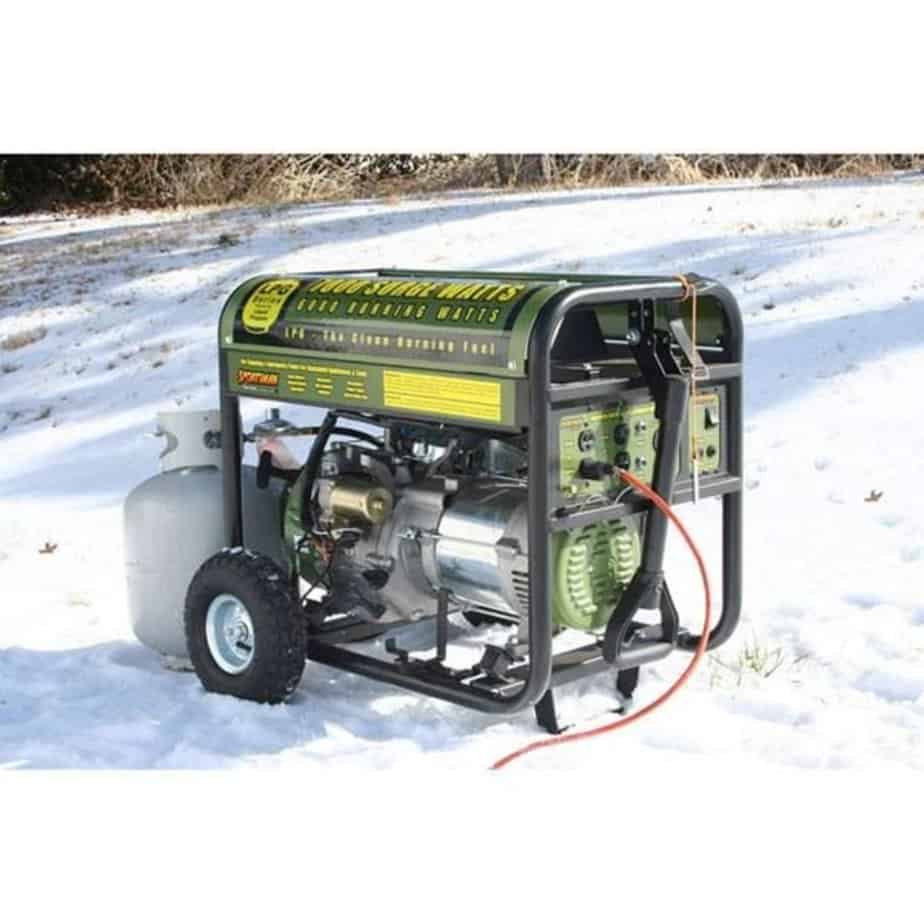
If you run a generator to power an electric heater, the generator itself is the carbon monoxide risk. Our page on how far a generator should be from the house has the distances.
Kerosene and gas heaters are a separate category. The USFA says to use kerosene heaters only if they are from a recognized testing laboratory and have an automatic shut-off, and to refuel a cooled heater outside. The CDC says to check with your local fire department that kerosene heaters are legal where you live, to make sure you have proper ventilation, and to “use only the type of fuel your heater is designed to use.” Whether an unvented fuel-burning heater is allowed at all varies by place, so ask your local fire department before you buy one.
Alarms matter more when heaters run
A heater that runs for hours raises the chance of both a fire and, with fuel-burning units, carbon monoxide. The CPSC’s winter reminder gives placement for smoke alarms:
Install smoke alarms on every floor of your home, outside all sleeping areas, and inside each bedroom. Test smoke alarms once a month to make sure they are working.
Source: CPSC, “CPSC Reminds Consumers to Warm Up to Safety this Winter” (cpsc.gov), 2020 news release, accessed November 2026.
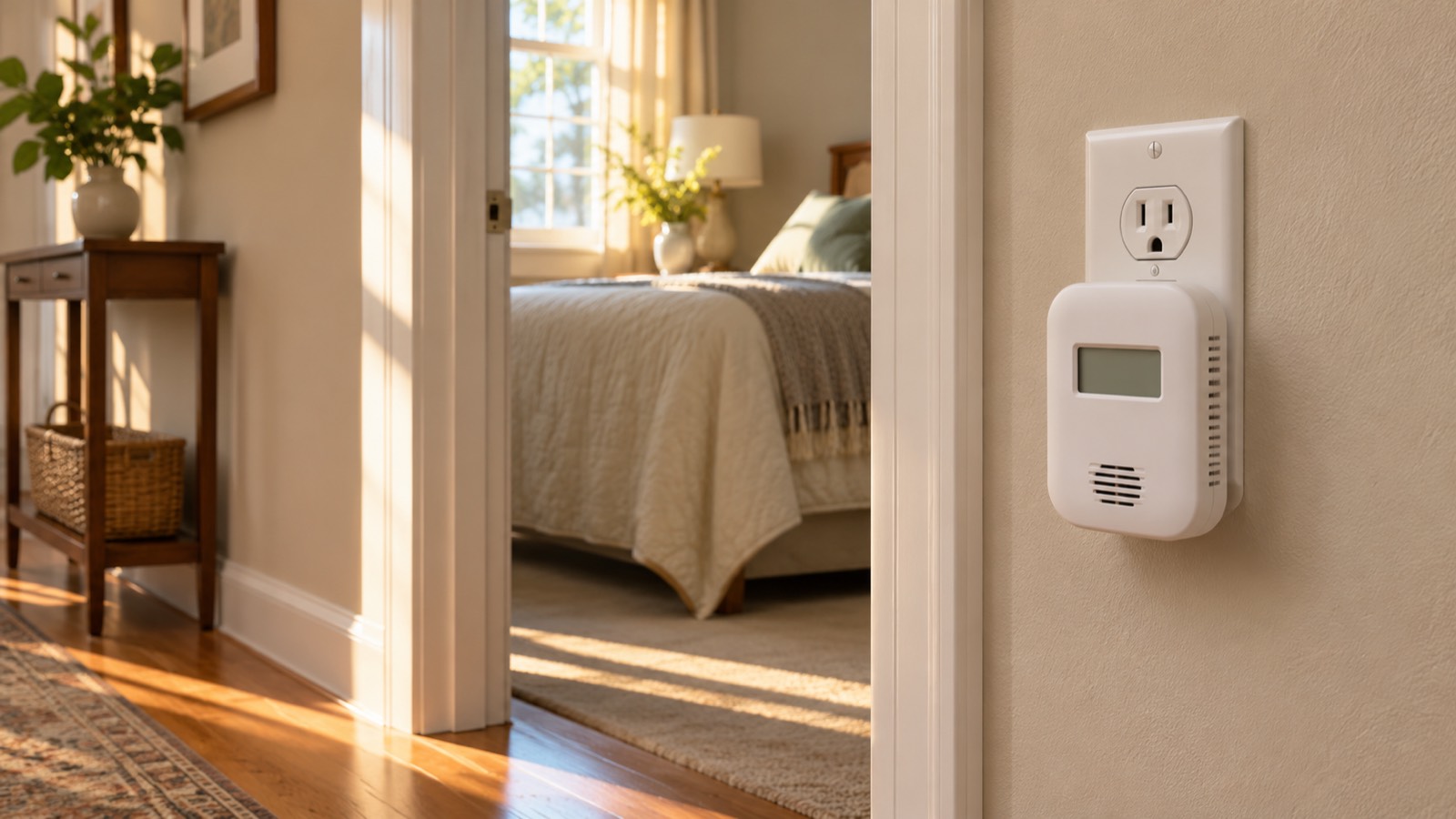
The same release says CO alarms go on every level and outside all sleeping areas, and should be tested monthly. The CDC adds that battery-operated or battery back-up units are the ones to look for:
Install battery-operated or battery back-up CO detectors near every sleeping area in your home.
Replace your CO detector following the manufacturer’s instructions or every 5 years.
Source: CDC, “Carbon Monoxide Poisoning” (cdc.gov), accessed November 2026.
If you are missing either one, a carbon monoxide alarm with battery backup or a smoke alarm is the cheapest safety item on this page. Our carbon monoxide detector guide covers what to look for and where to put one. Check the box for a testing lab mark and read the manufacturer’s placement notes. For a small fire you can safely fight, see how to choose a home fire extinguisher. The USFA’s rule there is that if you are unsure, you leave and call 911.
A short checklist before the first cold night
- Look at the cord and plug for cracks or damage.
- Find the lab mark and the tip-over shut-off in the manual or on the label.
- Pick a flat, bare spot with 3 feet clear on every side.
- Plug into a wall outlet, with nothing else on that cord.
- Test the smoke and carbon monoxide alarms.
- Decide in advance who turns the heater off at bedtime.
Follow your local officials
This page repeats what federal agencies publish and does not replace local guidance. Fire departments and emergency management offices know your codes and your conditions. If a heater smells like burning, sparks, or you see smoke, get everyone out and call 911 from outside. If you feel headache, dizziness, or weakness and a fuel-burning appliance is running, get to fresh air and call 911. When in doubt, don’t use it.
If you are building out the rest of your winter plan, our winter storm checklist is the place to start.