In this guide
Pick one small room, close it off, and put everyone in it, in layers, under blankets. Use only heat that’s safe indoors, like a vented fireplace or a space heater with three feet of clearance, never the oven, a grill, or a generator. Watch for hypothermia signs and drip the faucets to protect pipes.
Most winter power outages last a few hours, not days, so tonight’s job isn’t heating the whole house. It’s keeping the people in it warm until the power, or the sun, comes back. That means picking one room, dressing for indoor cold, and knowing exactly which heat sources are safe to use and which ones can hurt you faster than the cold will.
The first hour: close off one room
Stop trying to heat a house you can’t heat anymore. Pick one small, interior room with a door that closes and as few windows as possible. An interior room holds heat better than one with an exterior wall, and a room that gets afternoon sun helps even more. Move the whole family there, kids and pets included.
Then close it up:
- Push a towel or a rolled blanket against the gap under the door to the rest of the house
- Close blinds and curtains, especially once it’s dark, since a bare window loses heat fast
- Bring coats, extra blankets, and sleeping bags into the room instead of leaving them down the hall
- Layer clothing rather than wearing one heavy layer, and keep a hat on. A surprising amount of body heat leaves through an uncovered head
This is the same room-and-body-heat strategy in our guide to getting through a power outage at night, which walks through the rest of that first hour: checking on everyone in the house, food safety, and keeping phones charged. Here we’re going deeper specifically on staying warm.
Heat sources, from safest to never
Not every way to make heat is a way to make heat safely. Sort what you have into three tiers before you use any of it.
Tier 1: no flame, always safe. Blankets, sleeping bags, extra coats, and body heat from huddling together. Mylar emergency blankets are worth having specifically for this: they reflect about 90% of the body heat that would otherwise escape, as long as you wrap the whole body, including the head and neck.
Tier 2: safe if you do it right.
- A wood stove or fireplace, gas logs included, but only if it’s properly vented to the outside. An unvented fire in a closed room is a carbon monoxide problem, not a heat source.
- An electric space heater, run on generator or battery power if the grid is down. Keep it at least three feet from drapes, furniture, and bedding, never cover it, and never leave a child unattended near it. Plug it directly into a wall outlet rather than an extension cord, and turn it off both when you leave the room and when everyone goes to sleep. That’s CPSC’s own guidance for this exact situation, and it’s worth following to the letter.
- An indoor-rated kerosene or propane heater, but only the kind built for indoor use, only with a working carbon monoxide alarm in the room, and only ventilated exactly as the manufacturer directs. The CDC lists portable space and kerosene heaters among the options, but “safe” here depends entirely on using the right unit the right way.
Tier 3: never, no exceptions. The oven or stovetop, a grill, a camp stove, a hibachi, a lantern, or a generator, used indoors, in a garage, or anywhere that isn’t fully outside. All of them produce carbon monoxide, and a closed-up room built to trap heat traps gas just as well. Candles are worth keeping for light, but they don’t produce meaningful heat and carry their own fire risk. Our candle safety guide covers the clearance and placement rules if you’re using them tonight.
The stakes here aren’t small. Nationally, space heaters and heating stoves cause about 30% of home heating fires but 73% of the deaths, according to NFPA. Sensible clearance and an off switch, not a bigger heater, are what change that number.
Carbon monoxide: the outage’s quiet killer
Carbon monoxide is colorless, odorless, and, per the American Red Cross, common during power outages when people turn to other ways to heat and cook. That combination is exactly why the rule has to be a hard one, not a judgment call: install a carbon monoxide detector on every level of the home, with a battery backup, per FEMA’s ready.gov.
If you’re running a generator, keep it fully outdoors and at least 20 feet from any window, door, or vent, never in a garage even with the door open. Our guide on propane generators in cold weather covers placement and performance in more depth if you’re setting one up tonight. The same 20-foot, outdoor-only rule applies to grills, camp stoves, and any other gas or charcoal device.
Watch for headache, dizziness, weakness, nausea, vomiting, chest pain, or confusion. The CDC lists those as the most common CO poisoning symptoms, and they can look a lot like the flu until they don’t. If anyone in the house shows them, get outside into fresh air immediately and call 911 or Poison Control at 1-800-222-1222. If you need to cook while the power’s out, our guide to cooking without power has the same ventilation rules built in.
How to tell when cold has become a medical emergency
Hypothermia doesn’t announce itself the way a fire or a flood does. It shows up as:
- Shivering
- Exhaustion or feeling very tired
- Confusion
- Fumbling hands
- Memory loss
- Slurred speech
- Drowsiness
The CDC treats these as warning signs to act on, not wait out. If a body temperature drops below 95°F, that’s not a “keep an eye on it” situation. The CDC is direct about this one: it’s a medical emergency, and it needs immediate attention. Call 911.
Older adults and infants are the two groups to watch hardest, along with anyone who’s been outside for a long stretch. An infant in a cold bedroom can lose body heat faster than an adult would notice. If anyone has to step outside in real cold, know that both frostbite and hypothermia can take hold within minutes once wind chill gets involved, not hours.
Keep the pipes from freezing
Frozen pipes are the outage’s second emergency, the one that shows up a day or two later as a flooded kitchen instead of a cold night. Pipes freeze most often in unheated spaces like basements, crawl spaces, attics, and garages, and in any pipe that runs along an exterior wall with little insulation, according to the American Red Cross.
Two things help most, and both are free:
- Open the cabinet doors under kitchen and bathroom sinks so warmer room air can reach the pipes underneath
- Let a faucet served by an exposed or exterior pipe drip. Moving water, even a trickle, is harder to freeze solid than still water
If you can reach exposed pipes in a garage or crawl space, wrapping them helps, and even a quarter inch of newspaper wrapped around a pipe can make a real difference. And know where your main water shutoff is before you need it. If a pipe does burst, that’s the first thing you’ll want to turn off.
When to leave
There’s no official government threshold that tells you exactly when a house is too cold to stay in. That call is yours to make, and it’s a reasonable one to make early rather than late. Leave for a warming center, a friend’s house, or a public library when any of these is true:
- Someone is showing hypothermia signs
- Someone in the house depends on powered medical equipment
- Your one warm room keeps losing ground no matter what you do
- The outage is clearly going to outlast the heat sources you have
The Red Cross names friends’ homes, libraries, and warming centers as legitimate places to go, not a last resort. Your local emergency management office or 211 can point you to the nearest one if you don’t already know it. If the situation you’re facing is being stranded in a car instead of stuck at home, our winter car emergency kit guide covers staying warm and safe there instead.
Frequently asked questions
Is it safe to use the oven to heat the house?
No. Turning on a gas oven or stovetop for heat is not safe, per the CDC, and it’s one of the more common outage mistakes. Ovens aren’t designed to run unvented for hours, and they produce carbon monoxide in a room that’s often small and already closed off.
How do you keep a house warm without power?
You don’t try to heat the whole house. Close off one small room, move the family there in layers with blankets, and use only heat sources from the safe tier: a vented fireplace, or a space heater with proper clearance. Everything else in this guide supports that one decision.
Can I run a propane heater indoors?
Only an indoor-rated unit, used exactly as the manufacturer describes, with a working carbon monoxide detector in the room and the ventilation the instructions call for. A propane heater built for a patio or garage is not the same product and doesn’t belong inside.
How cold is too cold inside for a baby or an older adult?
There’s no single number to watch for. Watch the person instead: confusion, slurred speech, drowsiness, or unusual fumbling are the signs that matter, and a body temperature under 95°F is a medical emergency regardless of what the thermostat says. Older adults and infants lose heat faster than everyone else in the house, so check on them more often.
What should I do if the power goes out in winter and I have no heat source at all?
Close off one room, get everyone into layers and under blankets, and let body heat do the work. It isn’t comfortable, but it works for the hours most outages actually last. Watch for hypothermia signs, and leave for a warming center if the room keeps getting colder instead of holding steady.
Have this plan ready before you need it
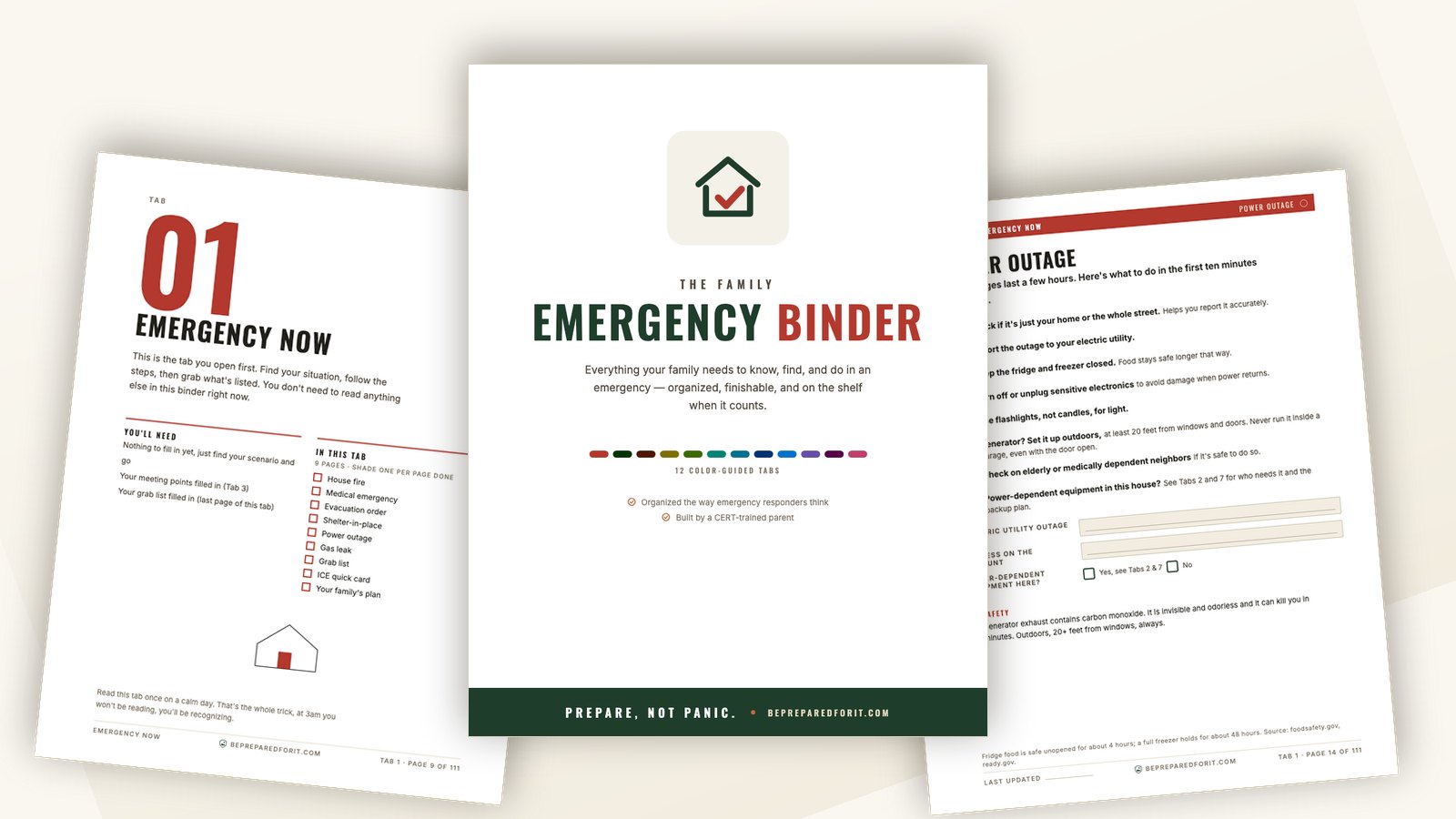
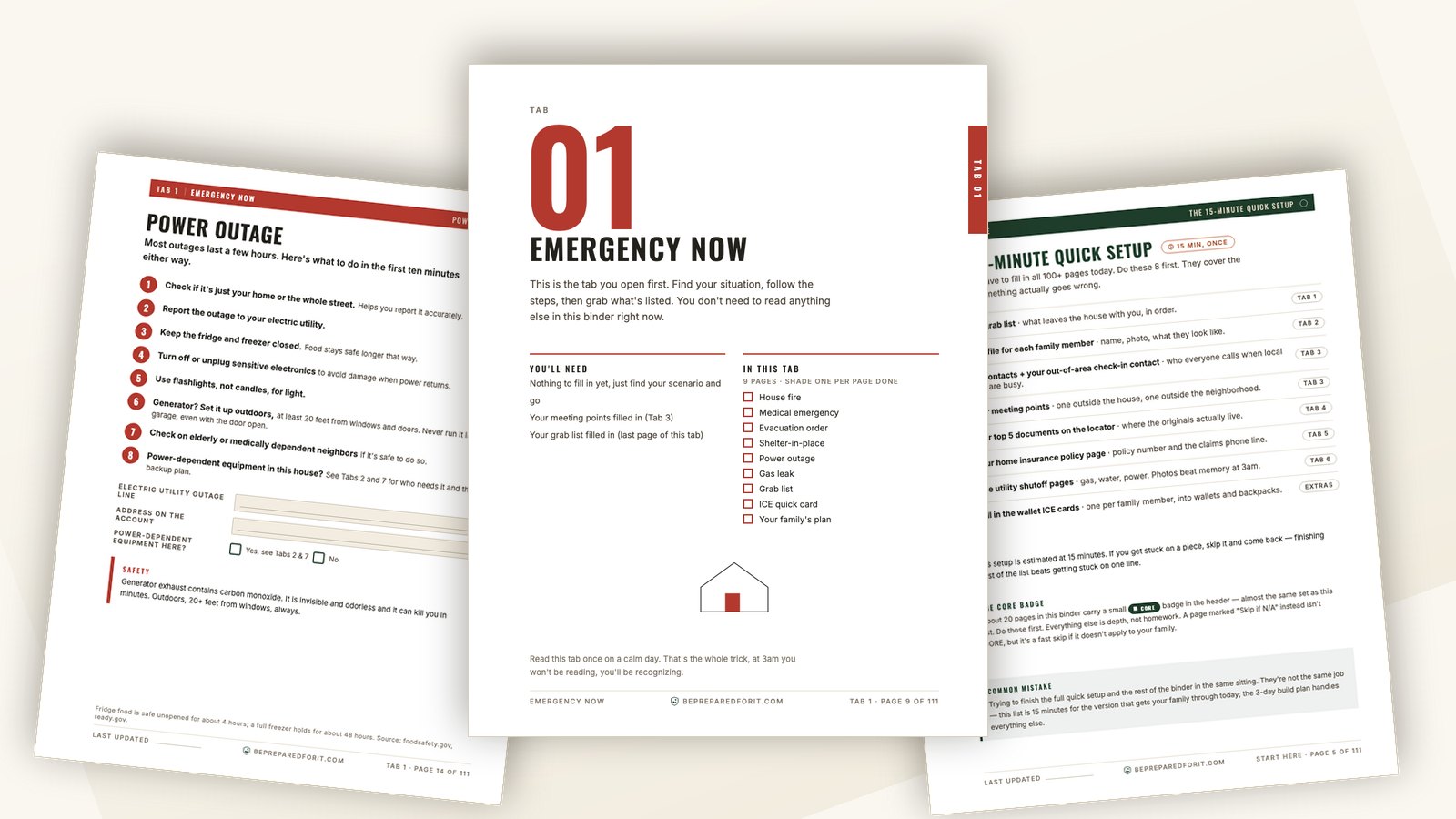
None of this is complicated, but it’s a lot to hold in your head at 9 p.m. with the power out and the house getting colder. If you’d rather have the first ten minutes written down, the binder’s Power Outage page puts them on one sheet: who to call, what to keep closed, where a generator can safely run, and where to turn if someone in the house depends on powered medical equipment.
Coming soon
The part of being prepared most families never finish
The Family Emergency Binder puts your family's contacts, documents, and plans in one place — a 15-minute quick start tonight, finished over a weekend. Join the list and we'll email you the moment it's ready, at the $19 launch price for a limited time.