Gear & Supplies
Best Carbon Monoxide Detectors for Your Home
General information only, not professional advice. In an emergency, call 911 and follow local officials. How we use sources
We may earn a commission if you buy through our links, at no extra cost to you. We don't test products ourselves. We choose picks from the maker's own specs, the retailer listing and, where a safety rule applies, official government guidance. Specs shown are the maker's or seller's claims, and we have not tested any safety or fire rating. How we choose.
In this guide
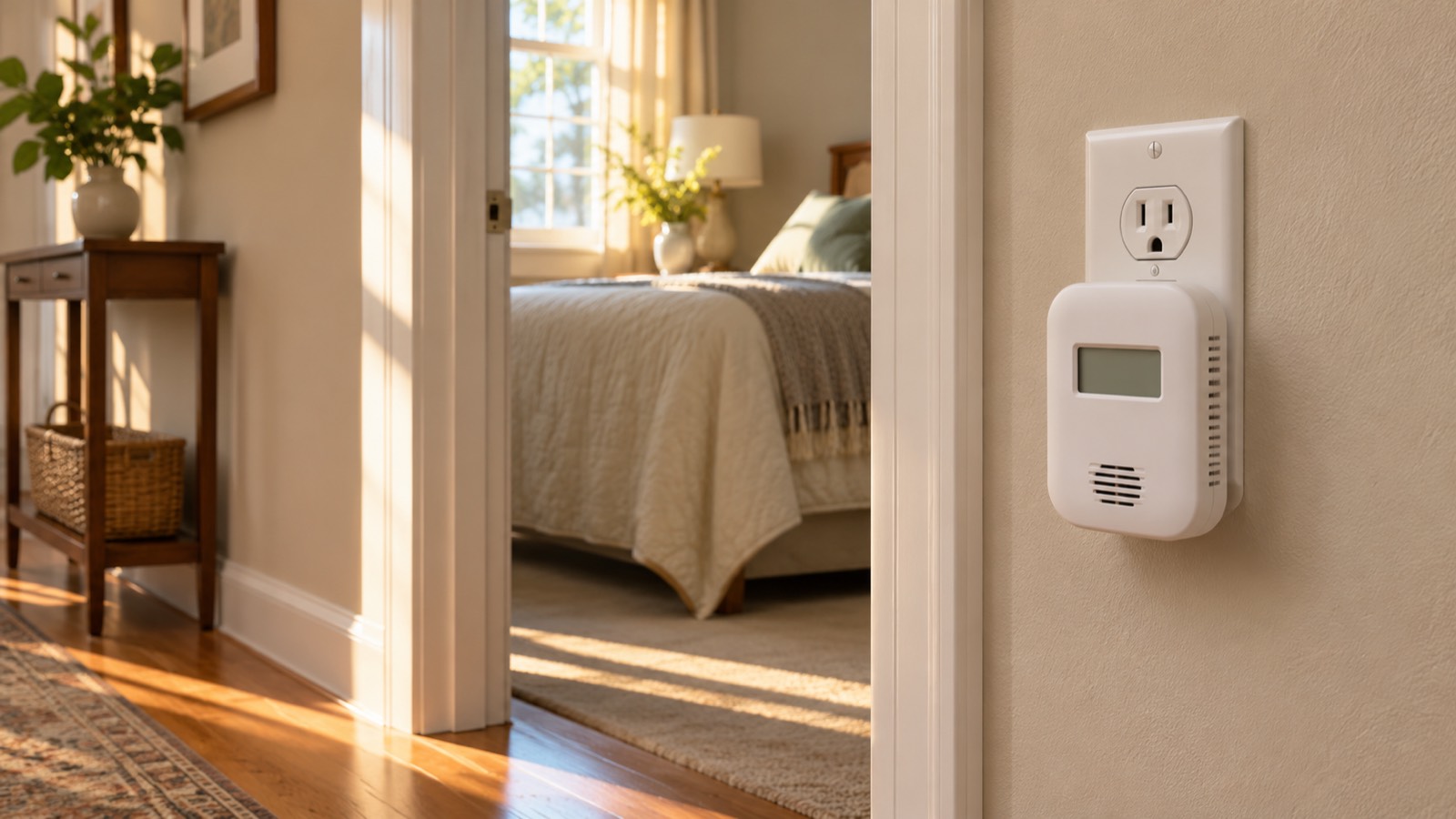
For most homes, the best carbon monoxide detector is a plug-in model with battery backup and a digital display, like the Kidde KN-COP-DP-B. It runs on house power day to day and switches to its batteries when the power drops. Put one on every level and outside each sleeping area, buy only a model that meets the UL 2034 standard, and check the date on the back so you know when to replace it.
Carbon monoxide matters more in an outage, not less. The things people reach for when the lights go out, like a generator or a charcoal grill, are the things that make it. This guide covers what the federal agencies say to look for, where the detectors go, and three models compared. If anyone in your home has a headache, dizziness or nausea and you suspect carbon monoxide, get outside to fresh air and call 911. Follow your local emergency officials, and when in doubt, don’t.
Why does a power outage raise the risk?
The CDC describes carbon monoxide as “an odorless, colorless gas that kills without warning.” It lists portable generators and charcoal grills among the household sources, and says CO is made “any time you burn fuel in cars or trucks, small engines, stoves, lanterns, grills, fireplaces, gas ranges, or furnaces.”
“People who are sleeping, drunk, or under the influence of other substances can die from CO poisoning before they have symptoms.”
Source: CDC, “Carbon Monoxide (CO) Poisoning Basics” (cdc.gov), accessed November 2026.
That is the case for a detector. You cannot smell the gas, and a sleeping person may not wake up to a headache. The alarm is your warning.
Ready.gov ties this directly to outages. Its power outage page says:
“Install carbon monoxide detectors with battery backup in central locations on every level of your home. Avoid carbon monoxide poisoning. Generators, camp stoves or charcoal grills should always be used outdoors and at least 20 feet away from windows. Never use a gas stovetop or oven to heat your home.”
Source: Ready.gov, “Power Outages” (ready.gov), accessed November 2026.
If you own a generator, our page on how far a generator should be from the house covers the distance rules, so we won’t repeat them here. The detector is your backup for the day someone gets that wrong, or a neighbor’s exhaust drifts your way.
What should you look for in a carbon monoxide detector?
Four things: a safety listing, battery backup, a readout you can use, and a replacement date.
A safety listing. The CPSC says buy only detectors that meet a specific standard. In an August 2026 warning about a plug-in gas and CO detector it wrote:
“Consumers should only buy carbon monoxide detectors that meet the UL 2034 safety standard.”
Source: CPSC, “CPSC Warns Consumers to Stop Using 4 in 1 Plug In Natural Gas and Carbon Monoxide Detectors Immediately Due to Failure to Alert Consumers to Deadly Carbon Monoxide” (cpsc.gov), accessed November 2026.
That warning covered a model sold under many brand names, and the CPSC reported 91 cases of the detectors failing to alarm. It is a good reason to skip the unfamiliar listing with a long string of random brand names, even when the price is low. Look for “UL 2034” on the box or the maker’s product page.
Battery backup. The CPSC puts it plainly:
“Install battery-operated CO alarms or CO alarms with battery backup on every level of the home and outside sleeping areas. Interconnected CO alarms are best; when one sounds, they all sound.”
Source: CPSC, “Carbon Monoxide” (cpsc.gov), accessed November 2026.
A plug-in with no battery goes quiet in the exact situation you bought it for. Battery backup, or a battery-only model, is the requirement. We did not confirm that the three models below connect to each other, so if you want interconnected alarms, check the maker’s page for that feature before you buy.
A digital readout. The CDC suggests one:
“Consider buying a detector with a digital readout. This type of detector can tell you the highest level of CO concentration in your home, in addition to sounding an alarm.”
Source: CDC, “Carbon Monoxide (CO) Poisoning Basics” (cdc.gov), accessed November 2026.
A replacement date. The CDC says to replace a detector “following the manufacturer’s instructions or every 5 years.” Makers differ, and several now sell units with a 10-year life. Whatever you buy, write the install date on the back or set a phone reminder, and follow the maker’s schedule.
Where do carbon monoxide detectors go?
On every level of the home and outside each sleeping area. That is the CPSC’s wording, and the CDC agrees on the bedrooms: it says to install detectors “near every sleeping area in your home.”
The CPSC adds one limit:
“CO alarms should not be installed in attics or basements unless they include a sleeping area.”
Source: CPSC, “CO Alarms” (cpsc.gov), accessed November 2026.
In a typical two-story house with bedrooms upstairs, that works out to one in the upstairs hallway by the bedrooms and one on the main floor. A finished basement with a bed in it needs its own. Beyond that, read the placement instructions that come with the model you buy, because each maker specifies heights and distances from fuel-burning appliances for its own unit. The CPSC also says to test CO alarms monthly and replace the batteries annually.
The National Fire Protection Association also publishes placement advice, but its page did not load as readable text for us, so we are not quoting it. It needs a browser check if you want a second source; your local fire department is another.
How we picked
We did not test any detector ourselves. We read the CPSC, CDC and Ready.gov guidance to set the criteria above, then read Kidde’s product pages for the models below. All three have a digital display and either a sealed battery or battery backup. Kidde’s pages for the two plug-in models say they are UL listed to UL 2034; the page we read for the C3010D did not say so, so check the box before you buy it. Kidde’s pages list all three as not interconnecting. The specs are the maker’s claims. We could not load other brands’ pages in time for this article, so all three picks are Kidde. That is a limit of our research, not a ruling that other brands are worse.
| Model | Power | Backup | Display | Replace after |
|---|---|---|---|---|
| Kidde KN-COP-DP-B | AC plug-in | 2 AA batteries | Digital, with peak level button | 10 years (end-of-life warning) |
| Kidde KN-COP-DP-10YL | AC plug-in | Sealed lithium battery, 10 years | Digital, with peak level memory | 10 years (end-of-life warning) |
| Kidde C3010D | Sealed lithium battery only | Not applicable | Digital, updates every 15 seconds | 10 years |
Kidde KN-COP-DP-B: best for most homes
Kidde describes this as an AC plug-in alarm with 2 AA battery backup and a digital display that shows the CO level it is sensing. A peak level button shows the highest reading since the last reset, which is the feature the CDC suggests when it recommends a digital readout. Kidde’s page lists it as UL listed to UL 2034, with a 10-year end-of-life warning and a low battery hush so you can silence the chirp until you can swap the AAs.
The tradeoff is the two AA batteries, which you have to keep fresh. The upside is that they are easy to find and cheap to swap, and the unit runs on house power the rest of the time. Check the Kidde KN-COP-DP-B on Amazon.
Kidde KN-COP-DP-10YL: best if you don’t want to change batteries
Same idea, with a different backup. Kidde lists a sealed, tamper-proof lithium battery rated for 10 years that “eliminates need for battery replacement,” plus a digital display and peak level memory. It also alerts you to replace the alarm after 10 years.
The tradeoff is that when the sealed battery is done, the whole unit goes. That matches the 10-year replacement date anyway. Check the Kidde KN-COP-DP-10YL on Amazon.
Kidde C3010D: best where there’s no outlet
This one has no plug. Kidde’s page describes a sealed 10-year lithium battery, a digital display that shows parts per million and updates every 15 seconds, and peak level memory. Kidde lists its alarm at 85 dB at 10 feet. It is useful in a hallway or bedroom where the nearest outlet is behind a dresser, and it keeps working in an outage because it never depended on the outlet. An amber light flashes if the unit is in a fault state, and Kidde says a beep every 60 seconds signals low battery power.
The tradeoff is that it is replaced whole when the battery is spent, like the other sealed model, and the page we read did not show a UL 2034 listing. Check the Kidde C3010D on Amazon.
We may earn a commission if you buy through these links, at no extra cost to you. We have not tested these detectors ourselves. The specs above are the maker’s claims, and Kidde’s KN-COP-DP-B page notes that alarms made before 2013 do not have a 10-year life, so check the manufacture date on any older stock.
How do you set one up?
- Count your levels and your sleeping areas. One per level and one outside each sleeping area, skipping attics and basements unless someone sleeps there.
- Follow the maker’s placement instructions for that model, including distance from fuel-burning appliances.
- Write the install date on the back, and add a phone reminder for the replacement date.
- Test it monthly, and replace batteries once a year if your model uses them. The CDC suggests tying this to the spring and fall clock changes.
- Know what to do when it sounds. The CPSC says: “If you suspect CO poisoning, get outside to fresh air immediately, and then call 911.” Then follow your local emergency officials.
The generator rules are on our generator distance page, and the propane generator cold-weather guide covers running one when it’s freezing. If the heat is out, how to stay warm without power lists ways that do not make CO, and our winter storm preparation guide and the night-time outage page cover the rest of the outage. Alerts matter too: a NOAA weather radio wakes you for a storm warning, the way a CO detector wakes you for gas. Our Family Emergency Binder has a power outage first-action page so the steps are on paper when the phone is dead.
Frequently asked questions
Do I need a carbon monoxide detector if I have no gas appliances?
The CDC lists many sources beyond gas appliances: cars, small engines, grills, lanterns and fireplaces. It also says to use a battery-powered or battery backup detector when running a generator. If anything in or near your home burns fuel, or you use a generator in an outage, a detector is worth having. Ask your local fire department if you are unsure.
Is a smoke detector the same as a carbon monoxide detector?
No. They sense different things. The CPSC notes that combination smoke and CO alarms are available. If you buy one, check that it meets the standards for both and follow the maker’s placement rules.
How often should I replace a carbon monoxide detector?
The CDC says to follow the manufacturer’s instructions or replace it every 5 years. Kidde’s pages for the models above say to replace them after 10 years. Go by the label on yours.
Can I put a carbon monoxide detector in the basement or attic?
The CPSC says not to install CO alarms in attics or basements unless they include a sleeping area.
What if my detector goes off?
The CPSC advice is to get outside to fresh air right away and call 911. Follow your local emergency officials from there.
Final thoughts
Check what you have this weekend: how many detectors, where they are, and the date on the back of each. Fill the gaps with a UL 2034 model that has battery backup, and follow the maker’s instructions for the spot you choose. Then keep generators, grills and camp stoves outdoors, and follow your local officials in an emergency.