Gear & Supplies
Carbon Monoxide Detector Placement: Where to Put Them in Your Home
General information only, not professional advice. In an emergency, call 911 and follow local officials. How we use sources
In this guide
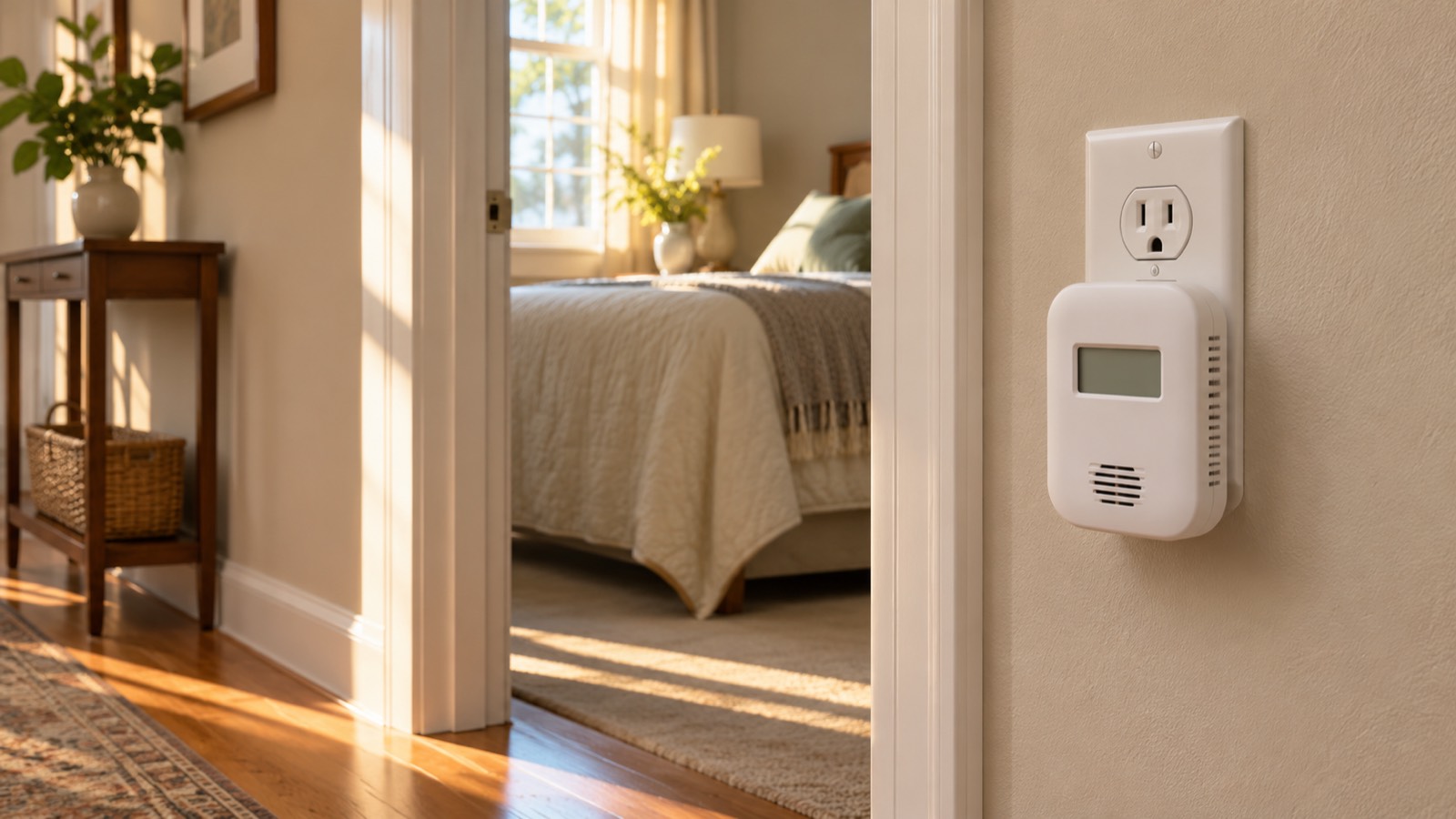
Put a carbon monoxide alarm on every level of your home and outside each sleeping area, which usually means the hallway by the bedrooms. The CPSC, the U.S. Fire Administration, NFPA and the Red Cross all say so, and the CDC asks for one near every sleeping area. Past that, including how high on the wall and how far from the furnace, the answer is in your alarm’s manual, and the makers do not agree with each other.
If an alarm is sounding right now, or anyone feels dizzy, sick or has a headache and you suspect carbon monoxide, get everyone outside and call 911 from there. Follow your local emergency officials, and when in doubt, don’t go back in. Our page on what to do when a carbon monoxide alarm is beeping covers that moment. This page is about placement.
We compared agency, NFPA, Red Cross and maker guidance; we did not test any alarm. When a number comes from one maker, we name the maker and model.
Where do carbon monoxide alarms go?
On every level of the home, and outside each sleeping area. The Consumer Product Safety Commission (CPSC) says:
“CO alarms should be installed on each level of the home and outside sleeping areas. CO alarms should not be installed in attics or basements unless they include a sleeping area. Combination smoke and CO alarms are available to consumers.”
Source: CPSC, “CO Alarms” (cpsc.gov), accessed November 2026.
The U.S. Fire Administration (USFA) asks for a central spot for each sleeping area:
“Install CO alarms in a central location outside each separate sleeping area and on every level of your home.”
Source: USFA, “Carbon Monoxide Poisoning Prevention” (usfa.fema.gov), accessed November 2026.
The CDC words it a little differently:
“Install battery-operated or battery back-up CO detectors near every sleeping area in your home.”
Source: CDC, “Carbon Monoxide (CO) Poisoning Basics” (cdc.gov), accessed November 2026.
The CPSC also calls interconnected alarms the best setup, since one alarm going off sets off the rest. Beyond that core, the sources draw the line in different places.
| Source | Where the alarms go | Basement |
|---|---|---|
| CPSC | Each level and outside sleeping areas | Not in attics or basements unless they include a sleeping area |
| USFA | A central spot outside each separate sleeping area, and every level | Not addressed on the page we read |
| CDC | Near every sleeping area | Not addressed on the page we read |
| NFPA (2026 educational messages) | Each bedroom, outside each separate sleeping area, and each level | Included |
| American Red Cross | Each level, with alarms inside bedrooms as well as outside them | Not addressed on the page we read |
NFPA also says to follow the manufacturer’s instructions for placement and mounting. The CPSC page neither asks for a CO alarm inside a bedroom nor rules one out, so the bedroom advice adds coverage on top of it. The NFPA and Red Cross rows are our wording of NFPA’s carbon monoxide safety tips and 2026 Educational Messages Desk Reference, and the Red Cross page on carbon monoxide poisoning safety.
How many alarms does your home need?
Count your levels, then count your separate sleeping areas. A one-story home with every bedroom off one hallway needs at least one alarm in that hallway. A two-story home needs at least one on each floor, with the one on the bedroom floor placed outside the bedrooms.
A few layouts change the count:
- Bedrooms in separate wings or on different floors. Each separate sleeping area gets its own alarm, per the USFA and NFPA.
- A finished basement where someone sleeps. The CPSC counts that as a sleeping area, so it gets an alarm.
- A long bedroom hallway. The First Alert CO710 and CO3-P01 manuals say to put an alarm at both ends of a bedroom hallway longer than 40 feet. That is those two models’ instruction, not an agency rule.
Adding alarms beyond the CPSC’s list is in line with NFPA and Red Cross advice. For help choosing a model, see our guide to the best carbon monoxide detectors. A smoke and carbon monoxide alarm combination unit is one way to cover both hazards with a single device on each level.
What about basements and attics?
Here the authorities part ways. The CPSC says no CO alarm in an attic or basement unless it includes a sleeping area. NFPA’s 2026 educational messages say every level, including the basement. First Alert’s support page says to put one in the basement, especially when fuel-burning appliances are there, and Google Nest lists every floor, finished attics and basements included, for its Nest Protect combination alarm.
The First Alert CO710 and CO3-P01 manuals put the basement-level alarm at the top of the basement stairs. Kidde’s support page says that if you have only one CO alarm, it belongs in the hallway outside the bedrooms.
We are not going to settle this one for you. With a furnace or water heater in the basement, NFPA and First Alert would put an alarm on that level, while the CPSC ties basement alarms to sleeping areas. Your local fire department or building code official can say what your area requires.
How high on the wall should it go?
Follow your alarm’s manual. The CPSC says to install alarms according to the manufacturer’s instructions, and no federal agency we read sets a height. The CPSC fact sheet gives two options:
“CO alarms may be installed into a plug-in receptacle or high on the wall. Hard wired or plug-in CO alarms should have battery backup.”
Source: CPSC, “Carbon Monoxide Fact Sheet” (cpsc.gov), accessed November 2026.
Many people have heard that CO sinks, so the alarm goes low, or that it rises, so the alarm goes on the ceiling. A 2012 study in the Journal of Emergency Medicine by Hampson, Courtney and Holm tested this in an 8-foot airtight Plexiglas chamber (we read the published abstract). CO released at the top, middle or bottom evened out through the whole chamber each time instead of collecting at the floor or the top, and the authors concluded any height in the room would be reasonable for a home alarm. It was one sealed chamber with one test gas concentration, not a real house. It does line up with First Alert and Google Nest, which both say CO mixes through a room’s air, and First Alert says a low outlet is generally fine for a plug-in alarm.
Combination smoke and CO alarms are different. NFPA says to follow the smoke alarm directions for those, and Google Nest says its Protect goes on the ceiling or on a wall within 12 inches of it. The First Alert CO710, a CO-only alarm, says not to mount it closer than 4 inches from where the wall meets the ceiling. Read the manual that came with yours.
How far from the furnace, water heater and stove?
It depends on the maker. Google Nest notes that fuel-burning appliances can give off a little CO when they start up, which is why it keeps alarms away from them. The makers’ distances do not match.
| Maker and model | What the manual or page says |
|---|---|
| First Alert CO710 (battery) | Not closer than 20 feet from a furnace, other fuel-burning heat source or fuel-burning appliance such as a water heater. Not within 5 feet of any cooking appliance. |
| First Alert CO3-P01 (plug-in) | Not closer than 15 feet from the same sources. Not within 5 feet of any cooking appliance. |
| Kidde support page | All alarms at least 15 feet from fuel-burning appliances. |
| Kidde Safety Hub | Additional alarms recommended 5 to 20 feet from sources such as a furnace, water heater or fireplace. |
| Google Nest | Not directly above or beside fuel-burning appliances. Its CO help page says not within 15 feet of heating or cooking appliances; its page on rooms that need a Nest Protect says 15 to 20 feet from water heaters or furnaces. |
First Alert’s support page sums up the idea as placing alarms “nearby but not directly next to” a fuel-burning appliance. When two sources give different numbers, go with the manual for your exact model.
Where should you not put one?
Away from drafts, moisture, temperature extremes and anything that could cover it.
| Place | What the sources say |
|---|---|
| Kitchens | CPSC does not recommend them, and the First Alert CO710 and CO3-P01 manuals say not to. One Kidde Safety Hub page says to have one there, so check your own manual. |
| Above fuel-burning appliances, near heating vents | CPSC advises against both. |
| Garages and furnace rooms | The First Alert CO710 and CO3-P01 manuals and Google Nest advise against both. First Alert’s support page says to put the alarm inside the home near the door from the garage. |
| Fans, air conditioners, open windows, doors, dead-air spaces | The CO710 and CO3-P01 manuals say blowing air may keep CO from reaching the sensor. Kidde’s Safety Hub says to avoid dead air spaces and spots next to a window or door. |
| Humid rooms | The CO710 and CO3-P01 manuals say at least 10 feet from a bath or shower, dishwasher, laundry room or other humid source. |
| Behind furniture or curtains | The CPSC says to avoid spots that furniture or draperies can cover. |
| Direct sunlight, extreme temperatures | The CO710 and CO3-P01 manuals rule out direct sunlight and spots colder than 40 or hotter than 100 degrees Fahrenheit, such as unfinished attics and crawl spaces. |
A garage is a poor place for an alarm, but it is a real source of CO. The CDC says:
“Never run your car or truck inside a garage that is attached to a house, even with the garage door open.”
Source: CDC, “Carbon Monoxide (CO) Poisoning Basics” (cdc.gov), accessed November 2026.
If you use a generator during an outage, keep it outdoors. Our page on how far a generator should be from the house goes through the distances, and the CDC says to use a battery-powered or battery backup CO detector in the home when running one.
Plug-in, battery or combination: what changes?
Mostly the mounting rules. For a plug-in alarm, First Alert says to pick an outlet that is not controlled by a wall switch and not hidden behind furniture, and to skip extension cords unless your model allows them. A battery-only alarm can go where there is no outlet, but its batteries need upkeep, which our page on whether batteries expire covers. A combination smoke and CO alarm follows smoke alarm placement.
Placement advice we could not source
These rules repeat across the web, but we did not find them in the agency pages or maker manuals we read. That does not prove them wrong, only untraced.
- “CO rises, so the alarm belongs on the ceiling.” We did not find this for CO-only alarms. The lab study found CO did not collect at the top of the chamber, and the ceiling advice we found is for combination smoke and CO alarms.
- “Mount it 5 feet above the floor.” We did not find this number.
- “Keep it within 10 feet of the furnace,” as a rule for every alarm. We did not find one shared figure. The maker figures we found range from Kidde’s Safety Hub, which puts additional alarms 5 to 20 feet from a source, to the First Alert CO710 manual, which says no closer than 20 feet.
- “Put one in the garage.” We did not find this in the sources we read; First Alert and Google Nest advise against it.
What about renters, RVs and local rules?
State and local rules vary. The CPSC says:
“Many states and local jurisdictions now require CO alarms be installed in residences. Check with your local building code official to find out about the requirements in your location.”
Source: CPSC, “Carbon Monoxide Fact Sheet” (cpsc.gov), accessed November 2026.
For renters, First Alert’s rental page says the most common setup is that the property owner or manager provides the required alarms and the tenant tests them and keeps them clear, but that this varies by lease and by local law. Ask your landlord who is responsible. The CPSC also says CO alarms should be used in boats and recreational vehicles.
What should you check after it is up?
Note the alarm’s expiration date, as the Red Cross suggests, and set a reminder, as the CDC suggests. The CPSC recommends testing alarms monthly and changing batteries once a year; a sealed 10-year alarm such as the CO710 has no battery to change, so follow its manual. The CDC says to replace a detector following the manufacturer’s instructions or every 5 years. Once it is up, leave it there, since Kidde’s support page says its alarms are made for a fixed location.
The CPSC also says what an alarm cannot do:
“A CO alarm can provide some added protection, but it is no substitute for proper use and upkeep of appliances that can produce CO.”
Source: CPSC, “Carbon Monoxide Fact Sheet” (cpsc.gov), accessed November 2026.
The CPSC and CDC both call for yearly service of your heating system. If you lean on a portable heater during a cold snap, our pages on space heater safety and how to stay warm without power cover the safer options.
Frequently asked questions
Do I need an alarm inside every bedroom?
The CPSC and USFA say outside sleeping areas. NFPA and the Red Cross also put one inside bedrooms.
Should a carbon monoxide alarm be high or low?
Follow your manual. The CPSC allows a plug-in outlet or high on the wall, and a 2012 chamber study found CO did not settle near the floor.
Can I put one in the kitchen or garage?
The CPSC does not recommend kitchens, and the manuals we read advise against both.
Where does the first alarm go if I only have one?
In the hallway outside the bedrooms, as Kidde’s support page advises. The CPSC and USFA still call for one on every level, so add more as you can.
Log each alarm’s model and purchase date on the Warranties and Serial Numbers page of the Family Emergency Binder.