Buying Guides
LifeStraw Review: What It Filters and What It Does Not
General information only, not professional advice. In an emergency, call 911 and follow local officials. How we use sources
In this guide
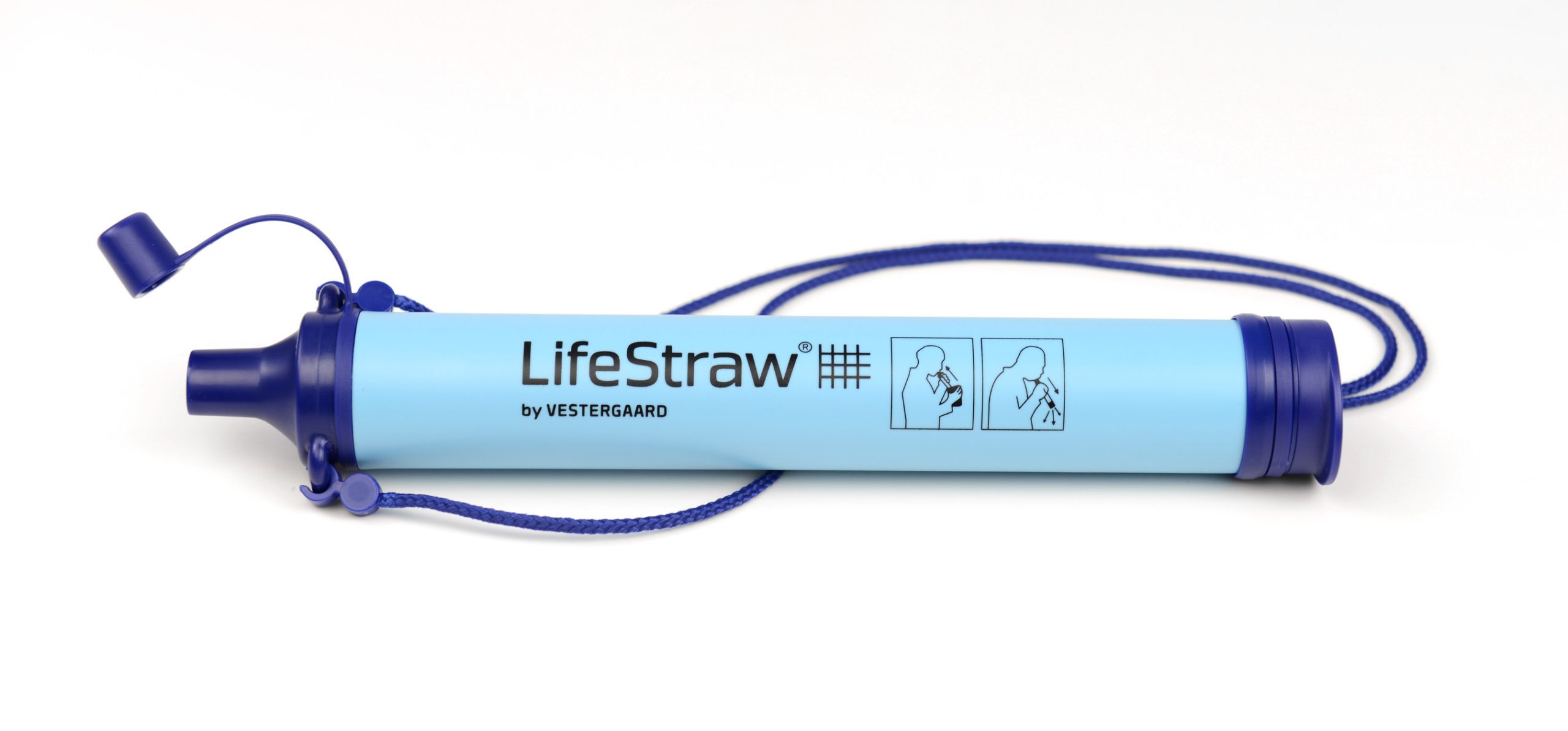
The LifeStraw Personal is a small straw filter that the maker says removes bacteria, parasites and microplastics from fresh water. It does not remove viruses, salt, chemicals or heavy metals, and that list matters more than the headline numbers. In a family emergency kit, it makes sense as one backup layer for drinking from a questionable fresh-water source, not as the whole water plan.
We did not test this product. This review is built from the maker’s product page, FAQ and storage sheet, from CDC and EPA guidance, and from one independent field review that is now several years old. Every performance figure below is the maker’s claim unless it is credited to someone else. In an emergency, follow your local emergency officials, call 911 if someone’s health is at risk, and when in doubt, don’t drink it.
What the LifeStraw Personal is
It is a hollow straw with a membrane microfilter inside, and you drink through it straight from the water source. Here is what the maker publishes for the Personal model.
| Spec | What the maker says |
|---|---|
| Bacteria | Removes 99.999999% |
| Parasites | Removes 99.999% |
| Microplastics, dirt, sand and cloudiness | Removes 99.999% |
| Pore size | 0.2 micron |
| Rated life | ”Lasts up to 1,000 gal” (4,000 L) |
| Shelf life | ”Unlimited shelf life when stored properly” |
| Weight | 1.6 oz (46 g) |
| Size | 9 x 1.2 in |
| Standards claim | Meets US EPA and NSF P231 drinking water standards for removal of bacteria and parasites |
The 1,000 gallon figure is the maker’s rating, not a guarantee. This review covers the Personal straw only, because we could not retrieve the maker’s pages for its other models.
What it does not do
These limits are why a straw belongs in a kit as a backup rather than as the plan.
Viruses. The maker’s FAQ says “Standard filtration products also do not remove viruses.” For virus removal, it points to its purifier models (Mission, Family and Community) or to combining a LifeStraw filter with purification tablets. The Personal is not on that purifier list. The CDC says this about portable filters in general:
Portable water filters do not remove all types of germs from water.
- Will not remove viruses
- Must have an absolute pore (hole) size of 0.3 micron or smaller to remove bacteria
- Must have an absolute pore size of 1 micron or smaller to remove parasites (such as Giardia or Cryptosporidium)
Source: CDC, How to Make Water Safe in an Emergency (cdc.gov), accessed November 2026.
The maker lists a 0.2 micron pore size without saying whether that is an absolute figure. If it is, it is smaller than both of those thresholds, which fits the maker’s bacteria and parasite claims. On viruses, the maker and the CDC agree.
The maker’s FAQ also says “Viruses are not a concern in backcountry locations or water sources in most developed countries.” That is the maker’s position, not public health guidance, and in an emergency your local officials decide what treatment the water needs. For the virus gap, the CDC says:
Chemical disinfectants kill viruses and bacteria, but may not kill parasites.
Source: CDC, How to Make Water Safe in an Emergency (cdc.gov), accessed November 2026.
The same CDC page calls boiling the best way to kill germs in water. A filter used with tablets covers the parasites that tablets may miss and the viruses that the filter misses, which is the pairing the maker itself suggests.
Salt. The maker states that LifeStraw products “do not remove salt from water and should not be used on water sources such as ocean or sea water, other saltwater sources or brackish water (where freshwater and saltwater are mixed).” That rules out the ocean and brackish water near the coast.
Chemicals and heavy metals. The maker’s product page says “The Personal Straw is designed for biological contaminants (bacteria, parasites, microplastics),” and points shoppers who want chemical or heavy metal reduction, such as PFAS or lead, toward its home pitchers and multi-stage products. The EPA draws the same line for boiling and disinfection:
boiling or disinfection will not destroy other contaminants, such as heavy metals, salts, and most other chemicals.
Source: EPA, Emergency Disinfection of Drinking Water (epa.gov), accessed November 2026.
If the water may have fuel, pesticides or an industrial spill in it, boiling, bleach and this straw are not designed to deal with that. Use bottled or stored water, and ask your local officials.
What the standards claim covers
The maker’s standards claim for the Personal is about bacteria and parasites, not viruses. Its wording is also not fully consistent: the spec line says “NSF P231,” while another answer on the same page cites “NSF 231 and NSF 53.” The FAQ says its testing uses protocols “aligned with WHO, US EPA, NSF, and WQA standards,” with in-house ISO-certified and external lab testing. We have not seen the underlying test reports, so treat these as the maker’s statements. If the exact certification matters to you, confirm it with the maker before relying on it.
What an independent reviewer found
The one outside review we found is from OutdoorGearLab, written by Amber King and dated May 6, 2019. The reviewer field tested the straw, and the site says it buys the products it tests. The review reports hard sucking, water that takes a few seconds to arrive, flow that drops sharply in murky water, difficulty cleaning it, and no way to carry water with it. Blowing back through the straw cleared clogs, but not efficiently. It seemed sturdy, though the reviewer thought the tube could snap. The reviewer called it light and a fit for emergencies or short trips where water is plentiful, while personally preferring other products.
That review is from 2019 and may not match the current model. For a kit, the slowdown in murky water is the finding most worth planning around.
Keeping it working
The EPA’s emergency disinfection page says to let cloudy water settle and then filter it through a clean cloth, paper towel or coffee filter. That guidance is written for boiling and disinfection, but doing the same before using a straw is a sensible way to spare a filter that slows down in murky water.
Storage matters for a kit that may sit untouched for a long time. The maker’s long-term storage sheet applies when you have already used the straw and plan to store it for more than one month. It says to disinfect the straw with a bleach solution, put it in a salt solution, store it in a bottle or bag of that salt water with both caps open, and keep it in a cool, dry place. The sheet says the salt solution helps prevent mold or algae while keeping the membrane wet, and it warns that “When the membrane becomes completely dried out, it can be difficult to get the product flowing again.” Use the maker’s current sheet for the exact amounts rather than relying on our summary. The CDC gives the same direction for filters in general:
Follow the instructions for the water filter you are using.
Source: CDC, How to Make Water Safe in an Emergency (cdc.gov), accessed November 2026.
The sources we read do not say when to retire a straw, so check the maker’s current instructions.
Where it fits in a family kit
A LifeStraw makes sense as a lightweight backup in a car or kit for the day you need to drink from a fresh-water source and have nothing else. It does not replace stored water.
If your area issues a boil water notice, follow your officials’ instructions. The maker’s FAQ calls bacteria and parasites the primary concerns during boil water advisories, a framing that leaves viruses out. Our boil water notice guide covers what to do.
To cover viruses, pair a straw with purification tablets or with boiling. The side-by-side is in LifeStraw vs. water purification tablets. Tablets have a shelf life, covered in do water purification tablets expire. For the wider field, see best emergency water filters and purification tablets, and for household volume, gravity water filters like Berkey and its alternatives.
Stored water comes before any filter. Our guide to storing water when you live in a small space helps if room is tight, and the 72-hour kit on a budget shows where water sits among the other basics. Our resources page lists water treatment options and water filters that we point readers to.
Frequently asked questions
Does a LifeStraw remove viruses?
No. The maker’s FAQ says standard filtration products do not remove viruses, and the CDC lists “Will not remove viruses” for portable filters. Combine a straw with purification tablets, or boil the water.
Can you drink salt water with a LifeStraw?
No. The maker says its products do not remove salt and should not be used on ocean water, other saltwater sources or brackish water.
Does a LifeStraw remove lead or other heavy metals?
No. The maker says the Personal is designed for biological contaminants, and it points people who want lead or PFAS reduction to other products. If lead or chemicals are a concern, use bottled or stored water and follow your local officials.
Is a LifeStraw enough during a boil water notice?
Follow your local officials. The straw does not remove viruses, so it is not a complete answer on its own. Boiling, or a filter combined with tablets, covers more.
How long does a LifeStraw last?
The maker rates the Personal for up to 1,000 gal (4,000 L) and lists an unlimited shelf life, but a rating is not a guarantee. If you store it after use, follow the maker’s storage sheet, which warns that a fully dried-out membrane can be difficult to get flowing again.
The bottom line
The LifeStraw Personal is a reasonable fresh-water backup within the limits the maker states. Because it does not handle viruses, salt or chemicals, it works best alongside stored water and a second treatment method.
The family emergency binder has a Shelter-In-Place Supplies page, with FEMA’s quantities cited, for planning the stored water that comes before any filter.