Buying Guides
Best Gravity Water Filters: Berkey and Alternatives
General information only, not professional advice. In an emergency, call 911 and follow local officials. How we use sources
In this guide
A gravity filter is a good fit for a kitchen with no power, and it can make stored or tap water taste better. It does not replace boiling or a disinfectant for germs, because the CDC says portable filters will not remove viruses. We did not test any filter for this article. We compared published specs, maker claims, NSF’s public listings (checked November 10, 2026) and CDC and EPA guidance. The five systems are the Big Berkey, the British Berkefeld SS2 Ultra Sterasyl, the ProOne Big+, the Boroux Legacy 3-gallon and the Alexapure Pro.
The agency guidance below is quoted word for word. Follow your local emergency officials, call 911 in an emergency, and when in doubt, don’t drink the water.
What does a gravity filter do, and where does it stop?
A gravity filter is a two-chamber countertop unit. Water you pour into the upper chamber drips through the filter elements and collects in the lower chamber, with no pump or pressure. The process is slow, and the makers’ own figures for a standard setup run from about 1 gallon an hour to a little over 4.
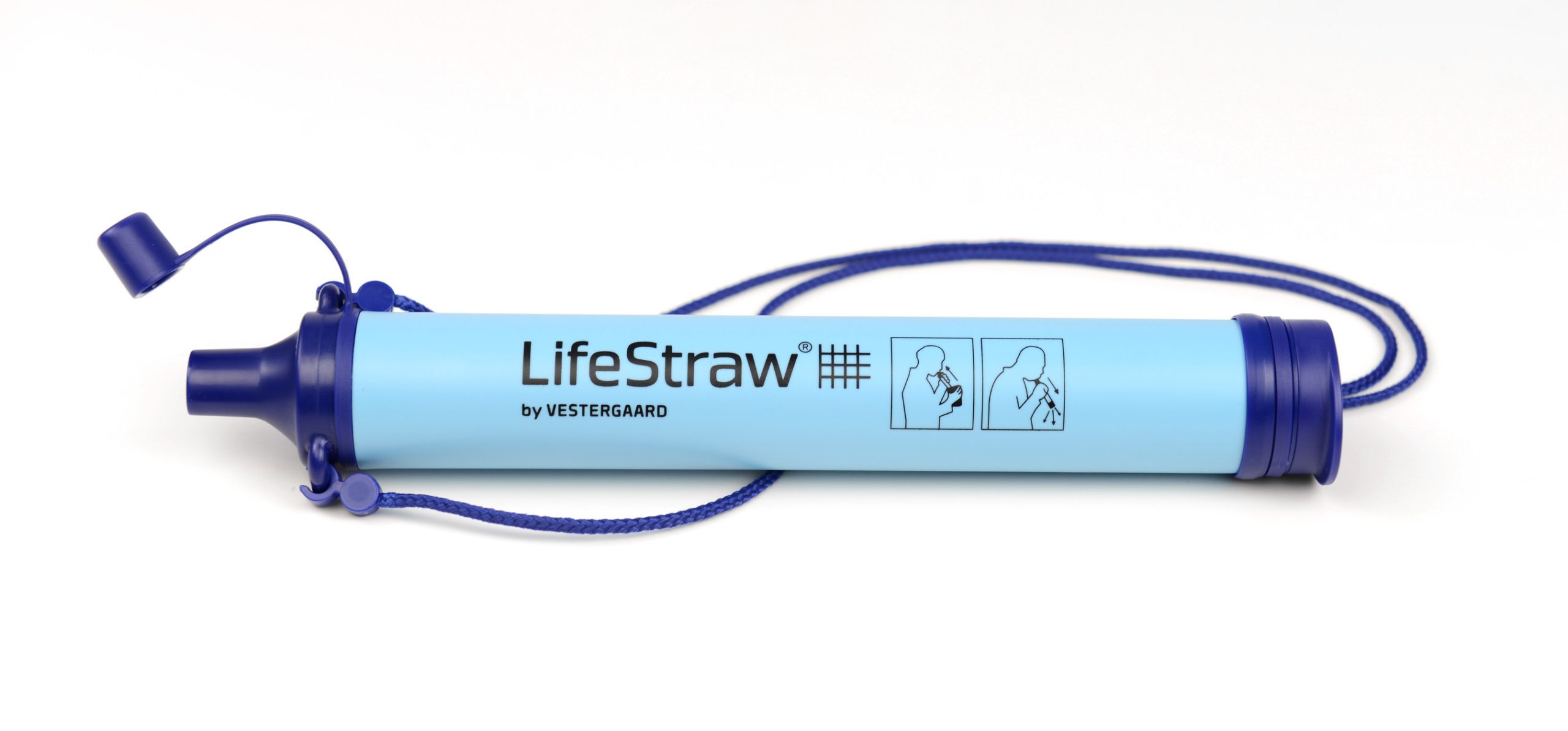
If you need something you can carry instead, see our comparison of LifeStraw and purification tablets.
On portable filters, the CDC says:
Portable water filters do not remove all types of germs from water.
Portable filters:
- Will not remove viruses
- Must have an absolute pore (hole) size of 0.3 micron or smaller to remove bacteria
- Must have an absolute pore size of 1 micron or smaller to remove parasites (such as Giardia or Cryptosporidium)
Source: CDC, How to Make Water Safe in an Emergency (cdc.gov), accessed November 2026.
The same page tells you to add a chemical disinfectant (it names iodine, chlorine and chlorine dioxide) to water after you filter it. It says:
The disinfectant will kill any viruses and bacteria.
Most filters will remove parasites, but not viruses or bacteria.
Source: CDC, How to Make Water Safe in an Emergency (cdc.gov), accessed November 2026.
So a gravity filter is half of a two-step plan. Our guide to portable filters and purification tablets covers the tablet side, and it is worth checking whether your purification tablets have expired if they have been in a drawer for years.
A filter also does not fix chemical contamination:
You cannot make water containing fuel, toxic chemicals, or radioactive materials safe by boiling or disinfecting it.
Source: CDC, How to Make Water Safe in an Emergency (cdc.gov), accessed November 2026.
What about a boil water notice?
Boil the water, as your local officials direct. The CDC says:
Boiling is the best way to kill germs in water.
Source: CDC, How to Make Water Safe in an Emergency (cdc.gov), accessed November 2026.
Our boil water notice guide walks through the steps. Given the virus limit above, a gravity filter on its own is not a substitute for boiling during a notice.
How did we compare them, and what do the NSF numbers mean?
For each system we read the maker’s own product page and instructions, searched NSF’s public drinking water treatment unit listings by trade name and company name on November 10, 2026, and read the CDC and EPA pages quoted here. We left out AquaRain and Waterdrop because we could not capture comparable specs, and we did not look at Clearly Filtered, Seychelle or Propur as separate brands.
A maker saying a filter was “tested to” or “meets” a standard is a statement from the maker. An NSF listing is a record NSF publishes, and you can look it up yourself. WQA and IAPMO R&T are separate certification bodies, and two makers here say those bodies certified their filters to NSF/ANSI standards. We did not check either directory, so those stay the makers’ claims.
| Standard | What it covers, per NSF’s listing categories | What it does not tell you |
|---|---|---|
| NSF/ANSI 42 | Aesthetic effects. Listed claims here are chlorine, taste and odor, or particulate | Nothing about bacteria, viruses or health-related contaminants |
| NSF/ANSI 53 | Health effects. On these gravity filters, the listed claims are cyst and turbidity reduction | The CDC says a filter certified for NSF 53 or 58 cyst reduction removes parasites “but not viruses or all bacteria” |
| NSF/ANSI 401 | Emerging compounds and incidental contaminants. The listed claim here is microplastics | Not a germ claim |
| NSF/ANSI/CAN 372 | Lead content of the materials (lead-free) | Not a claim that the filter removes lead from water |
| NSF P231 | Microbiological water purifiers. Claims on that listing include bacteria, cyst and virus reduction | None of the five appeared on the P231 page we fetched. That page may not be exhaustive |
The quoted phrase in the 53 row comes from the CDC’s page on water treatment when hiking, camping or traveling (cdc.gov), accessed November 2026.
How do the five compare?
Figures in the middle three columns are the maker’s (or, where noted, a dealer’s) claims. The last column is what NSF’s database showed when we searched it on November 10, 2026. “Not captured” means we did not get that detail from a maker page, not that the maker lacks it.
| System | Size (maker) | Element, flow and life (maker) | Certification claimed | What we found on NSF’s database |
|---|---|---|---|---|
| Big Berkey with Phoenix elements | About 2.25 gallons (8.5 L) | Phoenix: replace every 2,750 gallons per element, up to 4.2 gallons an hour per pair | NSF/ANSI 42 and 372 | Listed under New Millennium Concepts Ltd for NSF/ANSI 42: chlorine reduction, taste and odor reduction. Listed service cycle 1,050 gallons |
| British Berkefeld SS2 Ultra Sterasyl | Not captured | Ceramic cartridges. Life and flow not captured | A dealer page says the Ultra Sterasyl filters are NSF certified (maker page not captured) | Listed under Doulton Water Filters: 42 (particulate Class I), 53 (cyst reduction, turbidity reduction), 401 (microplastics reduction), with a 372 lead-free note |
| ProOne Big+ | Not captured | Ceramic shell with a carbon-based core. Filter life “up to 6 months” | Certified by IAPMO R&T to NSF 372, 42, 53 (for lead and total PFAS) and 401 | NSF lists the older ProOne G2.0 cartridges under 42 as “Conforms to material requirements only.” IAPMO listing not checked |
| Boroux Legacy 3-gallon | 3 gallons | Carbon block. Up to 12 months of water per pair. 1 gallon an hour with 2 filters, 2 with 4 | WQA certified to NSF 42, 401 and 372 | No match under “Boroux.” WQA directory not checked |
| Alexapure Pro | 2.5-gallon chambers | Up to 200 gallons per filter. Averages 1.67 gallons an hour. No priming | No NSF/ANSI certification named on the product page. Maker says “independently tested” for 220+ contaminants | No match under “Alexapure” |
Two cautions. The 1,050 gallons on NSF’s Berkey listing and the 2,750 gallons per element on Berkey’s page are different statements, so do not treat them as the same number. And the count of certifications is not a ranking: a longer list means different kinds of claims, and 42 is not a germ claim at all.
Berkey: what is sold now, and what do the records show?
Berkey is the name most readers arrive with. This section sticks to primary records (EPA orders, court filings, NSF’s listing) and to Berkey’s own statements, labeled as Berkey’s.
What Berkey sells now
Berkey’s Big Berkey page lists about 2.25 gallons of storage and says the system is “Not available for sale to residents of California and Iowa.” The same page says that with two Black Berkey elements, flow is up to 3.5 gallons an hour. Berkey’s Black Berkey page says the item “is either out of stock or has limited availability.” Its Phoenix page says Phoenix elements are “officially endorsed” by New Millennium Concepts, Ltd. for use in Berkey systems. A dealer’s page says Black Berkey elements are currently unavailable for individual purchase because of an EPA regulatory matter. That is the dealer’s statement, not Berkey’s.
What NSF’s listing shows
NSF lists the Big Berkey, Royal Berkey and Travel Berkey, each “Featuring Phoenix Gravity New Millennium Edition Filter Elements,” for NSF/ANSI 42: chlorine reduction and taste and odor reduction. We searched NSF’s database for “Black Berkey” and got no match. The same dealer says Black Berkey elements are tested to NSF/ANSI protocols by independent laboratories. We did not find that statement on Berkey’s own pages, so it stays a dealer’s claim. The listing says nothing either way about germ removal.
For a buyer, the Big Berkey with Phoenix elements is the version with a current NSF listing, and that listing covers taste and chlorine.
The dated record
- November 22, 2022: an EPA representative inspected the facility of James Enterprise, Inc., which does business as Berkey Filters, according to the EPA order below.
- December 27, 2022: EPA Region 8’s enforcement docket lists a Stop Sale, Use, or Removal Order against James Enterprise, Inc. The order says EPA “has reason to believe” the company sold “unregistered and misbranded pesticides,” and it names Black Berkey filters and several Berkey systems. It states: “This Order shall remain in effect unless and until revoked, terminated, suspended, or modified in writing by EPA.”
- May 8, 2023: the same docket system lists a separate Stop Sale, Use or Removal Order to Berkey International LLC.
- August 9, 2023: New Millennium Concepts, Ltd. and the trustee of the James B. Shepherd Trust sued EPA in the Northern District of Texas. On November 17, 2023, that court dismissed the case because the plaintiffs lacked standing. Its opinion says the court “is in no way disparaging, or opining on, Plaintiffs’ claims,” so the dismissal was not a ruling on the merits of Berkey’s position.
- March 6, 2024: Berkey International, LLC filed a separate suit against EPA in the District of Puerto Rico. A July 24, 2024 opinion in that case is limited to evidentiary rulings and says it “serves as the basis for the Opinion and Order to be issued separately denying Plaintiff’s preliminary injunction request.” We did not capture that separate order.
- August 9, 2024: the Fifth Circuit affirmed the Texas dismissal in an unpublished opinion: “There is no error that would affect the judgment of dismissal, which we therefore AFFIRM.”
What Berkey says
A January 30, 2024 post on Berkey’s support site says New Millennium Concepts sued EPA “for classifying Berkey Water Filters as pesticides.” It says silver is used “industry-wide” in water filters, which it argues makes its filters a “treated article” exempt from registration, and it says the filters are exempt “mechanical devices.” Those are Berkey’s arguments, not findings.
How EPA describes the general line
EPA’s consumer guide on pesticide devices describes the line in general terms, not about Berkey specifically:
Note: Water filters that limit claims to taste, odor, or sediment and do not claim to purify water or mitigate microorganisms are generally not considered pesticidal devices and thus are not regulated under FIFRA.
Source: EPA, Pesticide Devices: A Guide for Consumers (epa.gov), accessed November 2026.
The same page says that if a unit contains any substance intended to disinfect the water, it is “generally considered a pesticide that must be registered in order to be sold and distributed.” The 2022 order quotes Black Berkey labeling that begins “Black Berkey Purification Elements: VIRUSES:” followed by a percentage. We do not repeat maker virus figures here; for germs, follow the CDC.
What we could not confirm
We do not know the current status of either EPA order beyond the records above, which are what we found as of November 10, 2026. Check EPA and Berkey for updates before you buy.
What are the alternatives?
British Berkefeld SS2 Ultra Sterasyl
This is the only one of the five that shows NSF/ANSI 53 cyst reduction on NSF’s listing, along with 42, 401 and 372. As the standards table shows, a 53 cyst claim still calls for a disinfectant step behind it. It fits a household that wants a listed parasite claim it can look up. The drawback is that we did not capture its capacity, flow or element life, so get those from the seller.
ProOne Big+
ProOne pairs a ceramic outer shell with a carbon-based core and says the filter lasts up to 6 months. ProOne says IAPMO R&T certified it to NSF 372, 42, 53 and 401, and its page names lead and total PFAS as the 53 claims, not cysts. We did not check IAPMO’s directory, and NSF’s own database shows only the older G2.0 cartridges, as conforming to material requirements only. Ask the maker for the IAPMO listing that matches your exact element. ProOne also recommends cleaning the whole system monthly.
Boroux Legacy 3-gallon
At 3 gallons, this is the largest system among those whose size we captured. Boroux says a pair of its filters lasts up to 12 months, and an automatic filter primer comes in the box. It says its filters are WQA certified to NSF 42, 401 and 372. We got no match for “Boroux” on NSF’s database and did not check WQA’s. The maker says to clean the upper and lower chambers monthly, a recurring chore worth planning for.
Alexapure Pro
The Alexapure Pro page names no NSF/ANSI certification. Its maker says the filter was independently tested across more than 220 contaminants and needs no priming, and the page puts flow at an average of 1.67 gallons an hour. Filter life is up to 200 gallons per the maker. Alexapure’s own page says that for water known or suspected to be microbiologically unsafe, you should follow boil-water or disinfection guidance in addition to filtering.
How do you set one up for an outage?
Start with water to put in it. A filter needs a source, and stored water is the usual one. Bottled water kept as a backup is another.
Prime the elements before you need them. Berkey’s Black Berkey instructions say elements “will not operate properly if they are not primed.” Alexapure says its filter needs no priming, and Boroux includes a primer. Do the first setup on a normal day with tap water and the maker’s manual, not during the outage.
Keep it from freezing. Berkey’s instructions say never to allow wet Black Berkey elements to freeze, because ice may damage them and cause them to crack or break, and freezing voids the warranty. We did not capture freezing instructions for the other makers, so check your own manual and think about where the unit will sit if the heat goes out.
If you will be away for a few days, Berkey’s instructions describe keeping damp elements in a sealed bag in the refrigerator, where they will not freeze, for an absence of 4 to 15 days. We did not capture similar guidance from the other makers.
If the water is cloudy, let it settle or pre-filter it. The EPA says:
Disinfection does not work as well when water is cloudy or colored.
Source: EPA, Emergency Disinfection of Drinking Water (epa.gov), accessed November 2026.
Some of these elements contain carbon. Whether carbon or charcoal on its own makes water safe to drink is a separate question, covered in our guide to purifying water with charcoal. If you have no disinfectant on the shelf, that is the gap to fill first, and our water treatment resources list gear for it.
Which one fits which situation?
Pick by what your household needs and what you can verify.
- You want a listed cyst claim: British Berkefeld, plus a disinfectant step.
- You want an NSF listing for taste and chlorine: the Big Berkey with Phoenix elements, if you do not live in California or Iowa.
- You want the most storage among the sizes we captured: Boroux at 3 gallons.
- You want to skip priming: the Alexapure Pro, accepting its 200-gallon filter life and no NSF/ANSI certification named on its page.
- You want ceramic plus carbon with a third-party certification claim: the ProOne Big+, once you have confirmed the IAPMO listing for your element.
Before you buy any of them, run through these checks:
- Which standard does the maker name, and which certifier? Look the listing up yourself on the certifier’s site.
- What does the maker say about viruses? Whatever the figure, the CDC’s guidance to disinfect after filtering still applies.
- Are replacement elements in stock, and what does the maker say about element life?
- Do local rules limit where it can be sold or shipped? For Berkey, California and Iowa.
- Do you have a disinfectant on the shelf, and is it in date?
Frequently asked questions
Does a gravity filter remove viruses?
Do not count on it. The CDC says portable filters will not remove viruses and advises adding a chemical disinfectant after filtering. A maker’s virus figure is a maker claim.
Are Berkey filters NSF certified?
NSF’s listing, checked November 10, 2026, shows the Big Berkey, Royal Berkey and Travel Berkey with Phoenix elements under NSF/ANSI 42, which covers chlorine, taste and odor. We found no listing for Black Berkey elements. A dealer says they are tested to NSF/ANSI protocols, which is not the same as a listing.
Can I use one during a boil water notice?
Follow your local officials and boil. The CDC says boiling is the best way to kill germs, and a filter alone does not cover viruses.
Can a gravity filter freeze?
Berkey’s instructions say never to let wet Black Berkey elements freeze, because they may crack or break. Check your own maker’s manual.
Can I use one on pond or river water?
For water you are not sure is safe, the CDC says:
Boiling water is the best way to kill germs that could make you sick. The next best option is to filter water and then disinfect the filtered water.
Source: CDC, About Water Treatment Options When Hiking, Camping, or Traveling (cdc.gov), accessed November 2026.
Follow your local officials, and do not use any of these on water you know or suspect holds fuel or toxic chemicals.
Final thoughts
Choose the system by the claims you can verify, keep a disinfectant next to it, and keep water stored so the filter has something to work on. If officials tell you the water is unsafe, follow them, call 911 in an emergency, and when in doubt, don’t drink it. The Shelter-In-Place Supplies page in the Family Emergency Binder has lines for stored water and for the unscented bleach the CDC names for disinfecting it.